

Starship Flight 13 landed intact and kept sending telemetry after a mostly successful splashdown
SpaceX’s 13th Starship flight ended with the vehicle floating in water intact, still transmitting data, a signal for next steps.
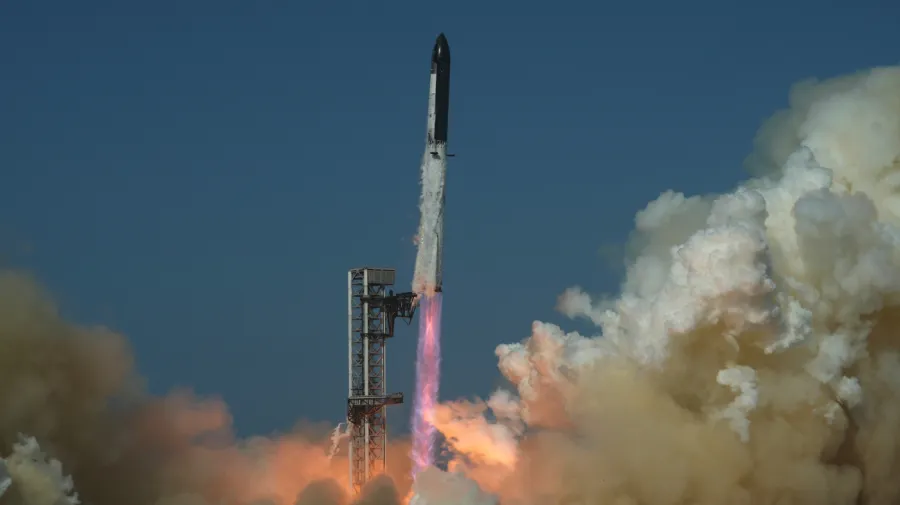
SpaceX’s Starship Flight 13, the company’s largest human-made object to fly in space, concluded with a landing and splashdown that left the vehicle intact. For decision-makers, the outcome preserves telemetry continuity and reduces uncertainty in the iteration loop.
SpaceX’s Starship Flight 13 did not just “do okay.” It mostly worked, and the payoff showed up in the most important place after a complex reentry and landing: the aftermath. The largest human-made object ever to fly in space landed “like a ballet dancer” and then wound up floating in the water intact, still sending telemetry. That is a rare sequence of events in test flights, where the question is often not whether you learn something, but whether you can keep learning it.
In other words, this was not a black box ending. The vehicle stayed intact long enough to transmit data, and that telemetry matters because it closes the loop between design intent and what actually happened during the mission. If you are tracking progress toward a repeatable system, the ability to confirm performance through continued data transmission is a big deal. It turns “we tried” into “we know,” and it does so without waiting for months of postmortems or delayed data recovery.
To understand why executives should care, zoom out to how high-stakes aerospace programs operate. Starship is not the kind of system you refine with small adjustments after a clean success. It is the kind you learn from either when things land and survive in a usable way, or when they fail loudly enough that you still capture the right data. Flight 13 hitting the “mostly a triumph” mark suggests a partial reduction in the chaos factor. The landing choreography being described as “like a ballet dancer” is not just a colorful line. It is shorthand for a landing profile that did not devolve into immediate breakup or total loss, which would have cut off the telemetry stream.
There is also an incentive angle. For any company building toward operational capability, credibility is a currency. Telemetry that continues after splashdown helps sustain that credibility internally and externally. Internally, engineers get better signal for troubleshooting and refinement. Externally, the program’s investors, partners, and regulatory-facing stakeholders get fewer blank pages. Even when a mission is not fully perfect, being able to keep the vehicle intact and “sending telemetry” reduces the risk that the next attempt will be forced into blind parameter guessing.
Regulatory and oversight dynamics are often less visible than the technical work, but they matter for the strategy around launches and landings. High-consequence flight tests typically sit under intense scrutiny because they are a proving ground for safety, environmental considerations, and operational planning. When a test ends with the vehicle intact in the water, it is the kind of outcome that can simplify evidence collection for what happened and how systems behaved through the landing phase. That can matter when teams need to demonstrate progress, not just ambition.
Now think about the second-order implications for peers. If SpaceX is continuing to preserve intact recovery and telemetry on a recurring basis, that shifts the competitive baseline for what “routine progress” looks like in the next round of spaceflight development. Boards and exec teams at other aerospace startups, or even incumbent contractors, will notice the operational learning advantage. The organization that gets cleanest data most consistently can iterate faster, and iteration speed can become a financial and programmatic differentiator.
Finally, there is the broader strategic stake: Starship is positioned as an end-to-end system, and end-to-end systems live or die on the final stretch. Launch gets headlines, but the mission’s value often depends on the landing and post-landing data. Flight 13 ending with an intact vehicle floating in water while it continued sending telemetry directly supports the idea that the program is moving from engineering prototypes toward a more measurable, repeatable process. If the goal is to scale, that is the kind of momentum that executives fight for. You do not just want a successful attempt. You want a successful attempt that keeps the information flowing so the next one gets smarter.
This story's Key Insights and Take-aways are locked.
Create a free account to unlock Executive Actions for one credit.
Register to UnlockAlways free for Executives Club members. Join the Club
More in Politics

Obama Defends Ilhan Omar After Agents Search Her Home in Trump Inquiry
The former president's intervention raises the stakes in a federal probe into immigration paperwork that has put a prominent progressive lawmaker in the crosshairs.

Blair-era minister: cut welfare to fund youth job support
Alan Milburn's call for welfare cuts to fund employment support opens a Labour fight over benefits and the Neet crisis.

Hot September CPI: energy costs surge, voters feel the squeeze before midterms
The latest inflation print lands as Trump campaigns for GOP control of Congress, putting cost-of-living worries at the center of the midterm fight.