
State Department casts Cuba as a major threat using left-wing groups amid anti-government push
A new framing links Washington's Cuba strategy to political networks, raising compliance and risk questions for anyone touched by policy.

The U.S. State Department has framed Cuba as a major threat by pointing to left-wing groups in its report. For decision-makers, the consequence is clearer risk signaling as U.S. efforts to overturn Cuba's government intensify.
The U.S. State Department’s report frames Cuba as a major threat by tying that threat narrative to left-wing groups. It arrives alongside growing U.S. efforts to overturn Cuba’s government, making the report feel less like a standalone assessment and more like a piece of a larger strategy puzzle.
For executives and board members trying to read around policy language, the key is the timing and direction. This is happening as Washington increases pressure aimed at changing Cuba’s government, and the report’s emphasis on left-wing groups signals that the policy lens is widening beyond traditional state-to-state categories. In plain terms: the U.S. is telling the world that political networks connected to Cuba can be part of the threat picture, not just the Cuban state itself.
To understand why that matters, it helps to know how U.S. government risk framing tends to translate into real-world constraints. When a regulator or policymaker labels something a major threat, it can expand scrutiny across finance, sanctions administration, compliance programs, partner vetting, and the due diligence that companies must perform when operating in or around sensitive geopolitical terrain. Even when the underlying report does not automatically change rules on day one, it can shift enforcement priorities and the posture of agencies that handle licensing, review, and oversight.
The report also lands in a familiar geopolitical cycle: U.S. policy debates about Cuba have long blended security concerns with political objectives. The source notes that this report comes amid growing U.S. efforts to overturn Cuba’s government. That matters because the policy goal being pursued changes what kinds of information, actors, and relationships get emphasized. If the aim is political change, then groups that influence public debate, mobilize constituencies, or shape ideological narratives become more relevant in the official framing.
There is a second-order implication for companies and investors: more actors can become “in scope.” In many regulated industries, risk assessments start with formal entities, but they often expand to networks, intermediaries, and affiliated organizations once policy signals broaden. When left-wing groups are explicitly used as part of the threat narrative, counterparties may need to reassess whether their current mapping of relationships is too narrow. That can affect everything from partner selection to contracting language to monitoring routines.
Boards also have to think about reputational and governance risk. Policy-driven threat narratives can trigger questions from stakeholders about whether an organization is doing enough compliance work or whether it is inadvertently associating with actors perceived as adversarial to U.S. objectives. Even if a firm is not seeking Cuban revenue directly, the compliance ripples can reach subsidiaries, logistics providers, research partners, and media or advocacy vendors if they touch Cuba-linked ecosystems.
Finally, there is strategic risk signaling for peers. The U.S. State Department’s framing does not just describe a situation; it communicates where attention is going. With growing efforts to overturn Cuba’s government, executives should assume that the overall policy tempo could continue to rise, and that future regulatory actions, guidance, or enforcement could build on the threat narrative established here. In practice, that means decision-makers in any organization exposed to U.S. geopolitical risk should expect additional compliance burdens and more demanding due diligence standards as the threat lens expands.
This story's Key Insights and Take-aways are locked.
Create a free account to unlock Executive Actions for one credit.
Register to UnlockAlways free for Executives Club members. Join the Club
More in Politics
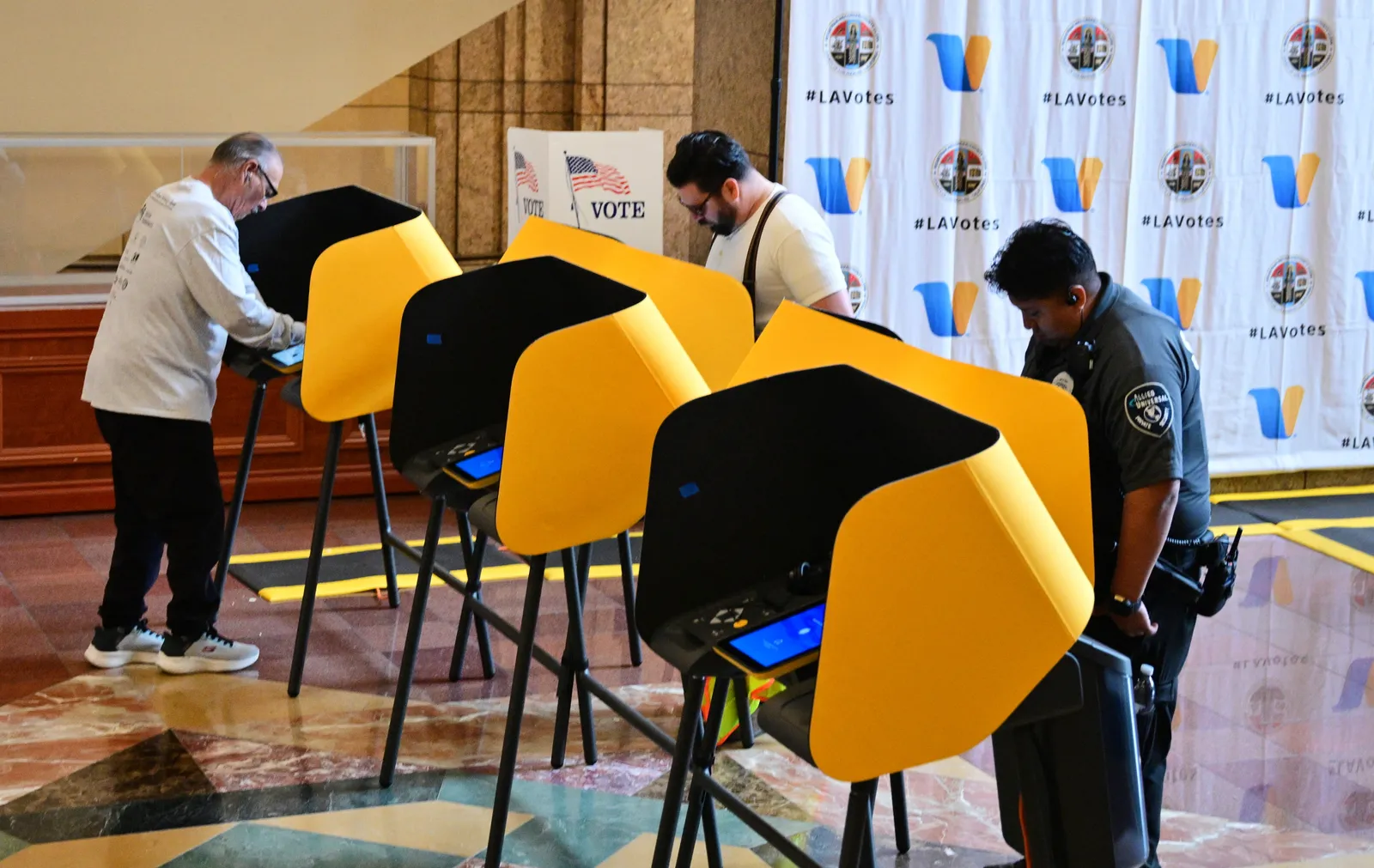
LA County: DOJ's 20,000 'noncitizen' voter list is 'unreliable,' includes U.S.-born
Preliminary review by Los Angeles County election officials finds errors in the federal list, raising the stakes for voter roll integrity ahead of November.
Trump's $1.5B Pentagon chip investment lands in North Carolina
A $1.5 billion defense infusion for North Carolina chipmaking signals a new era of Pentagon-backed reshoring - here's what it means for the industry.

Nigeria confirms first Ebola case in Abuja, a woman just off a Uganda flight
Health Minister Muhammad Ali Pate says the patient flew in from Uganda, putting Africa's latest outbreak on Nigeria's doorstep.