
Steve Allison leaves Epic after 8 years to become Saber Interactive chief business officer
His Epic Games Store run ends with 78 million monthly active users, and a new bet on Saber’s studio-led model.
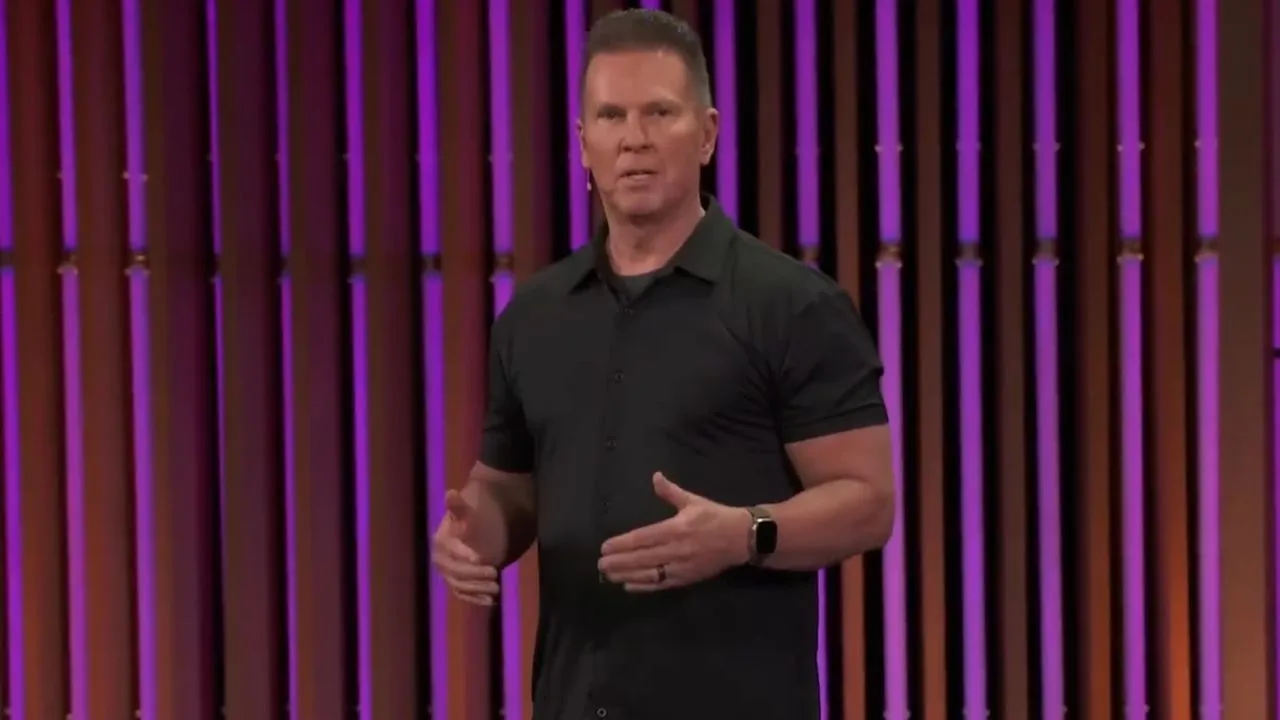
Steve Allison, vice president and general manager of the Epic Games Store, has left Epic Games to become chief business officer at Saber Interactive. The move matters for platform and publisher leaders watching how storefront economics, studio cost structures, and consolidation strategies evolve.
Steve Allison is stepping out of Epic Games Store leadership after an eight-year run. The vice president and general manager of the Epic Games Store has left Epic Games to take up a new role at Saber Interactive as chief business officer, effectively trading platform scale for studio economics and operating leverage.
Epic’s own scoreboard for Allison’s era is not subtle. Epic CEO Tim Sweeney credited Allison for launching the Epic Games Store in 2018 and “driving it to 78 million monthly active users today!” Allison’s exit comes after that growth arc, including the store’s long-standing strategy of giving away huge quantities of games. Epic’s storefront has gone from a challenger launcher to a destination on PC, with 78 million monthly active users a meaningful number even in a market dominated by Valve’s Steam.
So why does this personnel switch matter beyond industry gossip? Because it swaps one set of incentives for another. A storefront executive is typically measured on distribution momentum, user growth, and engagement. A chief business officer at a studio group is usually measured on monetization pathways, cost discipline, partnerships, and the throughput of the development machine. Saber Interactive’s public pitch, as reflected in Allison’s statement, is built around that second category: “Saber’s strength is the talented studios that build high-quality games at 30-50% the cost of industry norms.” That cost band is not just marketing language. It is the type of claim that can determine whether a company survives a downturn, funds riskier projects, and stays attractive to both investors and buyers during consolidation cycles.
Allison is not a newcomer to publishing either. Before joining Epic in 2018, he served as senior vice president of publishing at Telltale Games, and he held executive roles at Midway, Atari, and Accolade. That career path is basically a tour of companies that rose and fell with changing distribution economics. It also lines up with why Saber chose him now: the studio needs someone who understands how games get sold, not just how they get built. Epic’s storefront growth has also been intertwined with publishing strategy. Epic has pursued its store expansion by giving away “literally hundreds of millions of free games” and, by now, “billions of copies in total,” and it continues that approach. In other words, Allison’s brand of platform-building is closely related to how audiences discover and stick with content.
At Saber, the timing is interesting because Saber’s corporate story has been anything but boring. Founded in 2001, it released its first game, a Serious Sam clone called Will Rock, in 2003. In 2007, after releasing TimeShift, it teamed up with 343 Industries on Halo: Combat Evolved Anniversary. Then the M&A plot accelerated: Saber was acquired by Embracer in 2020 and became one of its major subsidiaries. Four years later, following Embracer’s implosion, Saber was sold to a company owned by CEO Matthew Karch for $247 million. That sale turned Saber into a kind of mini-Embracer in its own right, consolidating its footprint and forcing leadership to refocus on operating reality.
Karch’s reaction signals the board-level value he sees in the hire. Saber Interactive CEO Matthew Karch said Allison “has done more to shape and modernize the game industry than anyone else I know,” adding a joke that he is “not only one of the most knowledgeable and experienced individuals in games” but also “incredibly handsome,” and he said Saber is “lucky to have him help lead Saber into the next phase of our journey, even if I need to avoid joint photo ops.” That kind of statement matters for two audiences at once: internal teams who need confidence during a corporate refocus, and external partners who want to know leadership is aligned.
There is also an awkward footnote to Allison’s Epic period that decision-makers should notice. The source notes that the launcher “still kinda sucks,” and that Allison himself said “the launcher sucks” in February. Around the same time, Epic announced it would be “ripping out the guts” of the launcher as part of a major technical upgrade aimed at making the whole thing not suck. Even if the details are messy, the second-order lesson is clear: platform leaders inherit tech debt and user expectations at the same time, and fixes take time while markets move. Meanwhile, Steam remains the big dog in PC gaming stores, with Valve not sharing Steam monthly numbers; the article cites back-of-napkin math by Simon Carless at GameDiscoverCo estimating Steam at very roughly around 200 million MAU. In that context, Allison’s 78 million MAU milestone is an achievement, but it is also a reminder that platform competition is structural, not just executional.
Looking ahead at Saber’s pipeline, Allison’s statement points to a slate designed to attract audiences through recognizable brands and established universes. He referenced Space Marine 3, Jurassic Park, Turok, Hellraiser, the upcoming John Wick game, and “several unannounced projects” he said can be talked about “very soon.” For a chief business officer, those product announcements are not just entertainment. They translate into partnership strategy, marketing budgets, timing windows, and the ability to finance new work while maintaining the 30-50% cost edge.
For other executives watching this switch, the strategic stakes are straightforward: the industry is still consolidating, storefront economics still shape discovery, and cost structure increasingly decides who can take swings. Allison’s move from Epic’s storefront machine to Saber’s studio-led model is a signal that the next phase of value creation may depend as much on cost-efficient production and scalable publishing relationships as it does on user growth alone.
This story's Key Insights and Take-aways are locked.
Create a free account to unlock Executive Actions for one credit.
Register to UnlockAlways free for Executives Club members. Join the Club
More in Business

T. rex sells for $50M, eclipsing Ken Griffin’s $44.6M stegosaurus to set auction record
The $50 million T. rex sale makes it the priciest dinosaur fossil ever auctioned, reshuffling the “trophy” market.
SK Hynix opens at $170, raises $26.5B, and tops foreign IPO records
In Friday's Wall Street debut, SK Hynix turns AI RAM demand into a $26.5B fundraising moment that rewrites comps.

China lands a reusable Long March booster, a first that matches SpaceX and Blue Origin
A barge landing and net-based recovery move China from theory to proof, reshaping the reusability race and satellite ambitions.