

Subversive ETFs files “Ex-Elon” funds to track Nasdaq-100 and S&P 500
Two SEC filings promise broad-market exposure while automatically excluding companies founded, controlled, or led by Elon Musk.

New York-based Subversive ETFs has filed with the SEC for two “Ex-Elon” funds, as The funds track the Nasdaq-100 and the S&P 500 while excluding any company “founded, controlled or led by” Elon Musk.
New York-based Subversive ETFs just filed with the SEC for two “Ex-Elon” funds, reported by Bloomberg. The whole pitch is simple, and a little delicious: investors can track major US index performance, but without owning any companies founded, controlled, or led by Elon Musk.
Specifically, one fund tracks the Nasdaq-100 and the other tracks the S&P 500. Both are built to exclude Musk-linked companies, using the same defining language: any company “founded, controlled or led by” Musk. If you are an investor who wants broad-market exposure but not Musk exposure, this is basically a carve-out product packaged as index tracking.
Why this matters is not just about one person. In the ETF world, most “smart beta” or thematic funds are about adding factors, not subtracting companies based on who runs them. An “Ex-Elon” approach is different. It treats Musk not as a ticker symbol, but as a control variable. And that turns a personal leadership question into an investment constraint.
Regulators and ETF builders typically lean on clear rules for what gets included and excluded, because the whole ETF promise is transparency and repeatability. Subversive ETFs is doing that by filing for funds that follow widely used benchmarks (Nasdaq-100 and S&P 500), while then applying a definitional screen for companies tied to Musk. That is the key mechanism: the portfolio starts as index-like exposure, then the construction process removes Musk-controlled names.
This also connects to how investors actually think about risk. Some investors care about fundamental risk, others about regulatory risk, others about reputation and volatility tied to a founder or CEO. By excluding Musk-linked firms, the funds implicitly target a specific type of non-market risk: the kind that comes from concentrated decision-making by a small group of people. Whether Musk is making rockets, EVs, or AI moves is not the point. The point is that leadership concentration can create headline-driven swings, and ETFs have historically been used as a way to smooth exposure to the market as a whole.
There is a second-order implication for boards and leadership teams, even though this filing is an investment product. When capital markets start carving out leaders by definition, it can change how companies think about ownership and investor access. Subtracting a founder-controlled set of companies from a broad index exposure will naturally affect how certain passive and quasi-passive flows behave. Not everyone will care, but some investors may decide they prefer rules-based avoidance over discretionary judgment.
For decision-makers at asset managers, this filing signals that “index plus exclusions” is becoming more mainstream as an ETF design pattern. Subversive ETFs is not building an opaque active strategy; it is filing for something that tracks known benchmarks while hard-coding an exclusion based on Musk’s role. If the SEC approves these structures, it lowers the barrier for other providers to build similar exclusions, whether that means removing specific control relationships or applying other definitional screens.
For investors, the practical consequence is potential portfolio divergence from standard benchmark performance. If you hold a Nasdaq-100 or S&P 500 ETF, you normally get exposure to all constituents that meet those index rules. With an “Ex-Elon” ETF, you get the benchmark’s general shape and sector distribution trends, but you also accept that the set of holdings will be different in one meaningful way. That can mean slightly different returns, different factor exposures, and different drawdown behavior, depending on how much weight Musk-linked companies carry in those benchmarks at any point.
So the strategic stakes are clear: Subversive ETFs is trying to build a product for investors who want the broad market, minus a founder-shaped risk. If you are an operator, investor, or board member watching capital allocation flows, this is worth attention because it shows how quickly the ETF wrapper can turn personal leadership into a systematic constraint. Whether you see Musk as a catalyst or a complication, the market now has a way to price that distinction into an index-like fund.
This story's Key Insights and Take-aways are locked.
Create a free account to unlock Executive Actions for one credit.
Register to UnlockAlways free for Executives Club members. Join the Club
More in Business
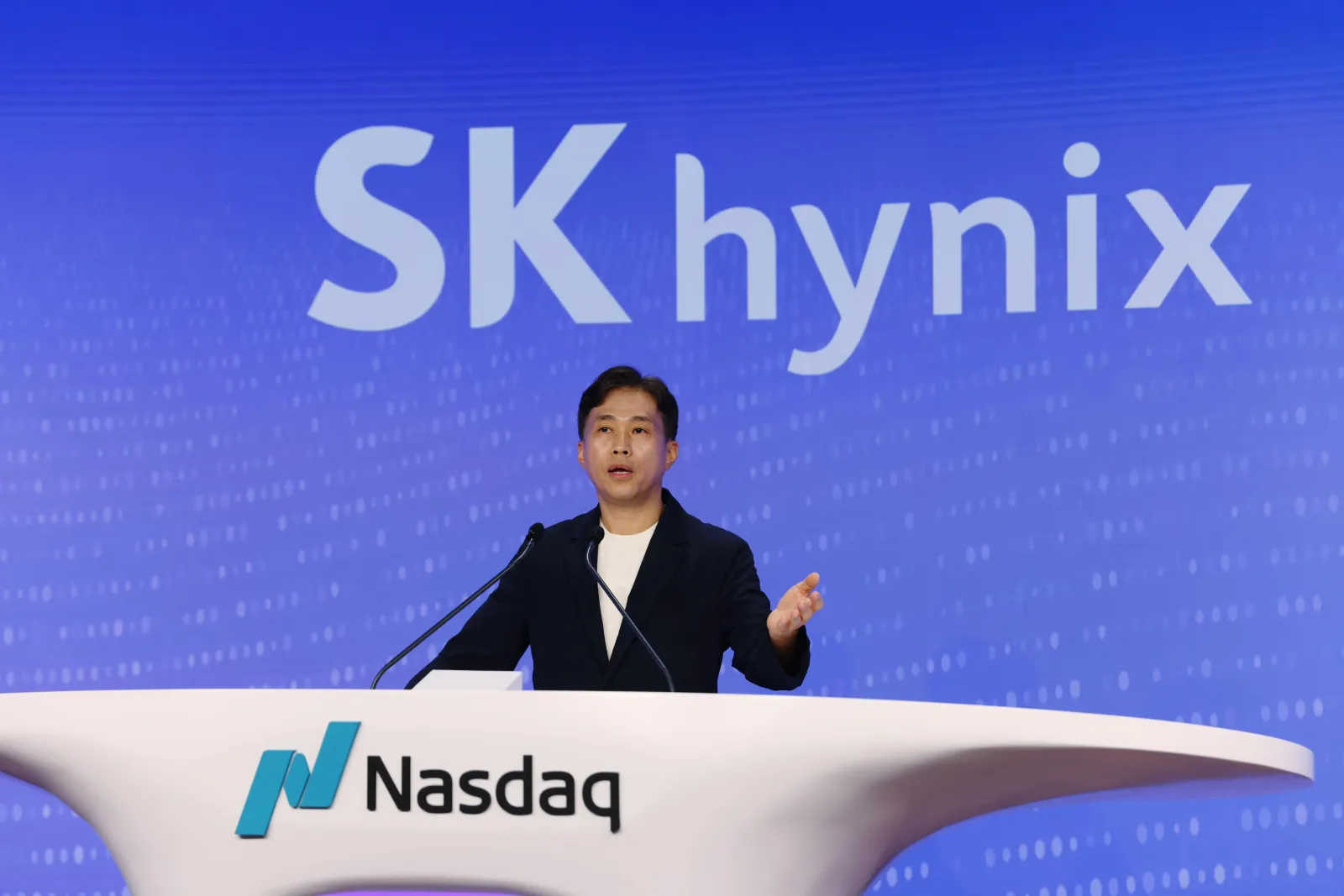
SK Hynix opens at $170, raises $26.5B, and tops foreign IPO records
In Friday's Wall Street debut, SK Hynix turns AI RAM demand into a $26.5B fundraising moment that rewrites comps.

China lands a reusable Long March booster, a first that matches SpaceX and Blue Origin
A barge landing and net-based recovery move China from theory to proof, reshaping the reusability race and satellite ambitions.

AstraZeneca $27B wipeout as Wainua late trial misses cardiovascular target
A failed late-stage heart study triggered a swift market punishment, forcing investors and boards to reset timelines and risk.