

Synthetic cell built from scratch grows, replicates DNA, and divides
A Quanta report describes a lab-made cell-like system that performs core cell-cycle functions, raising new questions for life sciences.

Biologists, for the first time, assembled nonliving components inside a membrane to create a synthetic cell-like system that grows, replicates its DNA, and divides. For decision-makers, the proof-of-concept signals accelerating capability, with ripple effects across biotech R&D, IP strategy, and future regulation.
For the very first time, researchers packed nonliving components into a cell-like membrane, assembled them piece by piece, and watched the mixture begin to behave like life. In a Quanta Magazine report, the lab-made synthetic cell grew, replicated its DNA, and divided, demonstrating basic functions of a cell cycle.
The headline event matters because it is not just “a molecule does something interesting.” It is a system that performs the core choreography of cell life in a controlled, engineered setting. The lab did not merely trigger a reaction. It built a cell-like container, put in components, and then observed growth and replication tied to DNA, followed by division. That sequence is the heart of the cell cycle, and the report frames it as a proof of concept that nonliving materials can be pushed toward life-like behavior “in the lab,” or at least something close to it.
Jack Szostak, who studies the origins of life at the University of Chicago, called the work “an impressive step.” That reaction is more than polite praise. Origins-of-life research is, by design, a hunt for plausible pathways from chemistry to biology. A credible step forward has to do more than show that life can be imitated in one narrow way. It has to show that a system can maintain itself, copy key information, and reproduce as a unit. Growth, DNA replication, and division in a synthetic setup are exactly the kinds of functions that strengthen the “how it could have happened” argument, while also giving engineers something tangible to build on.
If you are a founder, operator, or investor in life sciences, the second-order implication is not that we have a new kind of organism ready to deploy. The implication is that the engineering toolbox is getting sharper, faster. Synthetic biology already lives at the intersection of chemistry, computation, and automation, where improvements compound. A step like this suggests that assembling cellular components in membrane-like environments is becoming more than conceptual scaffolding. It is starting to deliver measurable, cell-cycle level behavior.
This also changes how boards should think about technical risk. Many biotech bets are constrained by “unknowns” that are hard to de-risk early. Here, the report describes a system built from scratch that demonstrates specific, observable functions. That shifts some conversations away from hand-waving and toward platform development: what components reliably yield growth-like behavior, what design choices support DNA replication, and what conditions enable division. Even if future systems are only incrementally more lifelike, the ability to iterate becomes a competitive advantage.
Regulatory framing is the inevitable follow-on. The work described is a lab demonstration, but it sits on the same spectrum regulators will worry about as synthetic cells become more capable. Frameworks for biological safety typically hinge on hazard and containment, not intent. As systems demonstrate more “life-like” behaviors, regulators will likely focus on factors like stability, controllability, and environmental impact. The fact that the study builds a cell-like system from nonliving components also suggests future attention on how these systems are characterized, monitored, and governed across labs.
Then there is the capital markets angle. When a field moves from “possible in theory” to “demonstrated in the lab,” funding attention tends to follow. Not because investors suddenly believe in instant cures, but because platform credibility increases. The best-funded programs often become the ones that can turn proof-of-concept into repeatable pipelines. Work that strengthens the fundamentals of replication and division can become enabling for everything from drug discovery to materials systems, even if the near-term applications remain unclear.
The strategic stakes for peers in similar roles are straightforward: capability is shifting in the direction of engineered life-like systems. If your company is building synthetic biology platforms, you will want to understand what this kind of cell-cycle behavior implies for design rules, measurement standards, and safety planning. If you are allocating capital, you should treat demonstrations like this as signals about how quickly foundational science can mature into engineering assets. And if you are on a board, the question to ask is not whether this is “life” in the philosophical sense, but whether it represents a reproducible engineering milestone that can change the competitive map over the next few years.
This story's Key Insights and Take-aways are locked.
Create a free account to unlock Executive Actions for one credit.
Register to UnlockAlways free for Executives Club members. Join the Club
More in Science
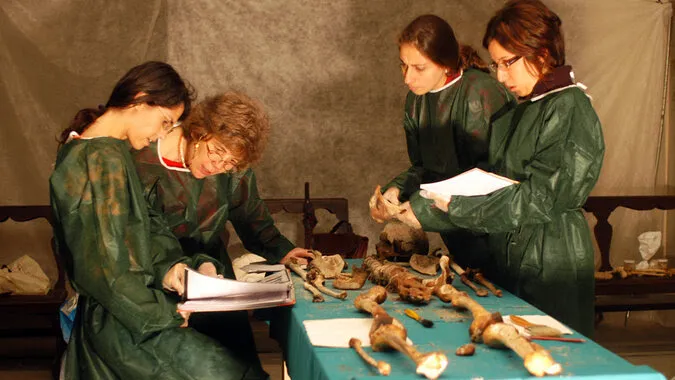
Ancient DNA clears two Medici brothers of poisoning, finds malaria in their bones
A 500-year cold case gets a DNA verdict: malaria killed Cardinal Giovanni and Grand Duke Francesco I.

Researchers convert low-energy green light to high-energy purple with high efficiency
A new acceptor molecule targets a core photocatalyst bottleneck: unused wavelengths that pass straight through.
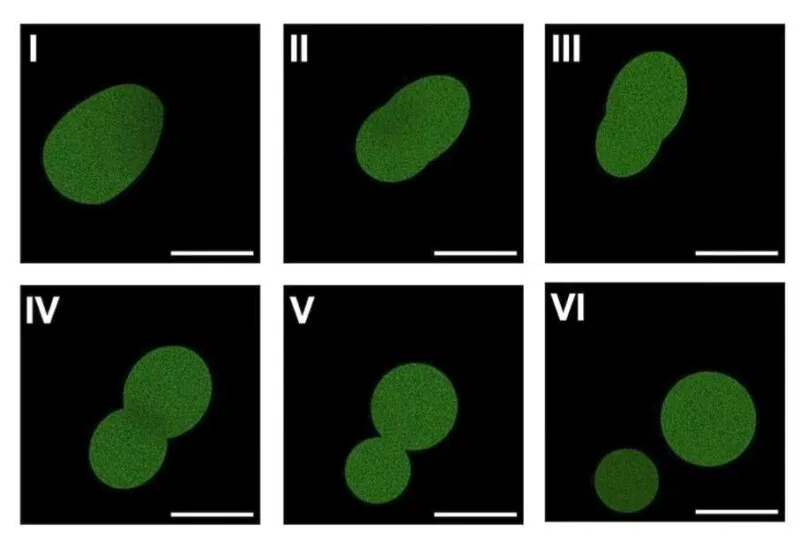
Minnesota’s Kate Adamala’s SpudCell completes a full cell cycle, without being alive
The first artificial cell that feeds, divides, and “evolves” answers what minimum life needs, and what it enables.