

Syria arrests ISIS-linked suspects over Damascus bombings during Macron visit
Damascus says it dismantled a bombing cell tied to Islamic State, including attacks during Macron’s time in the capital.
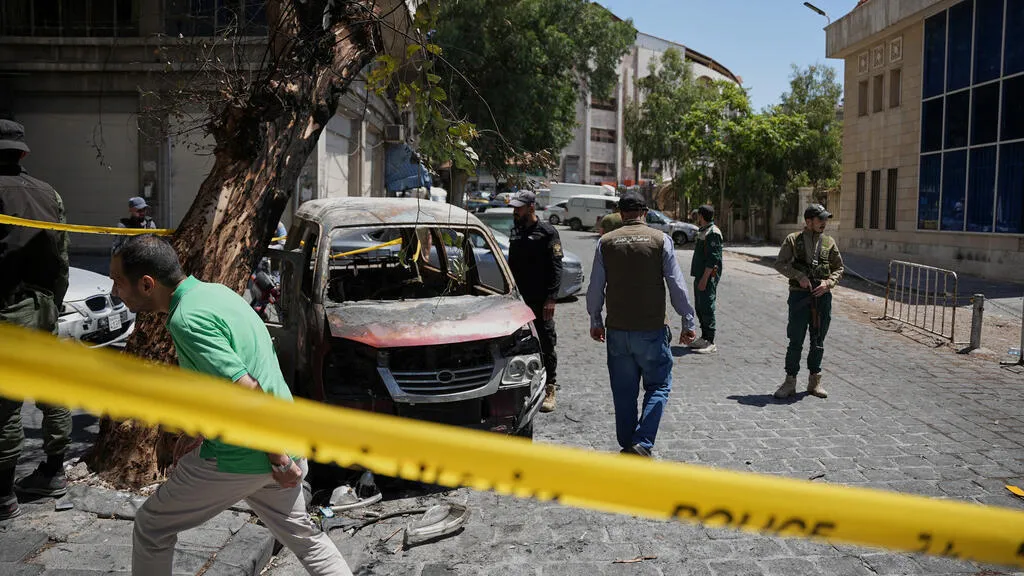
Syrian authorities, via the Interior Ministry, said they arrested several suspects accused of carrying out bombings in Damascus, including attacks during French President Emmanuel Macron’s visit this week. Security forces dismantled the entire cell, while an official blamed Islamic State, which has not claimed responsibility.
Syrian authorities said Thursday they arrested several suspects accused of carrying out bombings in Damascus, including attacks during French President Emmanuel Macron’s visit this week. The Interior Ministry said security forces dismantled the entire cell. Separate from the arrests, an unnamed official blamed Islamic State for the attacks, while noting the group has not claimed responsibility.
For decision-makers, the key detail is timing. The bombings reportedly hit during a live diplomatic moment, and Syria is explicitly tying the operation to the same organizational threat France and other governments have been tracking for years. In other words, this was not only a security incident. It was also an event with immediate political and operational spillover for any government-led engagement in the region.
What Syria is describing fits a familiar counterterrorism playbook: identify suspects, link them to a specific operational cell, and publicly claim the network was fully dismantled. The Interior Ministry statement matters because it is not vague. It says the entire cell was broken up, which is the difference between a few arrests and an attempt to prevent copycat attacks from the same pipeline of planning, logistics, and financing.
The Islamic State angle also adds a layer of uncertainty. The official blamed Islamic State, but Islamic State has not claimed responsibility. That mismatch between attribution by authorities and claims by the militant group is a recurring feature of modern terror reporting. Sometimes groups refuse to claim, sometimes they are unable, and sometimes multiple actors attempt to benefit from confusion. For executives and boards making risk decisions, that uncertainty changes how you treat the threat. You have to plan for “credible attribution” rather than “confirmed claim,” because the operational reality on the ground may still be severe even without a public confession.
For France, the stakes are sharper because Macron’s visit is referenced directly. A head of state landing in a capital is the kind of high-signal moment that typically triggers maximum scrutiny across security, intelligence sharing, and contingency planning. Syria’s framing, in which attacks occurred during that window, raises the question of whether foreign diplomatic traffic creates timing opportunities for attackers, or whether it simply concentrates attention after the fact. Either way, the second-order effect is predictable: more protective measures, more intergovernmental coordination, and more pressure on counterpart agencies.
Now zoom out to the broader business and regulatory angle. When terrorism risk spikes during internationally visible events, it tends to reverberate through systems that executives already rely on: travel advisories, sanctions compliance risk assessments, financial institution monitoring, and insurance underwriting. Even if the source story is only about arrests, the operational consequence is larger. Firms with exposure to the region must translate security news into policy quickly, including reviewing counterparties, checking for affiliations to designated groups, and updating scenario plans for disruptions.
There is also a capital markets and governance implication for boards that oversee risk. Terror incidents are not only about immediate safety. They can trigger reputational impacts, regulatory inquiries, and partner contract changes, especially for companies operating near logistics corridors, media supply chains, or energy and infrastructure projects. Public statements that claim a “whole cell” has been dismantled can reduce uncertainty for a moment, but they can also raise the internal bar. If the state says it has full dismantlement, then any later incident can be treated as proof that the threat ecosystem is still present, which pushes boards toward tighter monitoring rather than looser assumptions.
For peers in similar executive roles, the strategic stake is clear: security events linked to named diplomatic moments change your risk posture immediately. Syria’s claim that it arrested several suspects and dismantled the entire cell, combined with the official’s blame on Islamic State despite no responsibility claim, should be treated as a concrete signal to reassess threat timelines, not just a headline to file away. In environments like this, “who is behind it” and “when it happened” are inseparable. The timing relative to Macron’s visit turns a security update into an operational test for governments, contractors, and anyone with exposure to geopolitical volatility.
This story's Key Insights and Take-aways are locked.
Create a free account to unlock Executive Actions for one credit.
Register to UnlockAlways free for Executives Club members. Join the Club
More in Politics

Glacial collapse, not rain, killed 180 in Nepal's Himalayan flood
The Himalaya's extreme geography hid the true cause of Nepal's catastrophic flood, a glacial collapse that turned a geological battleground into a mass-casualty zone.

Iran’s Esmail Baghaei says Oman talks start shipping via Hormuz, not US talks yet
Temporary route plans with Oman aim to restart commerce while Tehran says Washington dialogue is not on the table.

Standards watchdog opens probe into Reform UK deputy leader Richard Tice over interests
The parliamentary standards commissioner says it began an investigation on 28 July into a possible undeclared interest.