

Taylor Swift and Travis Kelce donate $26 million to 20 charities before Madison Square Garden wedding
The couple gave $1 million-plus checks across U.S. hunger, education, animal welfare, and pediatric cancer programs, per Tree Paine.
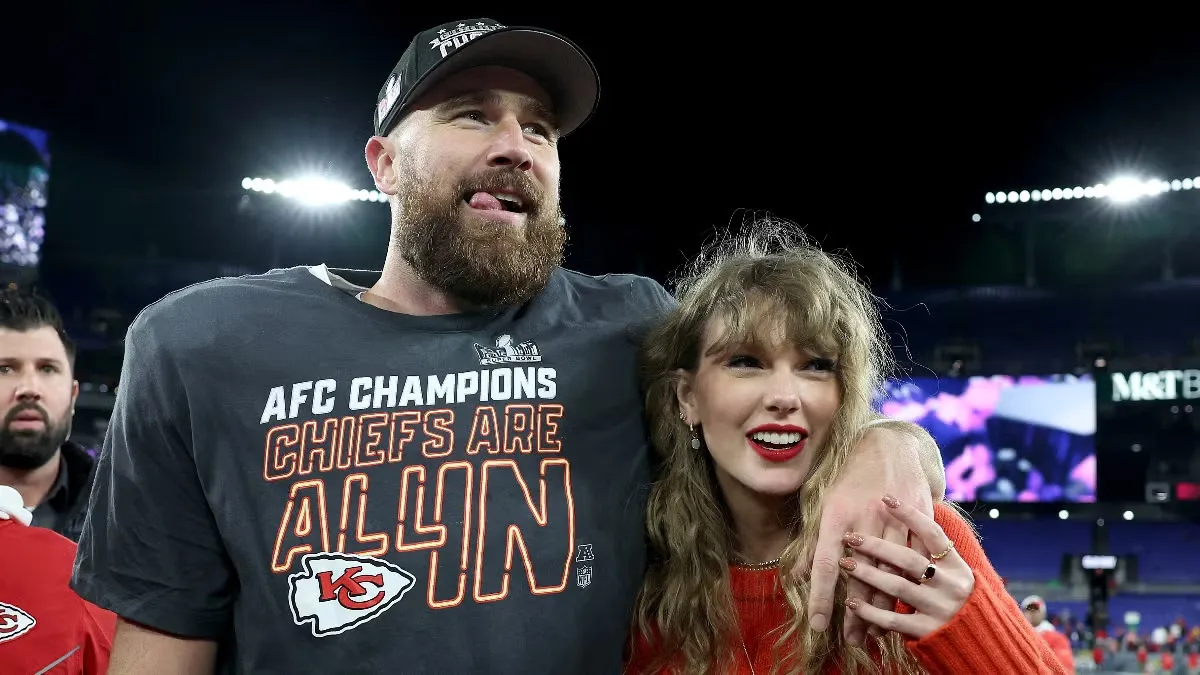
Taylor Swift and Travis Kelce, via a statement confirmed by longtime publicist Tree Paine, donated $26 million across 20 charities across the United States. For decision-makers, the move links high-visibility celebrity spending to specific community needs while the wedding itself locks in Madison Square Garden security constraints.
Taylor Swift and Travis Kelce are sending $26 million across 20 charities in the week leading up to their wedding. Tree Paine, Swift's longtime publicist, confirmed the donation in a Thursday statement, saying: “This week, Travis Kelce and Taylor Swift donated $26 million to charities across the United States.”
The list of beneficiaries is unusually specific, both geographically and by mission. It includes food security groups like City Harvest (New York City), For NYC Food Bank (New York), New York Cares (New York), and Los Angeles Regional Food Bank (Los Angeles), plus Kansas City-area hunger support through Harvesters - The Community Food Network (Kansas City, MO) and The Store Nashville (Nashville, TN) through the same run of announcements. It also spans Feeding America (National), plus Feeding America-linked regional support such as Helping Harvest (Reading, PA), and Rhode Island Community Food Bank (Rhode Island).
This is not a vague “supporting communities” headline. The charities named in the statement read like a map of particular needs: hunger relief, animal welfare, education through music, and pediatric cancer care. Examples in the source include the National ASPCA (National), Dolly Parton’s Imagination Library (National), and three education-focused organizations: Grammy In The Schools (National), Education Through Music (New York, NY), and Answer The Call (New York, NY). The arts and youth-support thread continues with Musical Mentors (New York, NY) and After-School All-Stars (New York, NY and Cleveland, OH).
The medical side is also clearly in scope. The donations listed in the source include MSK Kids, the pediatric cancer program at Memorial Sloan Kettering Cancer Center (Children & Teen and Young Adult (AYA) Programs, per the source), Hassenfeld Children’s Hospital at NYU Langone, and Children’s Mercy Hospital in Kansas City, MO. That matters because celebrity philanthropy can sometimes get criticized as performative when the recipient set is broad and hard to verify. Here, the source names named institutions and mission areas, and some organizations in the article back it up by publicly thanking the couple and stating what they received.
City Harvest CEO Jilly Stephens said in a statement that the couple’s $1 million donation was “a love letter to New York” and “a bold commitment” to efforts to ensure “that no New Yorker goes hungry.” She also linked the timing to operational pressure, saying their support came “at a critical time,” with visits to NYC soup kitchens and food pantries at “near record highs” and expected to increase “in response to federal funding cuts.” Meanwhile, Rhode Island Community Food Bank CEO Melissa Cherney called the gift “extraordinarily generous and unexpected” and said the $1 million donation would help the organization purchase and distribute “nutritious, culturally appropriate food” across Rhode Island.
Not every recipient in the story provided numbers, but at least one did: City Harvest and Rhode Island Community Food Bank both referenced the $1 million amount they received, and the article also notes that Grammy Museum thanked Swift and Kelce for “their transformative gift” supporting the museum’s work. The same coverage also includes a social post reference from “The Taylor Swift Updates” dated July 2, 2026 and embedded with the hashtag “#GRAMMYs,” along with a “Thank You” context for the donation. The point for executives is simple: these are not just donations that vanish into a press release. Some recipients are actively using the money timing to emphasize hunger and education pressures that are already showing up in daily demand.
While Swift and Kelce have not, according to the source, said anything themselves about the charities or the wedding, the wedding logistics are already very real and already spilling into public space. AP News confirmed the couple’s wedding would be at Madison Square Garden Wednesday, based on an unnamed law enforcement official briefed on the security plans. That confirmation came after outlets including TMZ and CBS News filmed outside the Midtown Manhattan arena as staging and tech crews unloaded trucks, rolled out carpets, and prepared for an event over the July 4 holiday weekend.
The security footprint is a second-order business and civic issue. The required security detail is shutting down blocks of Midtown that tourists and New Yorkers “decried as a travel hazard” during the holiday weekend, per the source. At the same time, many Swifties defended the choice, arguing Madison Square Garden offers world-class security and privacy. For leaders watching this from the outside, it’s a reminder that high-profile events are not only entertainment. They are operational problems for transportation, public safety planning, and local businesses. Celebrity scale becomes a kind of temporary regulator in practice: the event dictates how parts of the city function for days.
So what does this mean for decision-makers beyond the wedding week? First, the donation set suggests that celebrity philanthropy is increasingly measured by granularity: where the money goes, which programs it funds, and which organizations feel the impact quickly. Second, recipient statements show a narrative executives recognize from crisis funding cycles: demand rising to near record highs, expected to increase due to policy shifts like federal funding cuts. Third, the wedding itself illustrates the governance reality of major venues: security planning translates instantly into ground-level disruption, and that disruption becomes part of public perception.
In other words, Swift and Kelce are doing two things at once: writing checks with named program targets and demonstrating how massive public gatherings cascade through city operations. For founders, investors, and board members deciding how to sponsor initiatives, partner with institutions, or manage reputational risk during major moments, the lesson is not “copy the celebrity.” It is that credibility is earned by specificity, and impact is amplified when need is already measurable.
This story's Key Insights and Take-aways are locked.
Create a free account to unlock Executive Actions for one credit.
Register to UnlockAlways free for Executives Club members. Join the Club
More in Business
Comcast shares jump 25% as it plans to split NBCUniversal and Sky
The tax-free spin-off could reshape focus, funding, and competition across media and tech for years.

Bungie cuts most Destiny 2 staff as Sony says Marathon still matters
Herman Hulst confirms layoffs affecting most Destiny and some Marathon teams after Bungie admits Destiny fell short.

SK Hynix jumps 11% after seeking up to $29.4B in Nasdaq listing
The chip giant filed for a Nasdaq listing plan that could raise $29.4 billion, instantly reshaping investor expectations.