

Tencent enters talks to buy back Manus after Beijing kills Meta’s $2B deal
The agentic AI exit gets pulled back from the buyer, and boardrooms now have a clearer playbook for China regulatory risk.
Tencent is in talks to become Manus' largest shareholder after Meta agreed to buy the agentic AI startup for more than $2 billion late last year and Beijing blocked the deal on national-security grounds. The consequence: deal certainty in China AI is suddenly back on the table, with incumbents and acquirers recalibrating governance and regulatory timing.
Manus was, briefly, one of the most valuable exits in Chinese AI. Meta agreed to buy the agentic AI startup for more than $2 billion late last year, and then Beijing stepped in to block the transaction on national-security grounds.
Now the deal is being reversed in a way that matters for everyone watching China AI M&A: Manus is being bought back by the people who owned it in the first place, and Tencent looks set to become the startup’s largest shareholder as negotiations proceed. In other words, the “buyer” outcome got frozen, and the “control” outcome is shifting back toward insiders, with Tencent positioned to lead.
To understand why this is more than a corporate whodunit, you have to look at how these agentic AI companies tend to be valued. When an acquirer like Meta puts real money on the table, it signals strategic interest in capabilities like autonomous task execution, tool use, and faster iteration loops. But strategic interest does not override government scrutiny. When the state frames a national-security concern, the financial logic can get sidelined quickly, even if the price is eye-catching and the transaction is already agreed.
The “late last year” Meta agreement for more than $2 billion is the anchor fact here. It sets a benchmark for what the market thought Manus was worth, at least from one of the biggest tech platforms. Then Beijing blocks it. That sequence is the real story, because it demonstrates that in China, deal approvals are not simply a matter of corporate diligence or shareholder votes. They can be outcome-determinative events, and they can arrive after an agreement has already been publicly reached.
So what happens when that kind of block lands? The source says Manus is being bought back by its original owners, and that Tencent looks set to become its largest shareholder. That tells you something about the mechanics of control. In many cases, an acquisition that collapses does not leave a company in limbo. Instead, control reverts toward the parties who previously held it, while a new strategic investor steps in to stabilize funding and direction.
This is where Tencent’s role becomes significant for executives and board members beyond this single startup. Tencent is not described as a random participant. It is described as the potential largest shareholder coming in after the national-security block. That position matters because largest shareholders often influence board composition, governance priorities, and how aggressively a company pursues partnerships or product roadmaps that could be interpreted through a regulatory lens.
There is also a second-order implication for any acquirer thinking about China AI. When Meta can be blocked after agreeing to pay more than $2 billion, the risk is not only that you lose time. You may lose the entire transaction, and you may end up with a competitor or adjacent platform controlling the asset you tried to buy. Even if pricing negotiations happen, the gating factor is approvals shaped by national-security framing. Executives at other firms will notice that “signed and promised” is not the same thing as “closed and controlled.”
Finally, there is the investor and operator takeaway: the market can briefly reward Chinese AI exits, and then governance and regulatory decisions can yank those exits off the table. Manus’ path suggests a pattern: when a cross-border or heavyweight buyer is blocked, control can shift back to incumbents or local investors. Tencent becoming the largest shareholder is the tangible sign of that pattern in this specific case. For decision-makers elsewhere, it is a reminder that deal strategy in China increasingly needs to treat regulatory outcomes as a core scenario, not a footnote.
This story's Key Insights and Take-aways are locked.
Create a free account to unlock Executive Actions for one credit.
Register to UnlockAlways free for Executives Club members. Join the Club
More in Business
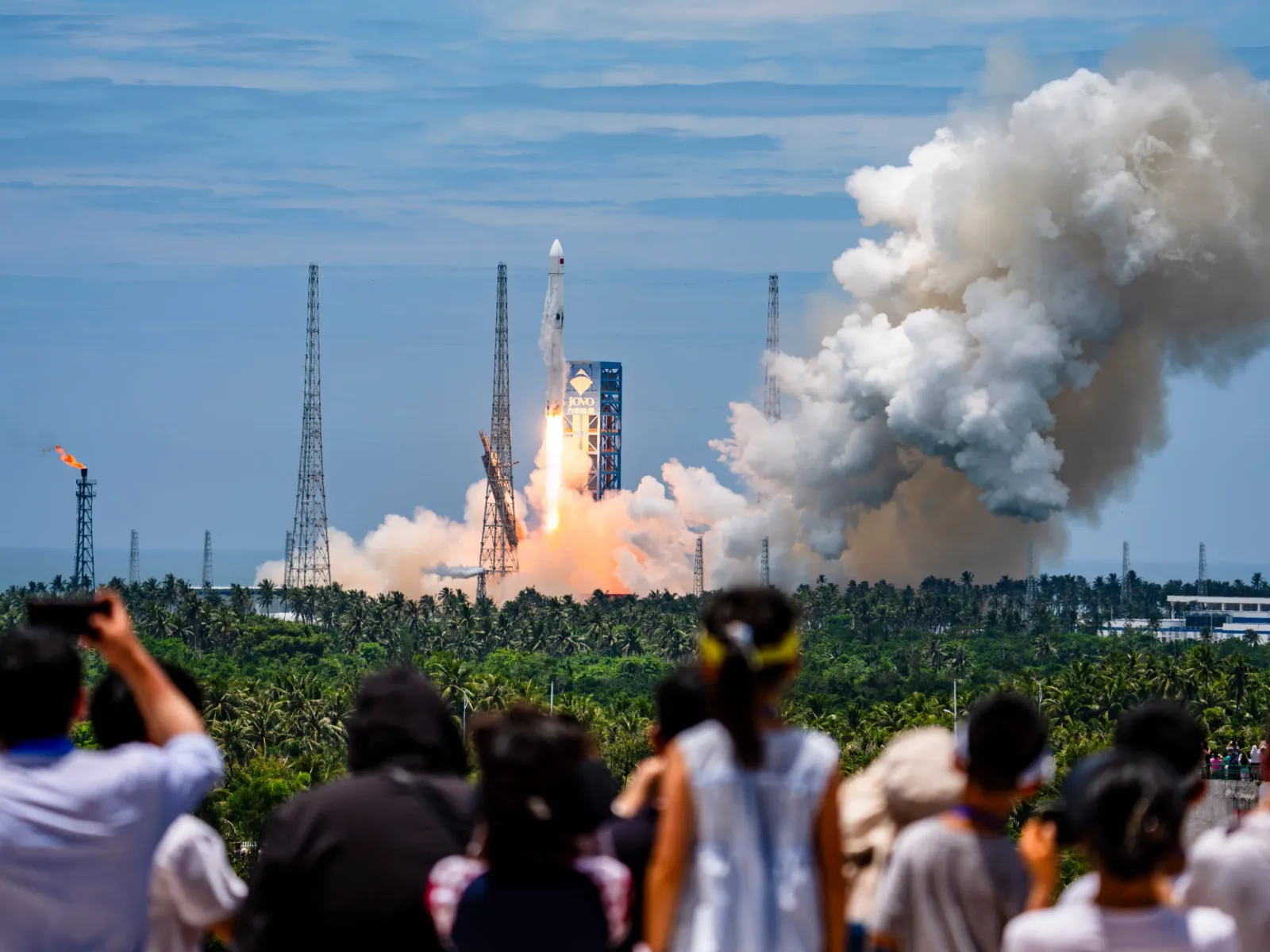
China lands a reusable Long March booster, a first that matches SpaceX and Blue Origin
A barge landing and net-based recovery move China from theory to proof, reshaping the reusability race and satellite ambitions.

AstraZeneca $27B wipeout as Wainua late trial misses cardiovascular target
A failed late-stage heart study triggered a swift market punishment, forcing investors and boards to reset timelines and risk.
Comcast shares jump 25% as it plans to split NBCUniversal and Sky
The tax-free spin-off could reshape focus, funding, and competition across media and tech for years.