

Tesla’s Robotaxi reaches Miami, removes the human safety monitor in first no-minder rollout
A Friday X announcement starts Robotaxi service in a West Miami patch, signaling Tesla’s next safety-step and regulatory test.
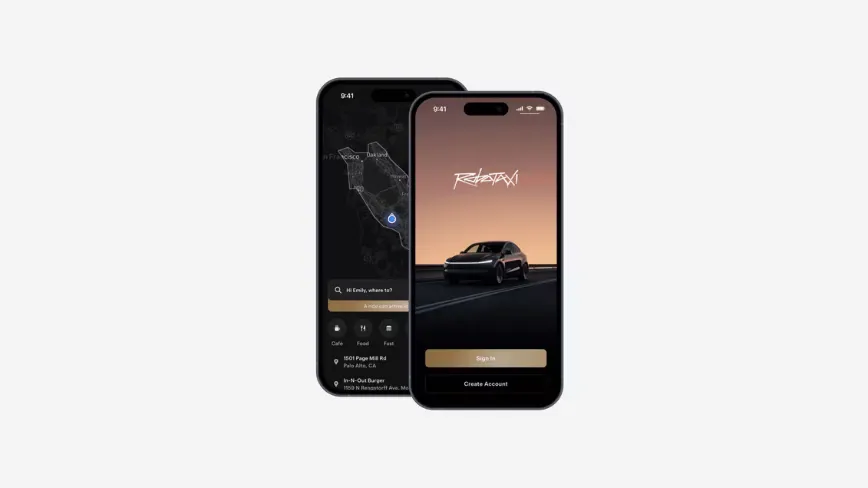
Tesla announced on X that it has started Robotaxi service in part of Miami. The rollout includes a section with no human minder in the car at all, marking a fifth US city for driverless cabs.
Tesla’s Robotaxi service just crossed another city boundary, and this time the company is quietly changing the safety model. In a Friday announcement on X, Tesla said its driverless cabs have reached a fifth US city: Miami.
The key operational shift is blunt: there is no human minder in the car at all for this Miami rollout. In the post, Tesla shared a map that showed a small patch of West Miami for the service, well away from the busy areas. In other words, Tesla is not attempting a citywide rollout on day one. It is constraining the geography, and then stress-testing the system where it can control variables like street complexity and traffic patterns.
For executives watching autonomous mobility, this matters because the “human minder” question has been more than a safety checkbox. Human oversight has historically served as a backstop when systems are unsure, confused, or simply operating outside what they have seen. Removing that backstop changes both risk and accountability. It forces the automated stack to handle the real world without someone inside ready to take over or intervene. And even if the system can technically drive, the question is whether it can do so consistently enough for regulators, customers, and other stakeholders to tolerate the remaining edge cases.
This Miami move also fits how autonomous programs tend to expand: start with a limited service footprint, then widen coverage if performance holds up and regulatory conditions allow it. The source does not specify the exact boundaries beyond calling out a small patch in West Miami, but the existence of a map is itself an important signal. Tesla is effectively telling the world where it believes the system can operate with acceptable reliability, at least for the initial phase.
Regulatory framing is the other pressure point hiding under the map. Driverless operations sit at the intersection of public safety, local oversight, and state-level rules. Even when technology leaders are confident, approvals and operating conditions typically depend on defined testing zones, reporting requirements, incident processes, and monitoring. A “no human minder” rollout can raise the stakes for regulators because it shifts more burden onto the automated system and Tesla’s operational controls. If something goes wrong, there is no longer a human inside the vehicle acting as the immediate safety layer, which may increase scrutiny on documentation, system limits, and escalation procedures.
Then there is the commercial logic. Each additional US city adds data, cost efficiency, and narrative momentum. Tesla’s claim that the Robotaxi service has reached a fifth US city is not just a milestone for press coverage. It is a scaling milestone for learning and for converting public interest into ongoing utilization. But scaling autonomous services is rarely linear. Expanding to Miami with a limited West Miami patch suggests Tesla wants the compounding benefits of more real-world miles without immediately paying the highest price of uncontrolled expansion across an entire metropolitan area.
Second-order, the biggest implication is competitive and organizational. Other companies in autonomous driving, robotaxi fleets, and adjacent “driver assistance to autonomy” transitions will view the Miami rollout as both a technical checkpoint and a governance test. Boards and investors tend to worry about two things when a company removes human oversight: reliability under messy conditions, and incident accountability. Tesla’s move implies its internal readiness is now strong enough, or its risk appetite is now high enough, to proceed with a step that reduces human redundancy.
For decision-makers, the strategic stake is simple: autonomous operators are racing not only to demonstrate that a vehicle can drive, but to demonstrate that it can drive without a human in the car, and do it in a way regulators and the public can keep accepting. Tesla has chosen Miami, selected a constrained footprint in West Miami, and started the clock on the next version of the autonomy debate. If this works, it becomes a model for future city expansions. If it runs into problems, it becomes a reference point for how regulators tighten conditions when human backstops disappear.
This story's Key Insights and Take-aways are locked.
Create a free account to unlock Executive Actions for one credit.
Register to UnlockAlways free for Executives Club members. Join the Club
More in Technology

Nvidia's $89B data center quarter: the 9 companies cashing in
The AI buildout is minting fortunes beyond GPUs, and memory, cloud, and cooling suppliers are riding the same wave.

Google quietly links your phone number to every Android account on your SIM
Adding a SIM now ties your phone number to all Google accounts - and future accounts inherit it. Here's the security and privacy stakes.

Hijacker AI 'Skynet mode' runs 100,000 attack steps against exposed models
Symantec caught a criminal AI agent that borrows other models, steals data, and mines crypto; the only relief is no confirmed victims yet.