
Tesla's steering-wheel-less Cybercab hits market by year-end amid safety probe
Tesla will sell its autonomous two-seater by end of year while federal regulators investigate whether it meets vehicle safety standards.
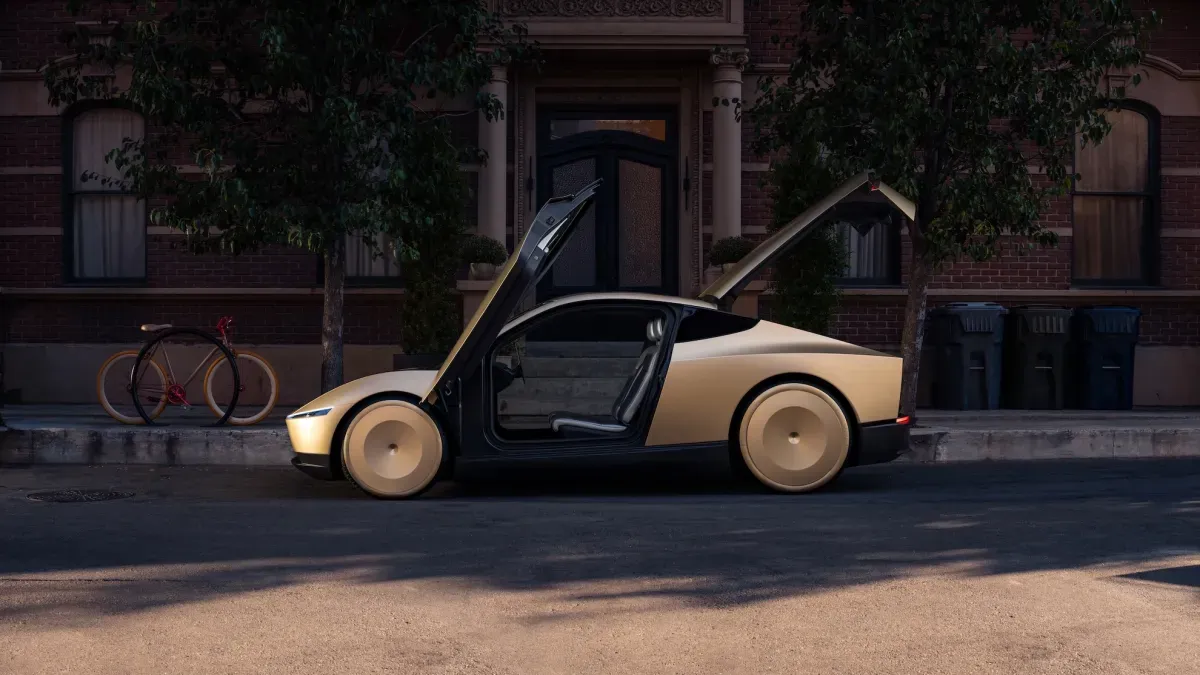
Lars Moravy, Tesla's vice president of engineering, said on the Q3 earnings call that the company will begin selling the Cybercab to customers by the end of the year. The plan puts an autonomous vehicle without a steering wheel at the center of a federal safety review, a test case for other automakers.
Tesla said Wednesday it will start selling its Cybercab to customers by the end of the year, according to Lars Moravy, vice president of engineering, on the company's third-quarter earnings call. The gold-hued, autonomous two-seater lacks a steering wheel and other traditional controls, a design that already has federal regulators investigating whether the vehicle meets vehicle safety standards. The company is pushing forward with a commercial timeline that runs directly into an open government review.
The timing is the headline. Tesla is essentially betting that it can sell a car that does not have the basic equipment drivers and regulators expect, and that the end-of-year launch can outpace the investigation. For customers, the Cybercab promises a genuinely new experience: you sit, it drives, and there is no manual fallback. For regulators, the question is whether such a vehicle can be legally sold under rules written for human-driven cars. That open question has not stopped Tesla from announcing a sales window, which forces every other player in the industry to pay attention.
Historically, U.S. vehicle safety standards have assumed a human driver at the controls. Requirements for steering columns, mirrors, and foot pedals exist because a person is expected to be able to take over in an emergency. A vehicle without a steering wheel does not fit neatly into that framework, which is exactly why the federal investigation matters. Tesla's decision to sell anyway means regulators may have to act quickly, either by granting approval, issuing a waiver, or starting an enforcement case. For automakers watching from the side, this is a live test of how far a manufacturer can push the definition of a car.
The Cybercab is a major product shift for Tesla, because it is not just an electric car with advanced software. It is a vehicle with no human control to fall back on. That changes the conversation around safety, liability, and maintenance. If the system fails, there is no steering wheel to grab. It also changes the economics of ownership, because the vehicle's sensors and software are central to its operation in a way that is different from a conventional car. Buyers will need to trust a system that has not yet received a clean regulatory stamp.
The investigation into whether the Cybercab meets vehicle safety standards is not a minor detail; it goes to the heart of whether the product can be sold. If regulators determine the vehicle is noncompliant, Tesla could face a recall, a stop-sale order, or a requirement to retrofit controls. That would be an expensive and reputationally damaging outcome. For now, the company is signaling that it will not wait for that resolution to begin marketing and sales, and the end-of-year timeline creates a concrete target for both Tesla and its critics to measure against.
Lars Moravy's comments during the earnings call put a senior engineering voice behind the plan. That matters because it signals that Tesla's leadership is aligned on the delivery goal and that investors should expect Cybercab revenue in the near term. It also gives the market a clear date to watch. If the company misses its own projection, the miss will be visible in the next earnings report. If it holds, Tesla will have sold a vehicle that many thought would require a regulatory rewrite before reaching a customer.
For executives in automotive, mobility, and policy, the takeaway is that commercial timelines are now being set ahead of regulatory clarity. The source shows a top-tier automaker willing to sell a vehicle under an active safety investigation. That is a strategic choice, not an oversight, and it could set a precedent for how other companies bring new vehicle types to market. Boards and product leaders should monitor the Cybercab's fate carefully, because the outcome will help define what is allowed on American roads and what can be sold as a truly autonomous vehicle.
This story's Key Insights and Take-aways are locked.
Create a free account to unlock Executive Actions for one credit.
Register to UnlockAlways free for Executives Club members. Join the Club
More in Business

A flaw in PHP just forced governments to pull their own sites offline
European agencies from Belgium to Germany took websites dark to patch a critical weakness in the language behind almost 70% of the web, and the blast radius extends far beyond government portals.

BioWare shuts down, Mass Effect 5 dead after $55B EA buyout
The legendary RPG studio's closure lands months after a $55 billion investment group buyout of EA, raising tough questions for gaming's biggest acquirers.
Musk barred from the room as Tesla, SpaceX boards weigh $3.5 trillion merger
The CEO of both companies is a 'conflicted party' watching independent directors negotiate a tie-up that would create a $3.5 trillion giant he would own about a third of.