

Tianqi Lithium projects up to 50x profit surge after Shenzhen filing Tuesday
First-half net profit forecast ranges from 2.85 billion yuan to 4.25 billion yuan, driven by lithium demand.
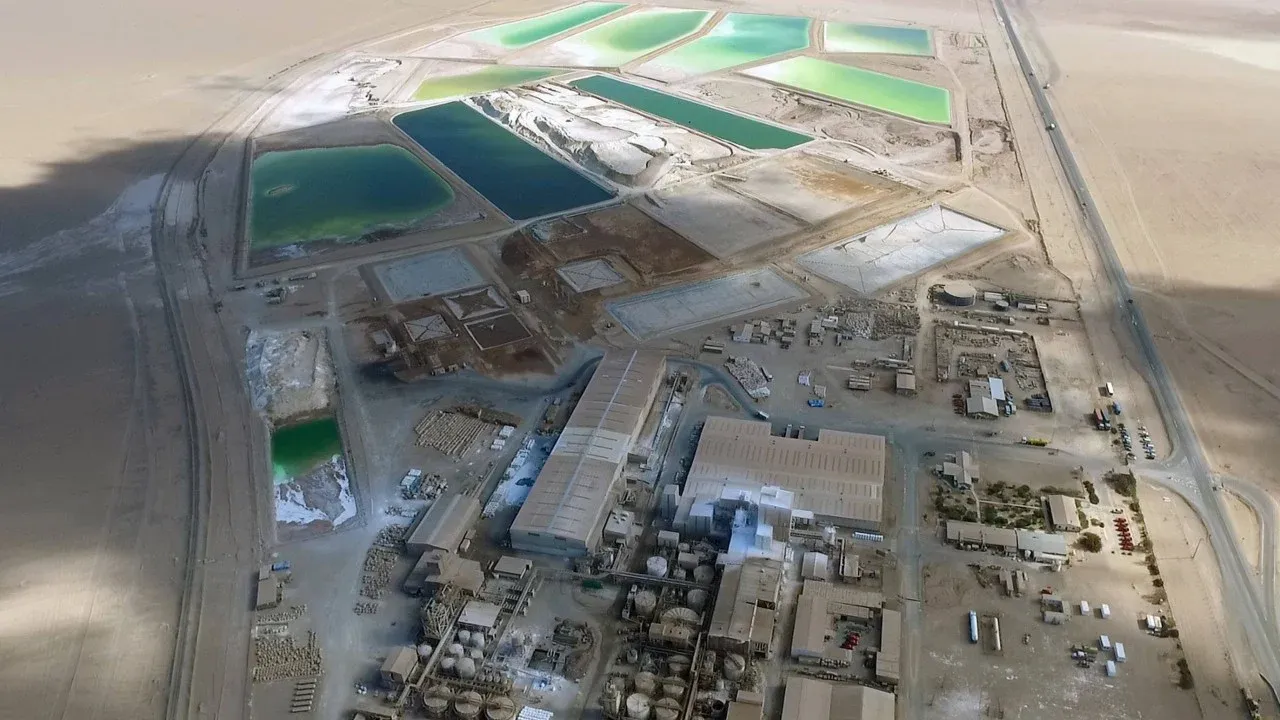
Tianqi Lithium told the Shenzhen Stock Exchange Tuesday night that its net profit for the six months ended June 30 is expected to land between 2.85 billion yuan (US$420 million) and 4.25 billion yuan. The filing signals how aggressively China’s top lithium producers are positioned for the energy transition boom and what that does to planning for peers.
Tianqi Lithium says its first-half profits could jump as much as 50 times, according to a Shenzhen Stock Exchange filing posted Tuesday night. For the six months ended June 30, the company estimated net profit of between 2.85 billion yuan and 4.25 billion yuan, equivalent to US$420 million for the lower bound mentioned in the filing. The year-on-year increase, the company projected, ranges from 3,276 per cent to 4,935 per cent.
That is the headline math, and it matters because it is not a gentle bump. It is a profit explosion forecast tied directly to the energy transition, with the SCMP report framing it as a product of global demand driven by energy independence. In plain terms: when electric vehicles, grid upgrades, and battery supply chains ramp up, lithium producers are often the first beneficiaries. But they are also the ones most exposed when demand expectations change, or when pricing moves faster than costs.
Tianqi Lithium is not operating in a vacuum. SCMP notes the broader context that China’s two largest lithium producers are set to report soaring earnings in the first half of the year. That matters because when the biggest players in a commodity-linked supply chain both signal extreme upside, it tends to shape market expectations for the entire sector, from miners to converters to battery materials companies. Even if you are not directly holding lithium equities, this kind of guidance can ripple into how investors price the whole energy transition trade.
The timeline in the filing is also a clue to what executives will watch next. The company is reporting expectations for the six months ended June 30, using a filing lodged with the Shenzhen exchange on Tuesday night. In public markets, that sequencing means competitors and counterparties have less time to react than they would with a slower cadence. If you are a board member, a CFO, or a procurement leader at a battery supply chain partner, these quick turns affect everything from inventory planning to contract negotiations and capex timing.
Profit forecasts of this magnitude are also a reminder that “energy transition” is not just a policy phrase. It is an operating environment that can materially swing earnings for producers. Tianqi’s projected net profit range, and the implied year-on-year surge of 3,276 per cent to 4,935 per cent, suggests either a sharp improvement in pricing, better margins, stronger volume, or some combination of those factors compared with the prior year period. The SCMP report ties the upside to global demand linked to energy independence, which is consistent with the idea that the market for lithium is pulled by geopolitical and infrastructure considerations as much as by domestic consumption.
Another second-order issue for decision-makers is how these forecasts influence bargaining power. When producers anticipate much higher profits, they may prioritize output allocation, renegotiate terms, or seek financing that locks in upstream access. That can put pressure on downstream players who are trying to secure stable supply at predictable costs. Boards at battery makers or EV supply chain companies typically need to plan for volatility, because commodity-linked inputs can turn quickly from “manageable” to “margin-shredding.”
There is also the capital-market signaling angle. SCMP’s framing that China’s two largest lithium producers are projected to deliver soaring earnings in the first half of the year sets an expectation that the sector’s financial performance is catching up to the demand story. When the biggest names confirm the boom in filings, other companies often face pressure to align their own guidance cycles, even if their operational realities differ. For executives, the challenge is to avoid being trapped by consensus expectations while still delivering enough visibility to satisfy investors.
Finally, the strategic stakes are wider than one company’s earnings forecast. Lithium is a bottleneck input in the energy transition supply chain. If demand is strong enough to drive a forecast like Tianqi’s, it can encourage more investment upstream, intensify competition for resources, and accelerate downstream processing and battery buildout. At the same time, extreme year-on-year comparisons, like the ones projected here, can reverse just as fast if market pricing or demand assumptions shift. The best-run teams use signals like this to stress-test plans, not to bet the farm on a straight-line outcome.
This story's Key Insights and Take-aways are locked.
Create a free account to unlock Executive Actions for one credit.
Register to UnlockAlways free for Executives Club members. Join the Club
More in Business

T. rex sells for $50M, eclipsing Ken Griffin’s $44.6M stegosaurus to set auction record
The $50 million T. rex sale makes it the priciest dinosaur fossil ever auctioned, reshuffling the “trophy” market.
SK Hynix opens at $170, raises $26.5B, and tops foreign IPO records
In Friday's Wall Street debut, SK Hynix turns AI RAM demand into a $26.5B fundraising moment that rewrites comps.

China lands a reusable Long March booster, a first that matches SpaceX and Blue Origin
A barge landing and net-based recovery move China from theory to proof, reshaping the reusability race and satellite ambitions.