

Time's up: Scientists vote to end leap seconds
The world's timekeepers just approved a 'leap hour' that lets clocks drift a full hour from Earth's rotation. Here's what breaks.
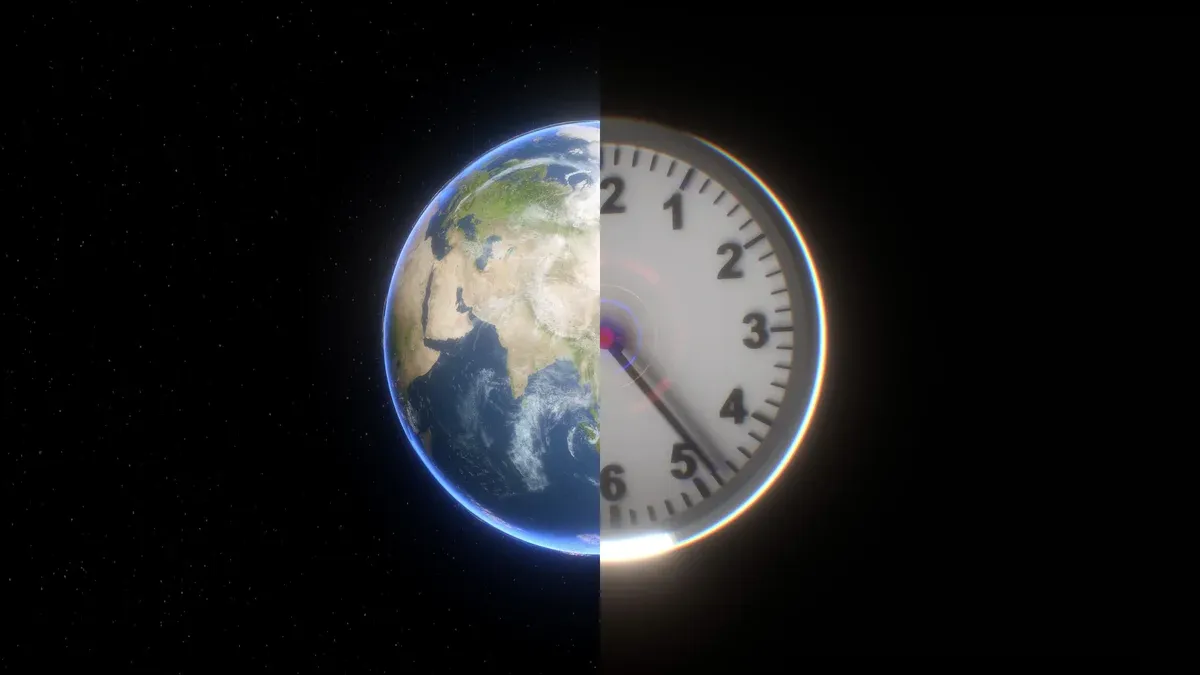
The global body that governs timekeeping voted to abolish leap seconds, replacing them with a 'leap hour' that allows official time to drift up to 60 minutes from Earth's rotation. For operators of financial markets, telecom networks, and satellite systems, this ends a decade of clock-reset chaos but introduces a new era of drift that engineers must design around.
The world's timekeepers just voted to end the leap second, the tiny clock adjustment that has been crashing websites, confusing GPS systems, and forcing engineers into a global game of whack-a-mole since 1972. In its place, they approved a system called the "leap hour," which will allow Earth's rotation and official time to fall out of alignment by a full hour before any correction is made. The decision, made at a meeting of the scientific body that governs time, effectively redefines how the world keeps time - and it will ripple through every industry that depends on precise synchronization, which is to say, nearly all of them.
Here is the problem the leap second was trying to solve. Earth's rotation is not constant; it wobbles, slows, and speeds up due to tidal friction, seismic activity, and the movement of molten iron in the planet's core. Atomic clocks, meanwhile, tick with near-perfect regularity, and since 1972 the world's official time scale - Coordinated Universal Time, or UTC - has been a compromise between the two. When the difference between atomic time and Earth's rotation approached 0.9 seconds, timekeepers inserted a leap second, usually on June 30 or December 31. The result was a minute with 61 seconds, and a recurring headache for anyone running a system that assumed time only moves forward.
That headache was not theoretical. In 2012, Reddit went down for about 40 minutes when a leap second caused a server load spike. In 2015, the leap second took out parts of the global financial system, forcing exchanges and data providers to halt trading or delay the close. In 2017, Cloudflare's network partially failed, and in 2020, the leap second caused problems for a number of internet services. The cost of these disruptions was measured in lost transactions, degraded services, and engineering hours spent patching systems that were never designed to handle a second that did not exist. For a world that increasingly runs on continuous, always-on digital infrastructure, the leap second had become a liability.
The new system, the leap hour, takes a radically different approach. Instead of correcting the drift every time it approaches one second, timekeepers will let the gap between Earth's rotation and atomic time grow to as much as 60 minutes. Only when the discrepancy reaches a full hour will a correction be applied. That means the next adjustment could be decades away, and possibly more than a century, depending on how Earth's rotation behaves. In the meantime, official time will slowly drift away from solar time - the time measured by the position of the sun in the sky - by up to an hour. For most people, that will be imperceptible in daily life, but for systems that rely on precise time, it is a fundamental change in how time is defined.
The vote is a significant departure from the status quo, and it did not happen without debate. The scientific body that made the decision has been wrestling with the leap second for years, and the vote to end it reflects a growing consensus among technologists that the cost of the leap second outweighs its benefits. The leap hour is a compromise: it preserves the link between time and Earth's rotation, but loosens it enough to avoid the constant disruptions. The decision also acknowledges a practical reality: the world's timekeeping infrastructure is now built around atomic clocks, and the Earth's rotation is no longer the reference that matters most for the systems that run the global economy.
For executives, the implications are immediate and strategic. Financial markets, which depend on timestamped transactions to settle trades and detect fraud, will no longer have to worry about a 61-second minute breaking their systems. Telecom networks, which use time synchronization to coordinate data transmission, will gain a more stable reference. Satellite navigation systems, which rely on precise time to calculate positions, will need to account for the growing drift between UTC and Earth's rotation, but they already have mechanisms to handle that. The bigger shift is cultural and operational: for the first time in half a century, the world's official time will be allowed to drift from the sun, and the systems that run modern life will have to be built around that reality.
The leap hour also raises a question that goes beyond engineering: what does it mean for time to be "correct"? For most of human history, time was defined by the Earth's rotation - a day was a day because the sun rose and set. The leap second was a way to preserve that link, even as atomic clocks became the more accurate measure. By voting to end the leap second, the world's timekeepers have effectively chosen atomic time as the primary reference, with Earth's rotation as a secondary concern that only matters when the drift becomes extreme. That is a philosophical shift as much as a technical one, and it will shape how future generations understand the relationship between the clock and the planet.
For the executives reading this, the takeaway is not about the science; it is about the systems you run. If your organization depends on precise time - and it does, whether through financial transactions, data logging, network synchronization, or supply chain coordination - the end of the leap second removes a recurring source of operational risk. But the leap hour introduces a new one: drift. Over the coming decades, the gap between official time and Earth's rotation will grow, and any system that assumes they are aligned will eventually be wrong. The smartest move is to design for drift now, before the next correction comes, and to treat the leap hour not as a curiosity but as a change in the fundamental infrastructure of the modern economy.
This story's Key Insights and Take-aways are locked.
Create a free account to unlock Executive Actions for one credit.
Register to UnlockAlways free for Executives Club members. Join the Club
More in Science
France euthanized Félicette, the first cat in space, two months after her flight
Félicette's 1963 flight made France a space-race player, but her euthanasia and a crowdfunded statue reveal how high-risk programs are remembered.
Ultracold atoms just created a 'fractional Fermi sea' that breaks quantum rules
A new quantum state challenges decades of theory and hints at 'super-Fermions,' with real stakes for quantum computing and materials science.

Bangladesh's 202,000 measles cases are a 'real warning' to other nations
The world's worst measles outbreak is spreading as routine vaccination falters. Here is why every country's immunization program should pay attention.