

Trump DOJ paused anti-bribery enforcement, but FBI probe into Argentina soccer rolls on
A Florida investigation into Argentina's football federation tests whether the Justice Department will cross borders now.
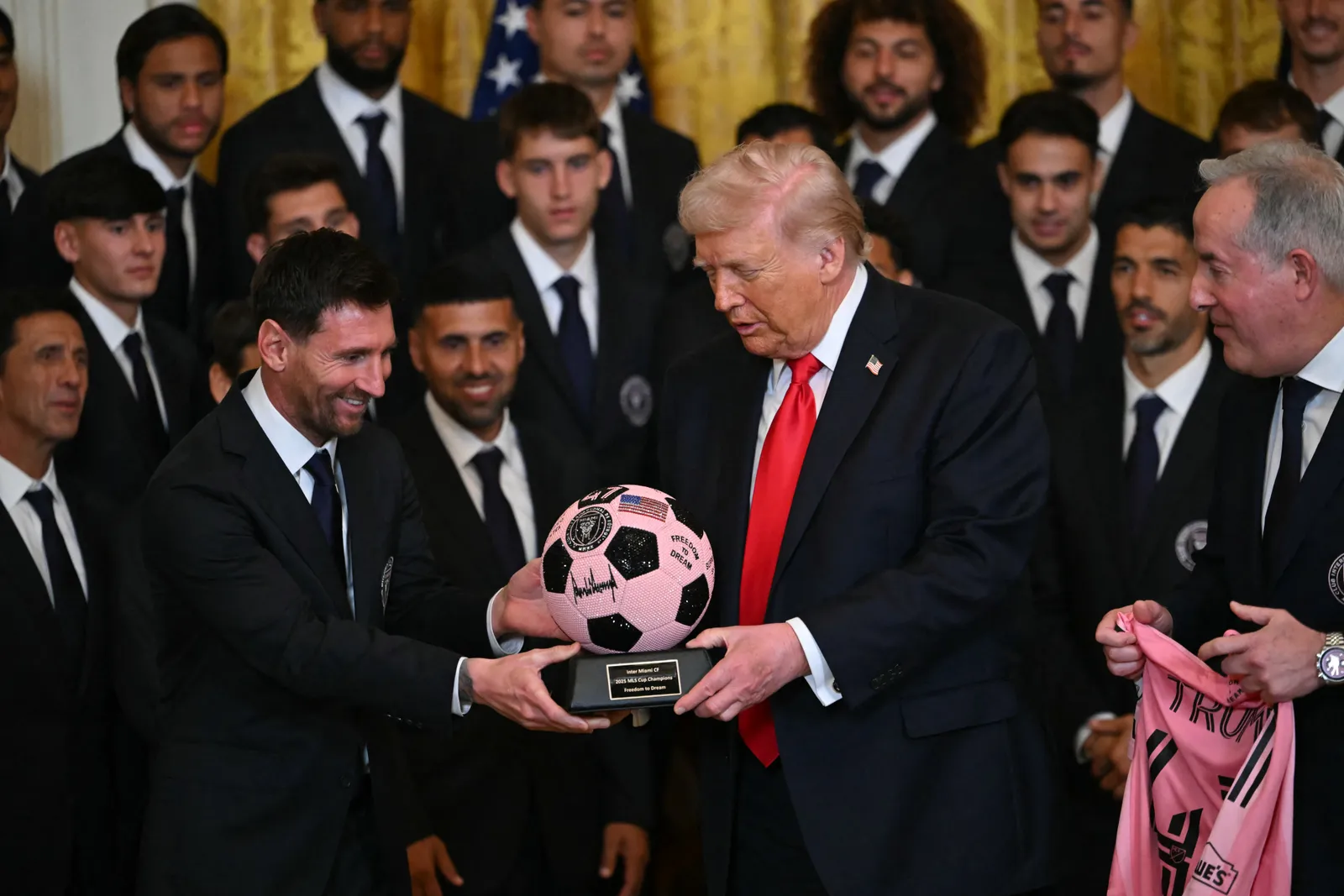
Federal prosecutors are investigating alleged corruption tied to Argentina's national soccer body, with reporting that U.S. prosecutors questioned a key businessperson by Zoom. The probe has implications for how Trump-era enforcement of the Foreign Corrupt Practices Act (FCPA) will treat overseas corruption.
If you thought the Trump Justice Department was turning the volume down on overseas bribery cases, a Florida FBI investigation into Argentina's national soccer body is a useful reality check. Reports say federal prosecutors questioned a key businessperson by Zoom earlier this month, as Argentina kept playing a strong World Cup run powered by Lionel Messi. The Miami Herald also confirmed parts of the probe, which is reported to focus on TourProdEnter LLC, a Florida-based company that handled promotional deals for the Argentine Football Association. Argentina's federation and people linked to TourProdEnter have denied wrongdoing, and no charges have been filed.
The tension in the background is the policy pivot. After President Donald Trump returned to office last year, he paused for several months all enforcement of a U.S. law that makes it a crime to bribe foreign officials overseas, the Foreign Corrupt Practices Act. Trump previously called it a “horrible law.” Incoming Justice Department officials said prior administrations used the statute to bring criminal cases over alleged corruption that had little connection to the U.S. This Argentina probe matters because it sits right on the fault line between “too little U.S. connection” and “enough U.S. footprint to matter,” and the facts are still developing.
Here’s what we do know from the reporting. Argentina’s La Nacion newspaper reported Wednesday that U.S. prosecutors questioned a key businessperson by Zoom earlier this month, while the World Cup storyline was still unfolding. The Miami Herald confirmed aspects of the probe, including the reported involvement of TourProdEnter LLC, described as Florida-based and responsible for promotional deals for the Argentine Football Association. It’s also notable that the reporting says the moves involve at least three Justice Department prosecutors. The FBI declined to comment, and the Argentine Football Association did not respond to a request to comment.
So what makes this more than just sports headlines? The FCPA is not a niche law. It is one of the U.S. government’s most powerful tools for policing bribery that crosses borders, but it has always raised a recurring question: how much of the conduct must tie back to the United States to justify a U.S. criminal case? When enforcement gets paused or narrowed, companies with any international exposure can immediately feel it. That’s because compliance programs often scale up or down with perceived enforcement intensity, and boards want to know whether the legal risk horizon moved, even if the statute didn’t.
This is also not the first time soccer has been a magnet for FCPA attention. The source notes that cases faced criticism after a series of prosecutions that began more than a decade ago under former President Barack Obama’s administration into corruption in international soccer. Those prosecutions led to convictions for a dozen people. The probe, led by federal prosecutors in Brooklyn, New York, toppled FIFA’s leadership. Appeals in some of the cases have dragged out, including a May court appearance by Joseph Nocella, the U.S. Attorney in Brooklyn, who personally explained why the Justice Department wanted to drop a case against a former Fox television executive. That executive had been convicted for paying bribes for soccer broadcast rights, then had that conviction initially thrown out and later reinstated by an appeals court. Nocella said the administration had higher priorities, including counterterrorism, national security, drug and human trafficking, and violent gangs, according to the Associated Press report cited in the source.
That background matters for executives because enforcement is not just about whether conduct is illegal. It is also about enforcement bandwidth and prosecutorial triage. The Argentina probe is reportedly ongoing, but it is unclear whether it is proceeding because a significant part of the activities under investigation took place in the U.S., or because some other wrongdoing has been uncovered that makes the case more attractive under current Justice Department policy. That uncertainty is the point. When there is a pause, and then a gradual shift, lawyers and compliance teams often need to infer the new boundary conditions: What counts as sufficient U.S. nexus? What kinds of evidence, entities, or fact patterns get prioritized?
There is a business-world second-order implication here for any company doing international promotion, sponsorship, media rights, or sales through U.S.-based intermediaries. If your commercial partner is based in Florida, uses U.S. platforms, or routes contracts through U.S. entities, you are no longer dealing with a purely “overseas” issue. The fact pattern described in the source, centered on TourProdEnter LLC’s role in promotional deals for the Argentine Football Association, is exactly the sort of structure that can pull U.S. investigators into the orbit even when the underlying sports organization is abroad. And when no charges have been filed yet, the real risk becomes reputational, discovery-driven, and board-visible before it becomes courtroom-visible.
Finally, the strategic stake for decision-makers in regulated industries is this: enforcement posture changes can be temporary, but legal exposure does not. The FCPA pause and the stated critique that prior administrations used the statute for cases with little U.S. connection tells you the government is thinking differently about cross-border cases. The open question is whether the government will reserve FCPA action for cases with clearer U.S. ties, or whether it will still pursue overseas corruption aggressively when investigators find a compelling trail. Right now, the Argentina investigation suggests a “wait and see” policy is not the same as a “case closed” policy. Boards and executives should treat that distinction as material.
This story's Key Insights and Take-aways are locked.
Create a free account to unlock Executive Actions for one credit.
Register to UnlockAlways free for Executives Club members. Join the Club
More in Business

SK Hynix opens at $170, raises $26.5B, and tops foreign IPO records
In Friday's Wall Street debut, SK Hynix turns AI RAM demand into a $26.5B fundraising moment that rewrites comps.

China lands a reusable Long March booster, a first that matches SpaceX and Blue Origin
A barge landing and net-based recovery move China from theory to proof, reshaping the reusability race and satellite ambitions.

AstraZeneca $27B wipeout as Wainua late trial misses cardiovascular target
A failed late-stage heart study triggered a swift market punishment, forcing investors and boards to reset timelines and risk.