
Trump endorsement can’t close the door in South Carolina’s Graham seat scramble
A newcomer backed by Trump faces a crowded GOP field, eligibility questions, and a test of whether MAGA dominance is fading.
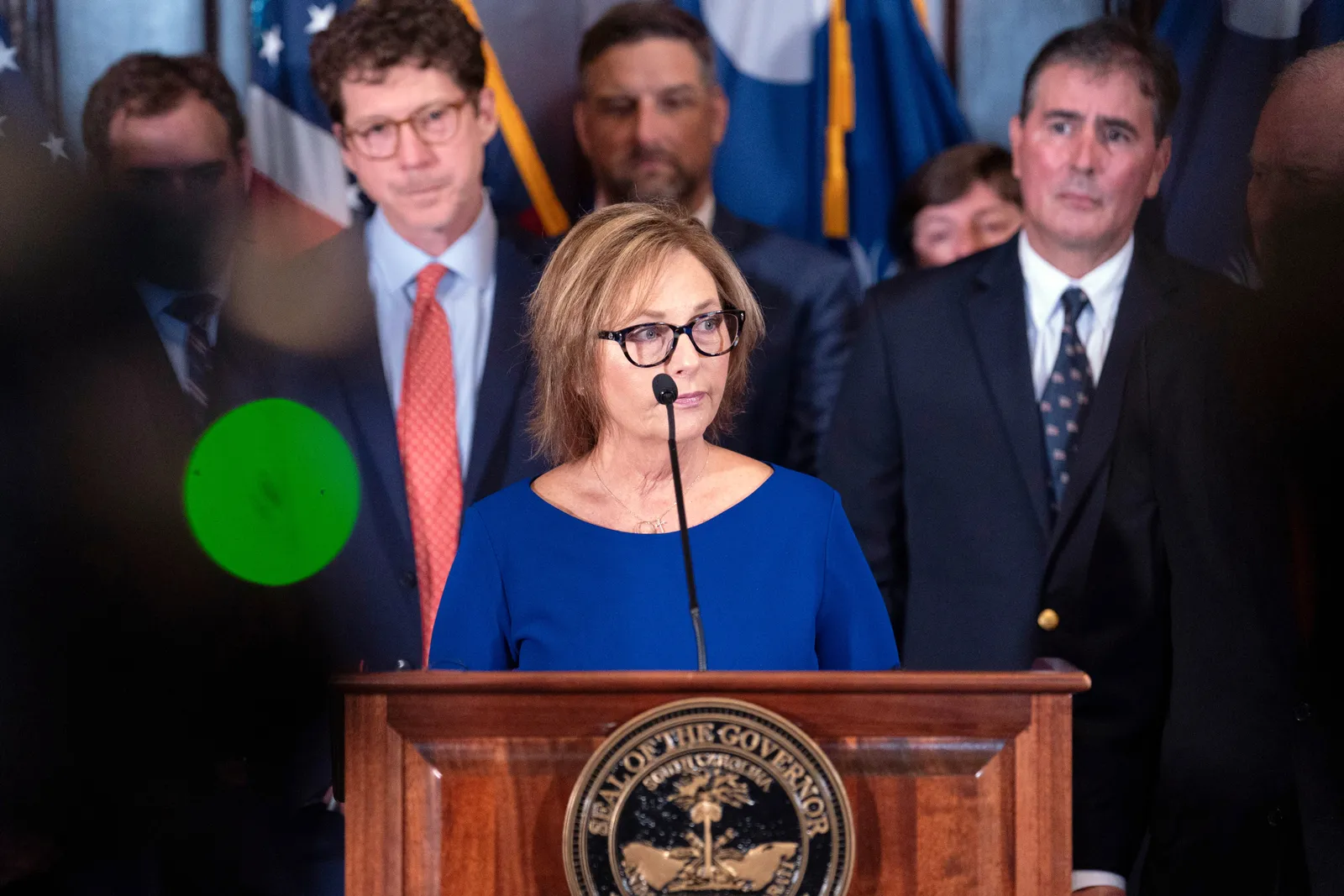
President Donald Trump’s endorsement of Darline Graham for the full term of Lindsey Graham’s seat has not stopped multiple Republicans from entering the race. The shakeup is putting Trump’s clout in South Carolina under a real stress test, with eligibility rules and prior endorsement outcomes shaping how quickly the field consolidates.
South Carolina Republicans just tried to treat a Trump-backed candidate like a done deal. It isn’t working.
Sen. Darline Graham, appointed last week to fill the remainder of her late brother Lindsey Graham’s term, announced Monday that she will seek a full term in the U.S. Senate. And yes, Trump backed her, with his endorsement expected to scare off challengers. But other Republicans are still jumping in, arguing the field is too open, the candidate is too untested, and they may have a window before the state GOP fully rallies behind the MAGA lane Trump drives.
“We don’t know how she votes. We don’t know what she believes,” said CJ Westfall, chair of the Dorchester County GOP. His point is blunt, and it goes to the heart of why this race matters beyond South Carolina trivia. Westfall said that after seeing Trump “jump in and support her,” “95 percent are saying, ‘What the hell are we doing here? We don’t know how she votes. We don’t know what she believes.’” The dynamic is a real-time referendum on whether direct presidential endorsement still shuts down competition, or whether Republicans have started to treat endorsement like just another input in a messy primary ecosystem.
That mess is already visible on the filing calendar. Rep. Russell Fry, one of Trump’s most loyal congressional allies, announced earlier Monday he was jumping in. He joins Rep. Ralph Norman, who declared his candidacy over the weekend, and self-funding businessman Mark Lynch, who lost to Lindsey Graham in the primary. Other Republicans are also considering runs, including former Gov. Mark Sanford and Lt. Gov Pam Evette, who lost her own bid for governor a few weeks ago even though Trump had endorsed her.
This is not the first time Trump’s endorsements have pushed a preferred candidate through a contested primary. The source notes that Trump’s endorsees have “largely won their primaries,” and that the MAGA movement remains the dominant force in South Carolina politics. The key twist is that South Carolina results tied to Trump are also described as “murkier.” Evette’s gubernatorial run is the example given: Trump backed her early, then later offered a last-minute dual endorsement to also back Attorney General Alan Wilson. Wilson beat Evette in the runoff by more than 30 points. The story frames this as part caution, part scoreboard, and part explanation for why challengers believe a Trump-backed field is not automatically locked.
Norman, for his part, is leaning into Trump’s favor while using the uncertainty to his advantage. He told reporters on Monday that Trump’s endorsement “helps a great deal,” and added, “That’s why I asked him for it.” In Fry’s launch video, he positioned himself as a Trump-aligned “MAGA warrior,” including pictures of him grinning alongside the president. Fry campaign spokesperson Luke Byars said in a statement that Fry has “been honored to receive President Trump’s endorsement” in past elections, and that the campaign’s focus for the next three weeks is ensuring South Carolina has a “conservative fighter” who will advance the president’s agenda.
The most interesting complication may not even be the candidates, though. It is the eligibility question wrapped around Graham’s path to running. A South Carolina GOP rule adopted earlier this year requires candidates for office to have voted in at least two of the past three statewide GOP primaries. The catch: the story says local outlet FITSNews reported that Darline Graham voted in the 2024 GOP runoff but not in the 2022 or 2024 GOP primaries. Whether the 2024 runoff vote counts as a “primary vote” under the new rule is the key issue. The Dorchester County Republican Party announced it was formally requesting the state party’s rules committee review of Graham’s eligibility. South Carolina GOP chair Drew McKissick said Monday he had not looked at the issue yet because the filing window does not open until midday Tuesday, so no one had officially filed to run. He added that the party would review candidates’ information and “official voting records from the state election commission” when filings come.
Meanwhile, Graham’s campaign says she meets the state requirement to file as a Senate candidate and is “qualified to run because she has real experience leading.” Her spokesperson Abby Zilch also said there were no conversations around her appointment that were contingent on serving only the remainder of Lindsey Graham’s term, describing her as a “strong conservative” who wants to build upon her brother’s legacy.
And then there’s the broader strategy inside the Senate and House, where this special election could ripple. On Capitol Hill, Senate Majority Leader John Thune said he would stay out of the August 11 special election, calling Darline Graham a “strong candidate” but saying, “I’ll let voters in South Carolina decide it.” At the same time, other senators are diving in: Sens. Mike Lee and Rick Scott, staunch allies of the president, announced their support for Norman over the weekend, publicly bucking Trump to back one of the House’s most conservative members. Both Lee and Scott cited Norman’s support for the Save America Act, the election reform bill described as a central focus for Trump.
Norman also raised an institutional risk that matters to House leadership planning. He suggested that Fry could jeopardize Republicans’ House majority if Fry wins the special election for the Senate seat, because the state would then have to call a special election to fill his House seat, potentially leaving his seat empty until May 18th. GOP Rep. Nancy Mace announced Monday she would not enter the race.
So what is the “test” actually measuring? Not just whether Trump can pick a winner. It is whether his endorsement still forces the GOP to stop second-guessing. Darline Graham has instant credibility from being Lindsey Graham’s appointed successor and from Trump’s backing, but her lack of prior elected experience and the early expectation she would only be a caretaker until her brother’s term ended in January have created skepticism. If multiple Republicans can compete credibly even after Trump’s endorsement, it suggests the South Carolina GOP may be shifting from “endorsement decides it” toward a more traditional contest over vote-rich credibility, eligibility certainty, and coalition signaling.
For executives, founders, and investors watching politics like a market, the second-order implication is simple: endorsements can still move people, but they are no longer guarantees. When eligibility rules, internal party rules, and candidate track records can all complicate consolidation, the “brand power” of a leader becomes a starting line, not a finish line.
This story's Key Insights and Take-aways are locked.
Create a free account to unlock Executive Actions for one credit.
Register to UnlockAlways free for Executives Club members. Join the Club
More in Politics

LA County: DOJ's 20,000 'noncitizen' voter list is 'unreliable,' includes U.S.-born
Preliminary review by Los Angeles County election officials finds errors in the federal list, raising the stakes for voter roll integrity ahead of November.

Trump's $1.5B Pentagon chip investment lands in North Carolina
A $1.5 billion defense infusion for North Carolina chipmaking signals a new era of Pentagon-backed reshoring - here's what it means for the industry.

Nigeria confirms first Ebola case in Abuja, a woman just off a Uganda flight
Health Minister Muhammad Ali Pate says the patient flew in from Uganda, putting Africa's latest outbreak on Nigeria's doorstep.