

Trump, in his second term, compares predecessors to define his presidency
The political pivot is not nostalgia. It is a strategy to frame success and distance failure, shaping how allies and opponents calibrate expectations.
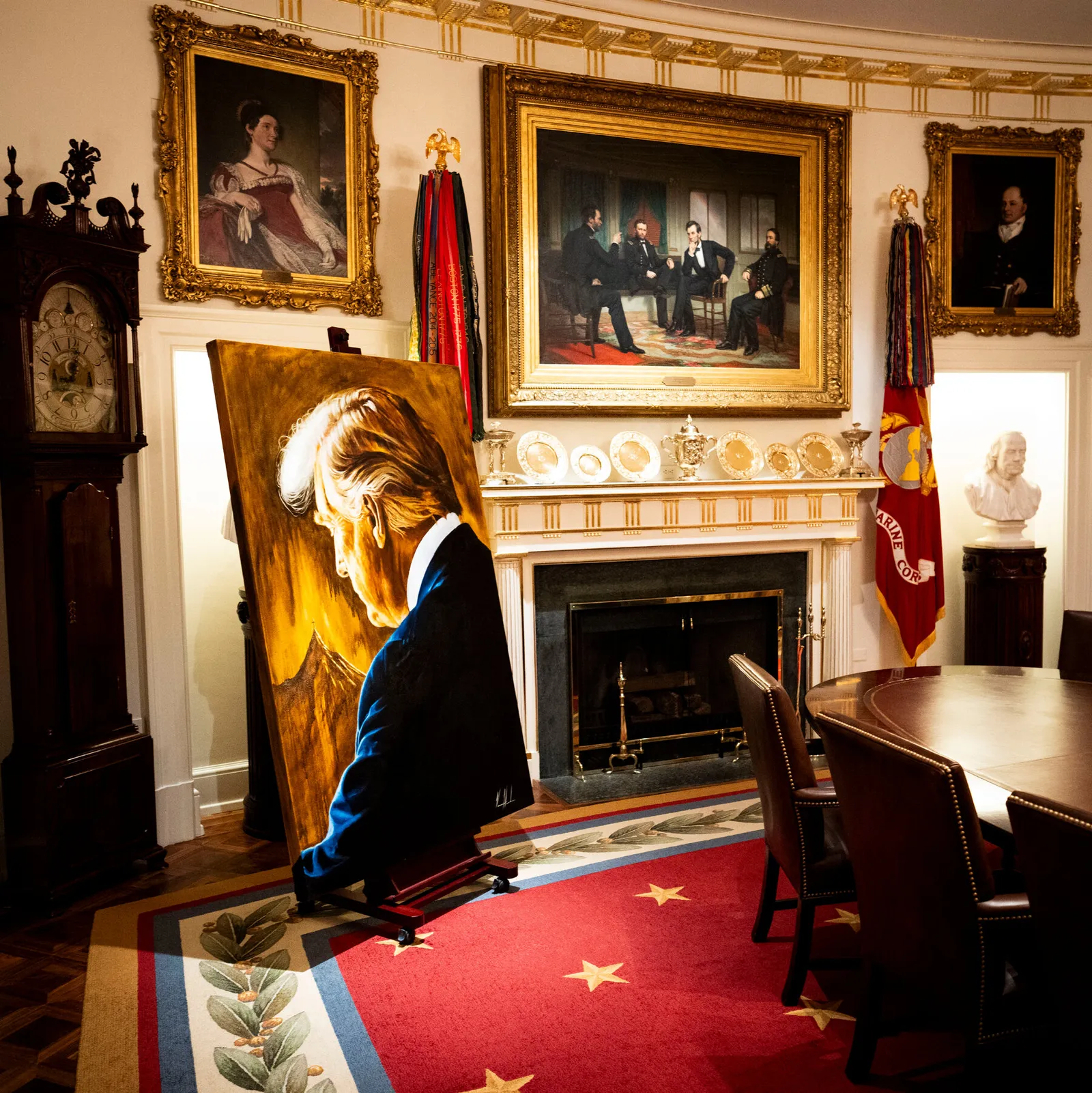
President Trump in his second term has increasingly mused about his predecessors, comparing himself with some and distancing himself from the failures of others. For decision-makers, the consequence is a shifting political narrative that can influence coalition alignment, regulatory posture, and risk assessment across the government ecosystem.
In his second term, President Trump has increasingly mused about his predecessors, comparing himself with some and distancing from the failures of others. That is the core move. It is also more than watercooler history. Political leadership in the United States, especially at the federal level, is built on narrative control, because narratives become decision filters. Who gets the benefit of the doubt? Which failures become reusable talking points? And what kinds of new promises start to sound “inevitable” to the people who have to implement them.
What makes this worth briefing is the way it reframes expectations in real time. By positioning himself against earlier presidencies, Trump is effectively telling two audiences at once. To supporters, he is suggesting that his approach is the corrective. To critics and institutions that have to worry about continuity, he is signaling where he believes earlier administrations went wrong and how he intends to avoid repeating that failure. In other words, “compare” is the tactic, “contrast” is the stake. The source describes this as musings that have increased in his second term, and that matters because rising frequency usually means rising intent.
To understand why narrative positioning has second-order effects, think about how modern governance works. The federal government is not a monolith. It is a lattice of agencies, regulators, court cases, procurement decisions, and compliance frameworks that have to be justified and defended. Even when policy change is slow, interpretation is fast. When a president repeatedly benchmarks himself against predecessors, staffers and outside stakeholders learn to anticipate which controversies will be treated as legacy problems to be corrected versus which ones will be treated as cautionary tales to be avoided.
There is also the boardroom angle, even for companies not directly in politics. Executives watch presidential tone the way they watch interest rates: not because it instantly changes the world, but because it changes the odds. A president who intensifies comparisons to predecessors is, in practice, shaping what internal and external decision-makers consider “the baseline.” The baseline then becomes the reference point for risk. If prior administrations are increasingly described as failing, then the institutions associated with those failures may face political pressure. And if Trump is also positioning his own record as the alternative, that can change how regulators justify aggressive enforcement, slower approval pipelines, or new guidance.
Historically, political leaders use contrast to manage coalitions. This can be a way to keep allies energized, by implying the current administration has learned from what did not work. It can also be a way to discipline opposition by casting certain criticisms as repetition of earlier mistakes. In the private sector, similar dynamics appear in corporate turnarounds. When leadership repeatedly draws a line between the current plan and the last one, employees and partners start to evaluate everything through that lens. They stop asking, “What do we do now?” and start asking, “What evidence will this administration accept as proof it is fixing the problem?”
The source is specific in one sense and thin in another. It gives us the direction of travel: Trump in his second term is increasingly talking about predecessors, comparing himself with some and distancing from the failures of others. It does not, however, list particular policies, specific administrations being named, or the exact regulatory outcomes of the musings. That limitation is important for decision-makers. If you try to translate narrative into immediate mechanics, you risk overfitting. But even with that caveat, the strategic logic remains: when a president emphasizes “failure of others,” the political system often responds by re-litigating where responsibility sits. That can affect how agencies handle discretion, how parties prioritize hearings and oversight, and how institutions prepare their arguments before courts.
For peers in similar roles, the lesson is uncomfortable but useful. Whether you are a corporate executive, an investor, or a policy operator, second-order implications often come from framing rather than from formal change. The more a president intensifies comparative messaging, the more stakeholders assume there is a target. Sometimes the target is ideology. Sometimes it is performance. Sometimes it is simply the future negotiating space. Either way, expectations get rewritten. In that sense, Trump’s second-term habit of benchmarking predecessors is not just storytelling. It is a tool that can reshape how quickly institutions adapt, how aggressively they anticipate oversight, and how confidently they commit to long-term positions. And in Washington, confidence is often what becomes policy momentum.
This story's Key Insights and Take-aways are locked.
Create a free account to unlock Executive Actions for one credit.
Register to UnlockAlways free for Executives Club members. Join the Club
More in Politics

Trump sends 260 FBI analysts to Georgia, critics warn it targets trust, not just votes
A deployment tied to repeated 2020 fraud claims is raising alarms about confidence in elections.

Hossam Hassan downplays Dallas police incident after brother’s hotel altercation
Egypt’s coach says there is “nothing to follow up,” after Dallas officers responded at the Westin.
Starmer warns Andy Burnham diplomacy cannot take a backseat
In his first BBC interview since resigning, Keir Starmer tells likely successor Andy Burnham international affairs will remain unavoidable.