

Trump sends 260 FBI analysts to Georgia, critics warn it targets trust, not just votes
A deployment tied to repeated 2020 fraud claims is raising alarms about confidence in elections.
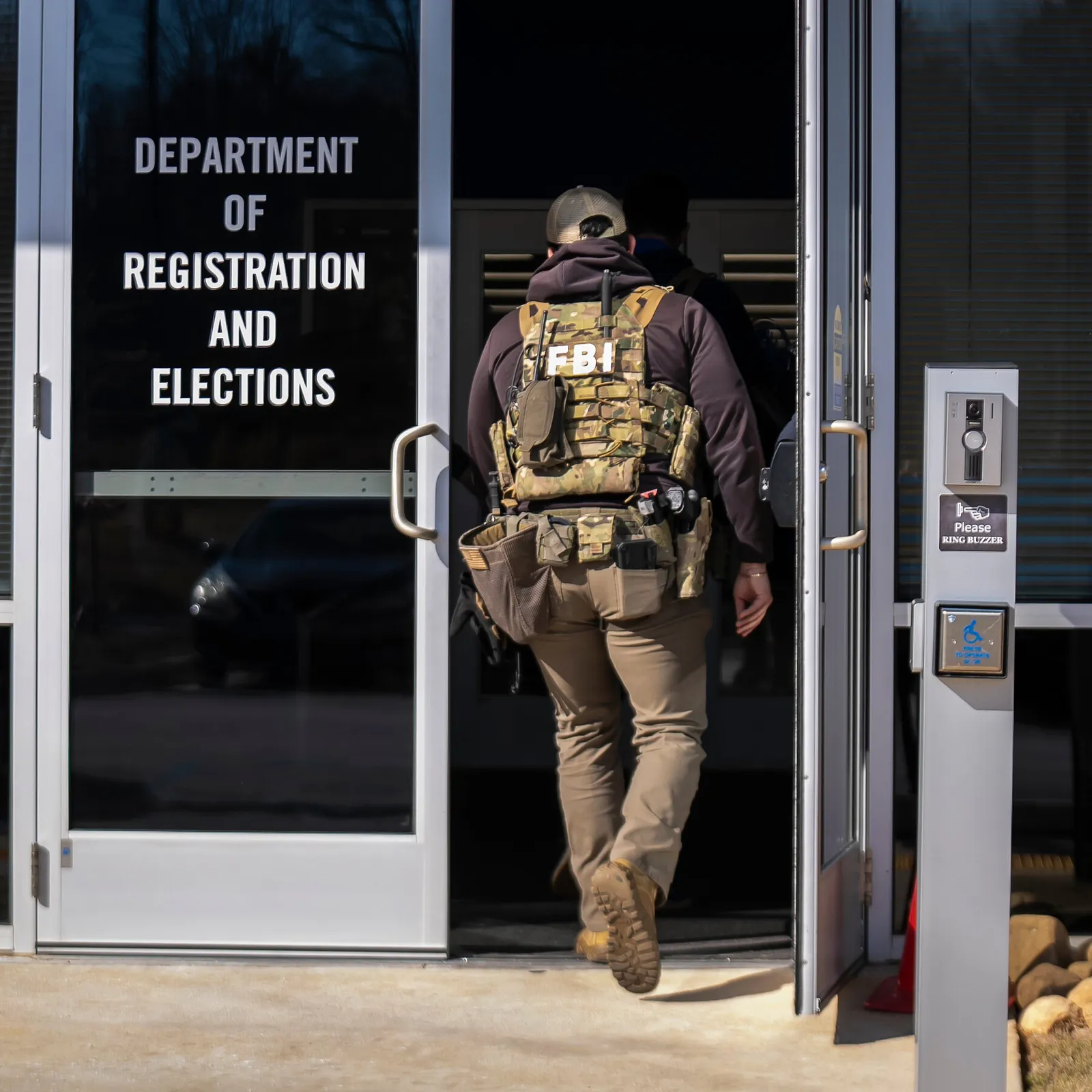
President Trump has sent 260 F.B.I. analysts to Georgia, reiterating baseless claims of 2020 election fraud. The move is drawing criticism that the real goal is to erode confidence in the electoral process, not to verify outcomes.
President Trump has sent 260 F.B.I. analysts to Georgia, repeating baseless claims of fraud in 2020. Critics argue the deployment is aimed less at uncovering wrongdoing and more at weakening overall confidence in the electoral process.
That distinction matters, because elections are not just a one-time event. They are the mechanism by which governments change hands, budgets get approved, and legitimacy is maintained. When a powerful political figure repeatedly frames an outcome as fraudulent, and then pairs that framing with a large government enforcement presence, it changes how other stakeholders interpret what comes next. The headline question for decision-makers is simple: are institutions investigating specific claims, or are they participating in a broader narrative that makes any result seem suspect?
In Georgia, the F.B.I. analysts are the institutional weight in this story. The original reporting says 260 analysts were sent, and that Trump is repeating claims of fraud from 2020. The “baseless” part is not incidental. It signals that the accusations are not grounded in substantiated findings, at least based on how critics are characterizing the claims, and it shapes why the scale of the deployment is viewed with suspicion.
Zoom out a little and you can see why trust is such a high-stakes asset. For businesses, markets, and capital allocators, election stability is a form of risk management. When investors cannot tell whether results will be accepted, they price in uncertainty. That uncertainty does not always show up as an immediate headline in bond spreads or stock tickers. Sometimes it shows up more subtly, as slower hiring, postponed expansion, and more conservative planning because leadership changes might bring abrupt shifts in regulation, tax policy, or enforcement priorities. Even if policies do not change, the perception of potential disruption can.
There is also a governance angle. Election legitimacy affects not only who governs, but how other institutions decide they should respond. Courts, election officials, state agencies, and federal regulators typically operate within frameworks built to preserve continuity. When a prominent political actor insists the system is corrupt, it increases pressure on officials and institutions to either defend the system publicly or face the possibility of being portrayed as complicit. That can distort priorities. Resources that could be directed to routine oversight can get pulled into legitimacy defense.
This is where the second-order implications show up for executives and boards. Even if your company is not directly involved in election administration, your risk picture depends on the broader operating environment. A sustained campaign that undermines confidence can turn ordinary administrative processes into political flashpoints. That can affect how quickly decisions get made by regulators, how predictable licensing and enforcement timelines are, and how stakeholders interpret compliance actions. Put differently: when trust in elections is attacked, trust in downstream institutions can be dragged along with it.
There is also an institutional coordination question. The source does not provide details on internal procedures for the F.B.I. deployment, but the basic logic is clear: sending 260 analysts is not a small administrative step. It is a signal that the federal government is treating the matter as significant. If that signal is perceived as bolstering already disputed narratives, the move can become less about verifying facts and more about shaping public interpretation of facts. That dynamic is exactly what critics say is happening, and exactly why the argument focuses on “overall confidence” rather than a narrow inquiry.
For leaders at companies with regulatory exposure, the playbook usually centers on resilience: scenario planning, clear governance, and disciplined comms. But resilience alone cannot neutralize reputational and policy uncertainty driven by political legitimacy battles. Boards and executive teams therefore need to track not only policy proposals, but also the credibility environment in which policies will be implemented. If confidence in elections is treated as fragile or conditional, the political incentives for every subsequent institution, including regulators, election officials, and enforcement agencies, become harder to model.
The stakes, then, extend beyond Georgia. The reporting describes a deployment tied to repeated, baseless 2020 fraud claims, backed by the scale of 260 F.B.I. analysts. Whether that enforcement activity is perceived as fact-finding or trust-disturbing will influence the broader perception of electoral outcomes and the legitimacy that flows from them. For peers in similar roles, the message is clear: when confidence in foundational institutions is challenged, the ripple effects hit capital, compliance, and governance long before the final vote count ever makes it into a press release.
This story's Key Insights and Take-aways are locked.
Create a free account to unlock Executive Actions for one credit.
Register to UnlockAlways free for Executives Club members. Join the Club
More in Politics

Glacial collapse, not rain, killed 180 in Nepal's Himalayan flood
The Himalaya's extreme geography hid the true cause of Nepal's catastrophic flood, a glacial collapse that turned a geological battleground into a mass-casualty zone.

Iran’s Esmail Baghaei says Oman talks start shipping via Hormuz, not US talks yet
Temporary route plans with Oman aim to restart commerce while Tehran says Washington dialogue is not on the table.

Standards watchdog opens probe into Reform UK deputy leader Richard Tice over interests
The parliamentary standards commissioner says it began an investigation on 28 July into a possible undeclared interest.