

Trump officials work with Diosdado Cabello while he is accused of Ojeda killing
Prosecutors in Chile say the Venezuelan interior minister helped direct Tren de Aragua. The U.S. has not pushed him out.
Diosdado Cabello, Venezuela's interior minister, remains in place as U.S. officials work directly with him even as Chile investigates and U.S. officials have alleged he helped orchestrate the killing of exiled dissident Lt. Ronald Ojeda. The consequence: U.S. rule-of-law and counter-criminal messaging collide with operational cooperation at the highest diplomatic levels.
In Los Angeles, Rafael Enrique Gámez Salas is awaiting extradition to Chile on accusations that he is a boss of Tren de Aragua and organized a kidnapping tied to the death of exiled Venezuelan dissident Lt. Ronald Ojeda. Chilean authorities also believe Gámez acted at the behest of Venezuela's authoritarian government, and within those allegations sits the name U.S. officials have kept close: Interior Minister Diosdado Cabello.
ProPublica reports that for the past six months, the Trump administration has been working directly with Cabello, the powerful Venezuelan official under investigation for allegedly ordering the crime. That is the uncomfortable pivot point. The case is not just about a gang kidnapping in another country. It is about whether Washington is treating a top Venezuelan repression figure as a partner of convenience or as someone it should be using pressure to remove, especially given longstanding U.S. accusations that Cabello has led repression of political opponents and enriched himself through illicit criminal partnerships.
To understand why this is such a high-stakes contradiction, look at how U.S. action in Venezuela has been framed. The unlikely alliance began in January after U.S. special operations forces captured Venezuelan President Nicolás Maduro and brought him to New York to stand trial on drug trafficking charges. Critics called it a blatant violation of Venezuelan sovereignty. The Trump administration described it as restoring law and order in a strife-torn region and said it would restructure Venezuela’s ruined economy and exert control over its massive oil industry.
The part that matters for today is that the administration left Cabello in place. Cabello has had a seat at the table during visits to Caracas by senior U.S. officials, including Interior Secretary Doug Burgum, for negotiations on issues such as Venezuela’s lucrative mining sector. This is not a theoretical policy debate. It is diplomacy with an individual who, prosecutors say, sits upstream of violence.
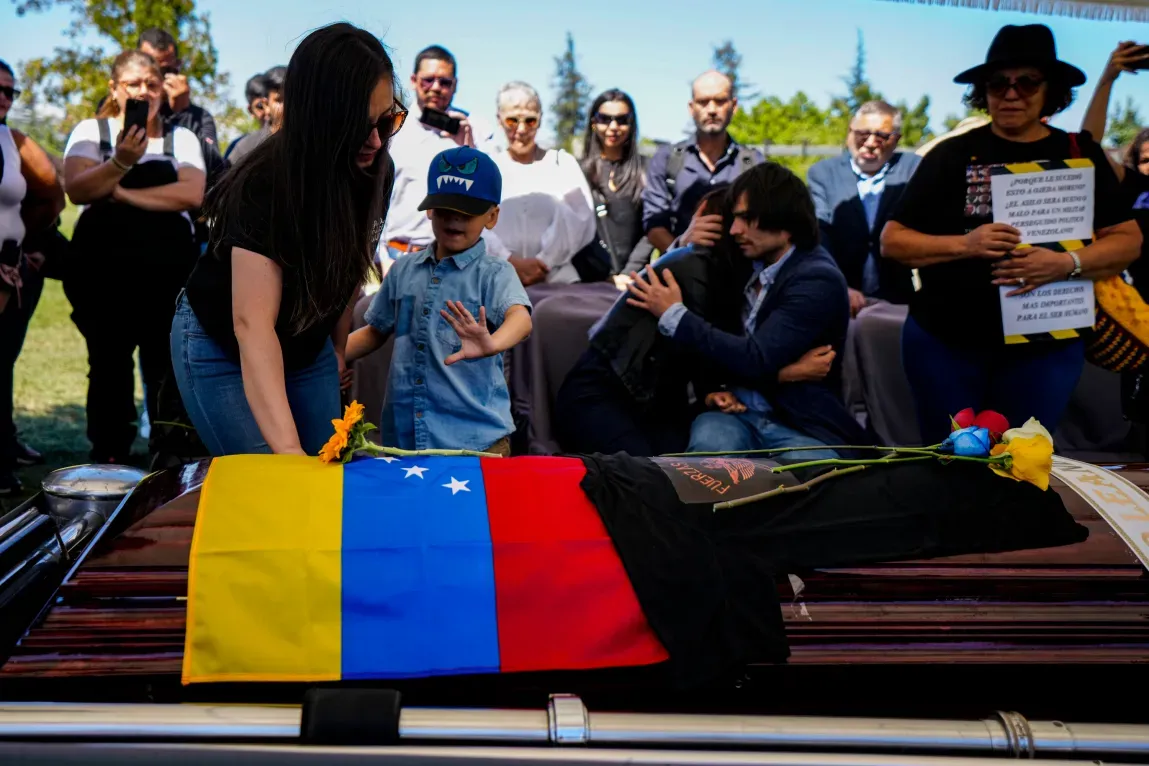
Meanwhile, the core allegation in Chile is stark. Chile’s attorney general and other senior officials said Cabello became an investigative target based on testimony of captured suspects. Ojeda, a former military officer who unsuccessfully attempted an uprising against Maduro, was granted asylum in Chile. Prosecutors believe Cabello paid Tren de Aragua’s top leadership, who then commissioned gang members in Chile, led by Gámez, to kidnap Ojeda. Chilean prosecutors say Ojeda died while his captors tortured him to get information about Venezuela’s political opposition. Ojeda’s widow, son, and sister attended his burial service in Santiago, Chile, on March 8, 2024; he was kidnapped, killed, and buried under cement in a slum.
The U.S. has tried to frame the gang as a major threat with political undertones. After Trump returned to office last year, Secretary of State Marco Rubio and other officials said the killing in Chile demonstrated Tren de Aragua’s ties to the highest levels of the Venezuelan government and the gang’s reach across the Americas. The president designated the gang as a terrorist group and said Maduro sent it to invade the United States, though some law enforcement officials say the administration exaggerated the threat to justify mass deportations. As Chile seeks the return of Gámez and prosecutors prepare to bring 20 suspects to trial, ProPublica reports that the Trump administration has been silent on the alleged role of the regime and Cabello in Ojeda’s death.
That silence contrasts with how U.S. officials have acted in crisis and enforcement moments. In recent days, Cabello has faced scrutiny for his response to the June 24 earthquakes, which killed more than 3,600 people, injured more than 16,000, and left thousands missing. In an internationally televised confrontation, Cabello exchanged tense words with members of a U.S. search-and-rescue team en route to aid victims in a heavily damaged area. Critics, including U.S. congressional representatives in Miami, accused him of interfering with rescue operations and repeated calls for his arrest on pending U.S. charges. A State Department spokesperson downplayed the incident as “an unfortunate misunderstanding.” Early this week, Cabello participated in a meeting with Gen. Francis Donovan, the head of U.S. Southern Command, which leads U.S. military operations in Latin America, during Donovan’s visit to discuss relief operations.
For executives and board members tracking geopolitical and regulatory risk, this is the quiet part that can get loud fast: when the U.S. keeps a high-profile accused official in the room, it signals that operational cooperation may outweigh public enforcement messaging. ProPublica includes views from retired diplomats Todd Robinson and Brian Naranjo, both of whom question whether U.S. commitments to advancing rule of law are real or a cover for interests tied to Venezuela’s oil. Both also argue Washington may be appeasing corrupt actors rather than uprooting them. One line that captures the strategic framing is Robinson’s call that leaving Cabello in place is “a horrible, horrible idea.” The reporting also notes that U.S. officials aided Chile with the extradition process but have not used the Ojeda case to press Venezuelan authorities to oust, arrest, or hand over Cabello.
The compliance and credibility consequences are not confined to diplomacy. U.S. authorities had charged Cabello and a top Tren de Aragua leader in the same drug trafficking indictment as Maduro and offered a $25 million reward for Cabello before Maduro’s capture. When asked in May if the U.S. still considers Cabello a narcoterrorist, Rubio said, “The policy of the United States on that topic has not changed, and when it changes we will let you know.” In parallel, ProPublica reports that the Department of Justice declined to comment on ongoing investigations, and the White House referred questions to DOJ, while the State Department and Venezuelan government officials did not respond.
So where does that leave Gámez and the broader system? Gámez crossed the Mexican border in late 2024 and was first treated like many Venezuelan migrants. Now he is in a federal jail in Los Angeles awaiting extradition to Chile. ProPublica says it found no information that he was charged with a violent offense during nearly two years in the United States. In a phone and email exchange from jail, he said he worked at a restaurant and as a deliveryman in Utah, denied any role in Ojeda’s death, denied membership in Tren de Aragua, and said he has no connections to Cabello. Cabello, reached through public statements, has denied involvement in the Ojeda kidnapping and killing.
The second-order lesson for decision-makers is blunt: in high-intensity enforcement environments, cooperation can look like leverage, but it can also look like legitimization. If U.S. policy treats Cabello as both a target in indictments and a partner in negotiations, the message market participants, regulators, and counterparties receive is not just about this one case. It is about which risks get priced, which get deferred, and how quickly rule-of-law rhetoric turns into operational reality. For boards, that should sharpen the question: when geopolitics meets compliance, who is actually getting cleaned up, and who is simply being managed for access?
This story's Key Insights and Take-aways are locked.
Create a free account to unlock Executive Actions for one credit.
Register to UnlockAlways free for Executives Club members. Join the Club
More in Politics
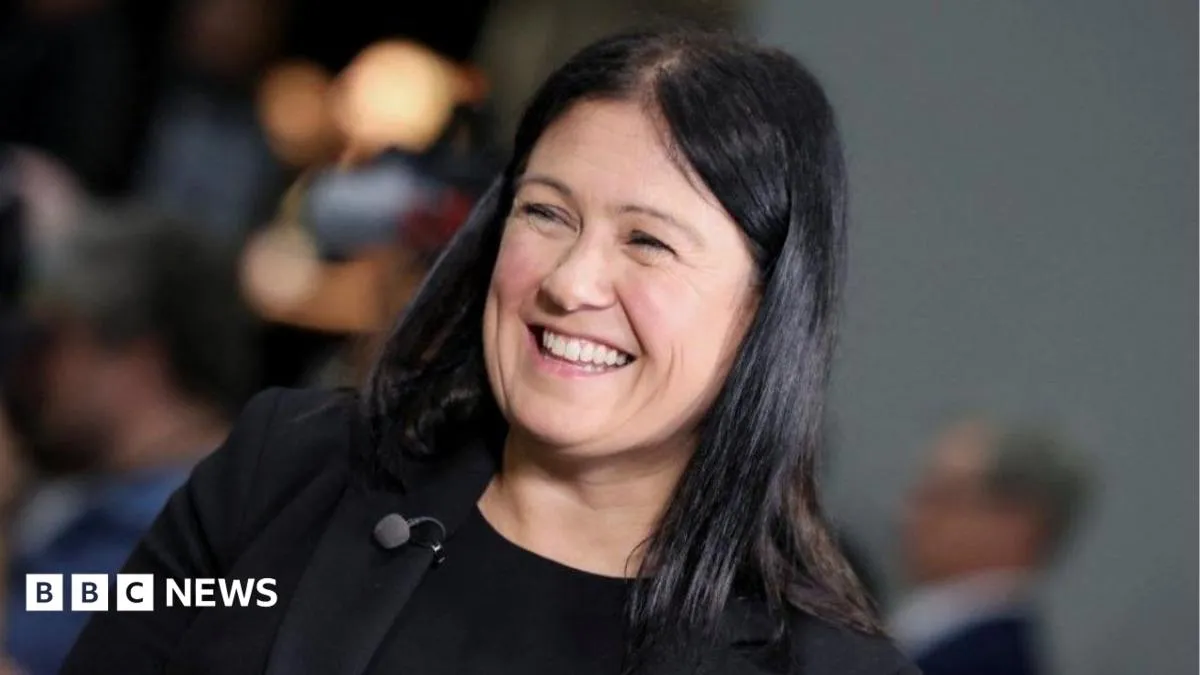
Lisa Nandy rallies Labour MPs: 322 votes back Burnham, making leadership likely
The minister points to a “faster and bolder” direction as 322 Labour MPs back Andy Burnham.
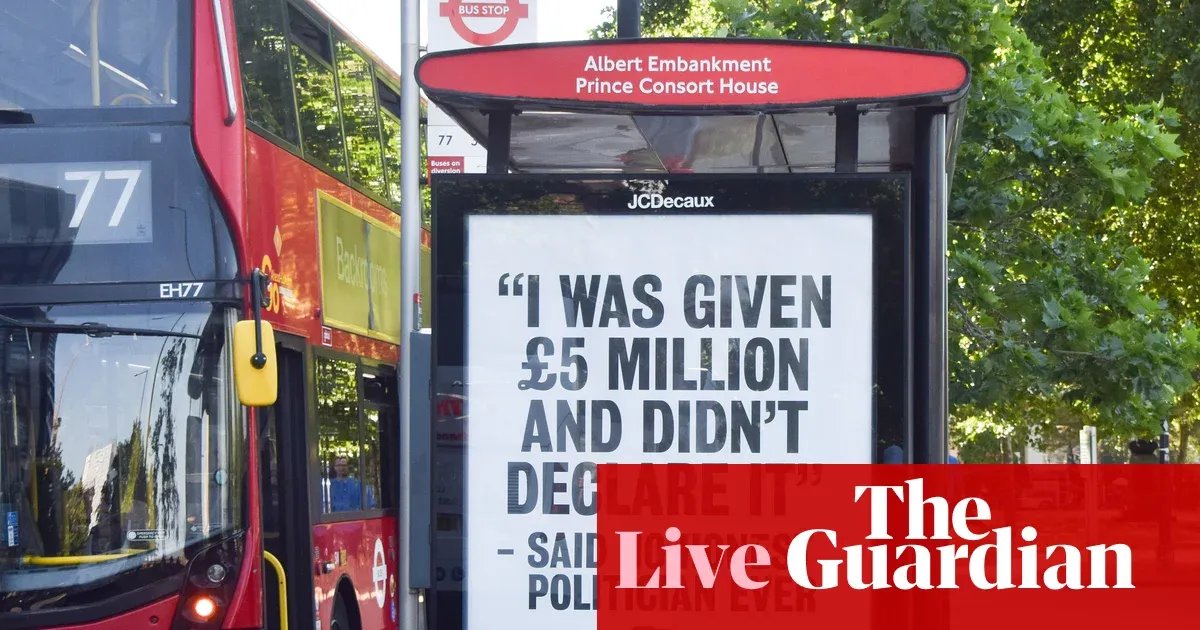
Clacton byelection fallout: over half rate Farage and Reform “very sleazy”
What the latest polling signals for Andy Burnham’s early PM challenges, from Westminster auditions to Manchester power.

France braces for third major heatwave since May as Lodève hits 41.1°C
Heat alerts cover almost the whole country, and the next few days decide whether disruption turns into a longer crisis.