
Trump reads “Presidents Play!” on Usha Vance’s “Storytime” podcast
A pre-recorded kids’ episode blends presidential history with unscripted White House commentary, expanding Trump’s media reach.
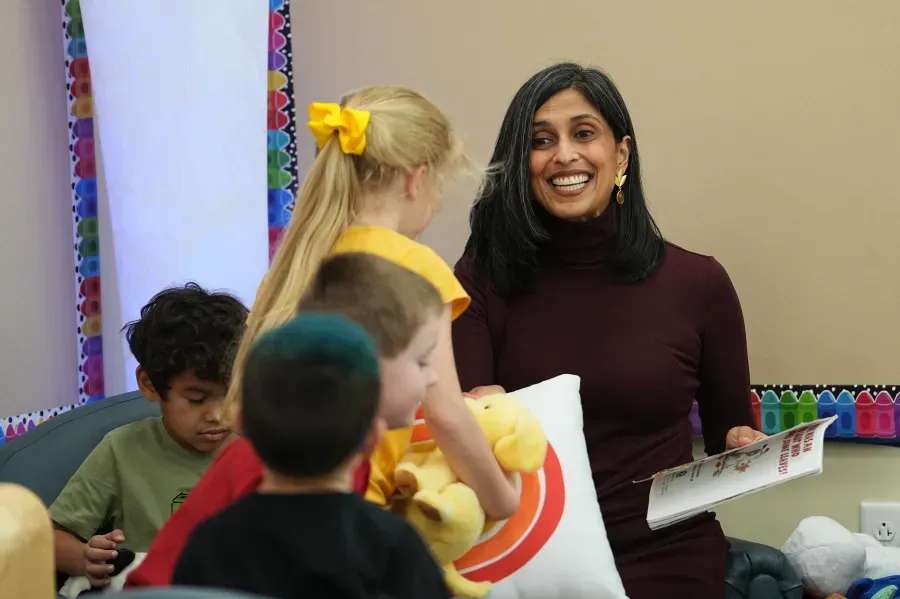
President Trump appeared as a guest on second lady Usha Vance’s children’s podcast “Storytime with the Second Lady,” recording a Friday episode. He read the children’s book “Presidents Play!” and offered unscripted commentary on his presidential predecessors and life in the White House, turning a family-audience format into a fresh public-media channel.
President Trump joined second lady Usha Vance on her children’s podcast “Storytime with the Second Lady,” appearing in a Friday pre-recorded episode where he read the picture book “Presidents Play!” The setting matters, because this is not a traditional campaign stop, press scrum, or policy interview. It is a children’s audio format, hosted by the second lady, with a guest who can instantly convert a gentle storytime premise into a live-wire national conversation.
In the episode, Trump read “Presidents Play!” and, crucially, offered unscripted commentary. The source describes his remarks as covering his presidential predecessors and life in the White House. That combination is the real headline: a kids’ book about presidents becomes a stage for the kind of personal, wide-angle political framing that audiences usually associate with rallies or late-night monologues. For decision-makers watching media patterns, it is a signal that attention capture is being engineered through unexpected channels, not only through expected ones.
If you are an executive, operator, investor, or board member, the lesson is not about kids’ books. It is about distribution. Podcast audiences behave differently than traditional broadcast viewers, and pre-recorded episodes add another layer: they allow for controlled production while still leaving room for moments that feel spontaneous. In this case, the “unscripted commentary” element is the switch that can drive virality, because people tend to replay and quote off-script lines. The format is soft. The potential impact is not.
For context, “Storytime with the Second Lady” sits in a broader ecosystem of public figures using family-friendly or culture-adjacent programming to shape narratives. Children’s media is often treated as apolitical, or at least less politically saturated, which makes it a powerful contrast tool. When a president, even one speaking in a seemingly light context, brings their own framing of who came before and what life in the White House looks like, it turns cultural programming into political content by implication. It asks the audience to absorb a perspective without the usual cues of a formal political briefing.
There is also a branding and legitimacy angle for Usha Vance as host. As second lady, her role is partly informational and symbolic, but the podcast structure gives her a platform with recurring access, tone control, and a regular cadence. By featuring President Trump, the show gains immediate gravitational pull from his base of attention. At the same time, Trump benefits from a context that can soften the edges of political discourse. That is not a trivial difference. The same message, delivered inside a children’s storytelling container, can land differently.
From a regulatory and compliance standpoint, this episode lives in a relatively familiar space. Content with a political figure on a podcast does not automatically trigger the kinds of campaign advertising scrutiny associated with paid political media. But it still raises questions typical of the modern media landscape: how messaging is framed, what is edited versus truly live, and how audiences interpret “unscripted” commentary. While the source does not specify legal classifications or any formal review process, executives in media, platforms, and ad-supported ecosystems still pay attention to these distinctions because they can affect risk management, brand safety, and how platforms moderate or label content.
The second-order implications extend to partners who are negotiating content deals, sponsorships, or platform distribution. A guest appearance like this is a reminder that traditional calendars are no longer the only driver of reach. When a political leader enters a niche format such as a children’s podcast, the ripple spreads beyond the immediate audience. Clips can move into mainstream news feeds. The topic can expand into broader debates about tone, leadership style, and the characterization of predecessors.
For peers in similar roles, the strategic stake is clear: narrative control is becoming more granular. The White House era is no longer only about press conferences and official statements. It is also about choosing the medium that best matches the emotional temperature of the moment. If you lead an organization that depends on audience trust, you should watch how public figures experiment with format to manage perception, because the same attention logic increasingly governs corporate communications and brand storytelling too. And if you sit on a board, you should treat media strategy and reputational exposure as one system, not separate tracks.
This story's Key Insights and Take-aways are locked.
Create a free account to unlock Executive Actions for one credit.
Register to UnlockAlways free for Executives Club members. Join the Club
More in Politics

Glacial collapse, not rain, killed 180 in Nepal's Himalayan flood
The Himalaya's extreme geography hid the true cause of Nepal's catastrophic flood, a glacial collapse that turned a geological battleground into a mass-casualty zone.

Iran’s Esmail Baghaei says Oman talks start shipping via Hormuz, not US talks yet
Temporary route plans with Oman aim to restart commerce while Tehran says Washington dialogue is not on the table.
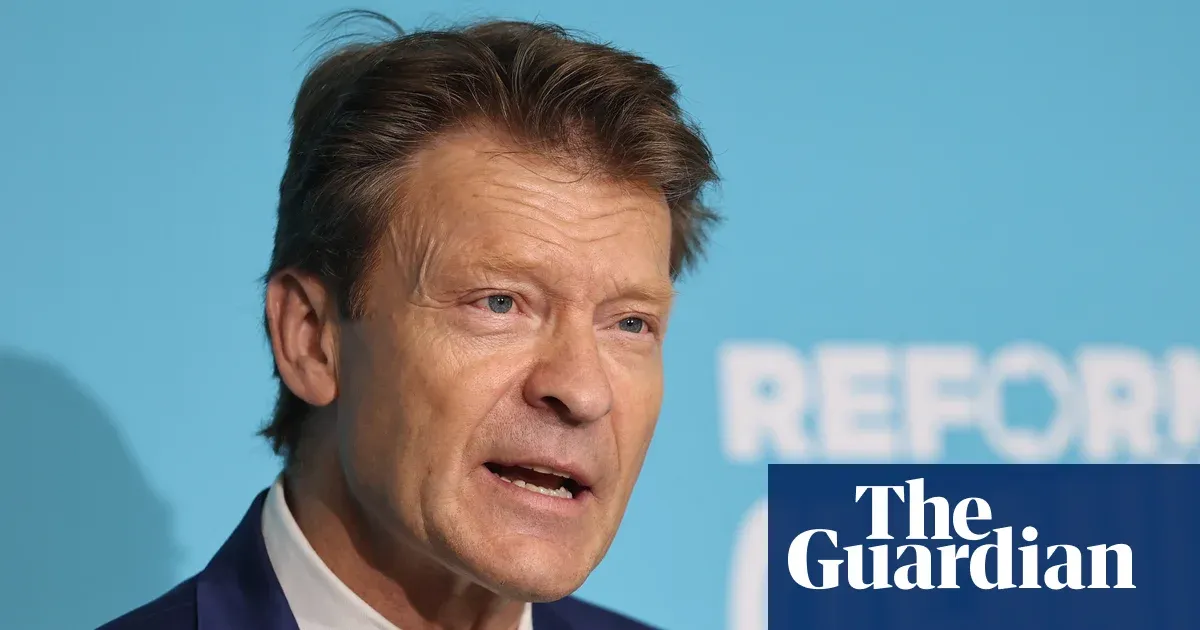
Standards watchdog opens probe into Reform UK deputy leader Richard Tice over interests
The parliamentary standards commissioner says it began an investigation on 28 July into a possible undeclared interest.