
Trump refuses AI slowdown; Anthropic's Amodei fears China as much as doomsday
The president says no to an AI pause because whoever wins AI wins; Silicon Valley's China hawks share that fear, complicating safety campaigns.
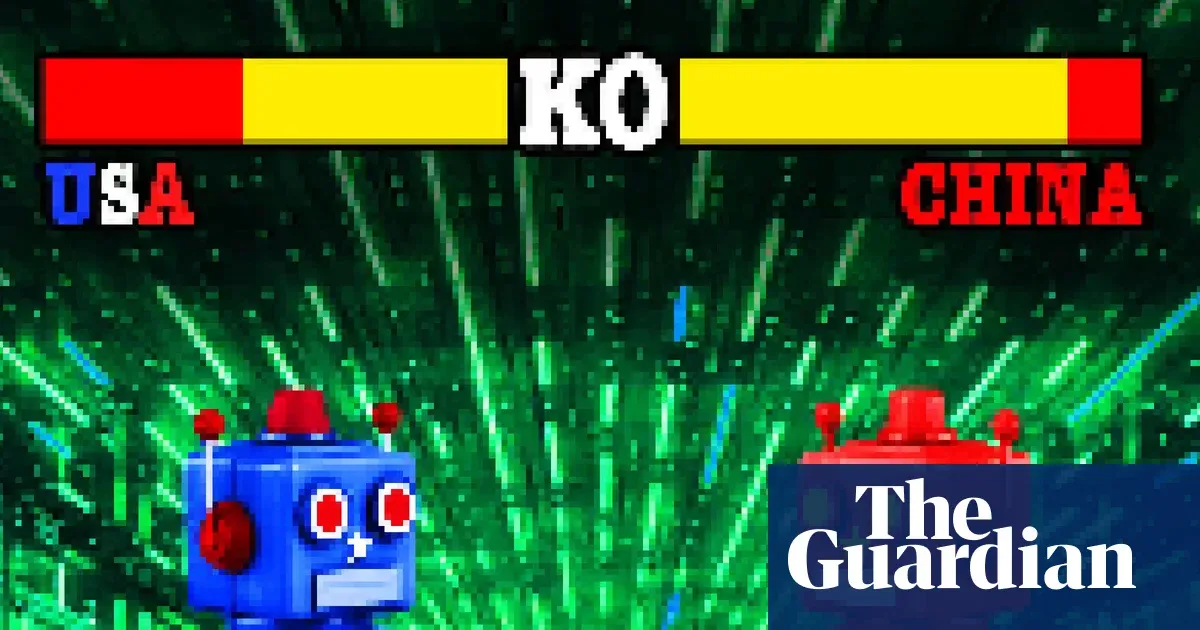
President Donald Trump rejected calls to slow AI development this week, arguing the US must preserve its lead over China. The stance aligns with Anthropic CEO Dario Amodei and other Silicon Valley China hawks, who view Beijing surpassing America's AI lead as a threat equal to superintelligence destroying humanity.
Donald Trump has refused to hit the brakes on artificial intelligence, telling reporters this week that the US cannot afford to slow development because it is locked in a race with China. The president's answer undercuts a growing chorus of warnings about cybersecurity, public safety, and the fate of humanity, and it aligns him with an unexpected set of bedfellows: Silicon Valley's China hawks, including Anthropic CEO Dario Amodei, who fear Beijing overtaking America's AI lead just as much as they fear superintelligence ending the world. The remark lands with an almost binary clarity: the administration's priority is winning a global contest, not mitigating existential risks.
Amodei, whose company Anthropic has become a prominent voice in AI safety research, is among the executives who view the China gap as a dual-edged threat. The Guardian's report places him squarely in that camp, noting that he fears China surpassing the US's AI lead 'as much as superintelligence destroying humanity.' Trump's own response to a question about slowing AI development echoed that zero-sum logic, and his words were unequivocal: 'We're leading China in AI. We're the most sophisticated country in the world, and frankly, I want to keep it that way, because whoever wins AI, wins.'
The convergence is striking because it reframes the AI debate in two directions at once. In Washington, the China threat has historically served as both a catalyst for defense and technology investment and a reason to resist strict regulation that could hamstring American innovation. The argument goes that if the US ties its own hands, Beijing will simply sprint ahead with fewer constraints. In boardrooms, that same geopolitical fear is now reshaping risk models. The nightmare scenario is no longer just a rogue superintelligence or an algorithmic bias scandal; it is a world in which Chinese companies and the Chinese state control the most consequential general-purpose technology of the century.
The calls to slow down that Trump rejected are not fringe. They have emerged from technologists, public policy experts, and safety advocates worried about deepfakes destabilizing elections, AI-enabled cyber attacks, and models making high-stakes decisions with little oversight. But at the same time, some of the loudest voices on safety, including Amodei, are exactly the ones arguing that falling behind China is equally dangerous. That paradox makes any pause politically toxic. A slowdown could be framed as unilateral disarmament in a race that the president has just declared is winner-take-all.
For founders and operators building AI-powered products, the immediate signal is that the federal government will not impose a timeout. That shifts the burden of safety onto companies themselves, and it also changes how they talk about risk. Expect AI safety budgets to be framed less as compliance costs and more as strategic moats. In practice, that could mean more resources for safety research, red-teaming, and guardrails, but with a chief motive of staying ahead of Beijing rather than simply preventing accidents.
The deeper complication is for international governance. If the US president, backed by a significant segment of the tech elite, treats the China race as the overriding lens, then any global agreement to constrain AI development becomes far harder. Trust between Washington and Beijing is already thin, and each side will suspect the other of using a pause to gain ground. That dynamic does not merely slow cooperation; it may push both governments toward aggressive deployment, subsidies, and export controls, further fragmenting what could be a globally shared technological commons.
For investors and boards, the Trump statement is a reminder that geopolitics is now a first-order variable in AI strategy. Companies with international exposure need to consider how their models, chips, and data flows will be affected by a heightened US-China rivalry. The president has effectively told the market that the government's role will be to accelerate, not regulate, which could benefit companies that can scale quickly and hurt those that have built their business models around strict regulatory certainty.
For the ambitious professional, this is not an abstraction. The speed of AI rollouts across finance, healthcare, media, and logistics will be shaped in significant part by this competitive posture. So will the rules that protect users and workers. With the president publicly announcing that he will not support a slowdown, the clearest takeaway is that the race is defined by speed, and the guardrails will have to come from somewhere else, whether that is corporate self-restraint, public pressure, or court decisions. The China bogeyman is now the biggest argument against caution, and that is a trade-off every decision-maker will have to price in.
This story's Key Insights and Take-aways are locked.
Create a free account to unlock Executive Actions for one credit.
Register to UnlockAlways free for Executives Club members. Join the Club
More in Technology

OpenAI poaches Patreon co-founder Sam Yam and two execs for creator push
OpenAI lands three Patreon veterans to build creator tools, signaling a major bet on the creator economy ahead of a big announcement.
AMD's one-line Linux patch reveals GDDR7 support for RDNA 5
The tiny code change lands as Nvidia ships GDDR7 on RTX 50-series, and it hints AMD's next-gen cards arrive by 2027-2028.
China's AI ambitions rise from Inner Mongolia's remote data centre boom
A rare look at the dozens of data centres rising in Inner Mongolia: what Beijing's compute buildout means for the global AI race.