
Trump’s Congo deal unravels, exposing how “America First” strains African commitments
A Central African project shows what happens when U.S. priorities collide with local realities and policy limits.
The Foreign Affairs piece argues that the logic behind President Trump’s Congo deal is running into constraints. The consequence for decision-makers is a real-world lesson in how “America First” can fail to deliver in Africa when incentives and governance don’t line up.
“America First” sounds clean on a campaign stage. In Africa, the math is messier, and the Foreign Affairs analysis uses Trump’s Congo deal as the proof point. The central claim is that the deal’s momentum is not holding because the model is hitting hard limits once you confront how African politics, economics, and security needs actually work on the ground. In other words, the problem is not just whether the U.S. wants to help. It is whether the deal design can survive competing interests, fragile institutions, and the governance realities that come with large cross-border commitments.
That is why the Congo story matters beyond Congo. When a U.S. administration frames external engagement through an “America First” lens, it tends to privilege immediate national leverage, transactional bargaining, and clear domestic payoff. But the Congo environment is not built for transaction-only deals. Major outcomes there require sustained coordination, credible long-term support, and institutions that can implement and enforce agreements. The Foreign Affairs piece argues that once those requirements meet the limits of “America First,” the arrangement starts to come apart, not because everyone suddenly stopped wanting it, but because the incentives and constraints were never aligned well enough to make durability likely.
To understand the unraveling, it helps to remember how dealmaking in complex regions differs from deals that rely mostly on price and contract enforcement. In stable, rule-based settings, a government can negotiate a commitment and expect predictable follow-through. In places like the Congo, enforcement can depend on actors with different agendas, security conditions that can change quickly, and political cycles that shift priorities for both local stakeholders and international partners. When U.S. engagement is tightly filtered through a narrow conception of national interest, the deal can end up underpowered for the needs of implementation. The result is a gap between what the agreement requires and what the strategy is structurally positioned to provide.
The regulatory and institutional angle is also crucial, even if it is easy to overlook. Cross-border commitments in high-risk regions usually implicate multiple layers of policy, including sanctions frameworks, development-finance rules, procurement and compliance expectations, and oversight of how funds or concessions are managed. Even when the headline is a single “deal,” the reality is that it lives inside a broader compliance ecosystem. If the U.S. approach centers on short-horizon bargaining and leverage rather than long-horizon institution-building, then administrative friction and policy risk can compound. Bureaucracies respond to political uncertainty by tightening controls, delaying decisions, or reducing flexibility. That can slow implementation, which then weakens partner confidence and makes the entire arrangement more fragile.
There is also a governance dynamic that often gets underestimated in Western deal narratives: local stakeholders want guarantees that go beyond paper terms. That can include security assurances, consistent incentives, anti-corruption expectations, and a credible path for dispute resolution. If the U.S. posture is primarily transactional, local actors may anticipate that commitments can be rolled back when political leadership changes. That expectation changes behavior. Parties hedge, implementation slows, and the political costs of participation rise. In practice, that means the deal becomes harder to execute, and eventually harder to justify politically, even for those who originally supported it.
This is the second-order effect decision-makers should pay attention to: “America First” does not just affect diplomatic optics. It can alter partner behavior, implementation capacity, and the compliance burden that sits around the agreement. Those effects then feed back into the deal’s performance. For executives and boards considering exposure to Africa, the lesson is that deal durability depends on more than signing. It depends on whether the strategy has the resources, continuity, and governance scaffolding to carry the agreement through real-world volatility.
The Foreign Affairs framing is a reminder that external commitments in Africa are not plug-and-play. If your engagement model is built for domestic political clarity, it can still fail when the environment demands long-run institutional work and multi-actor coordination. The Congo deal unraveling is therefore not only about one administration. It is about what happens when policy doctrine meets complex implementation realities, and how quickly the gap between intent and execution can turn into a strategic liability for anyone tied to the outcome.
This story's Key Insights and Take-aways are locked.
Create a free account to unlock Executive Actions for one credit.
Register to UnlockAlways free for Executives Club members. Join the Club
More in Politics
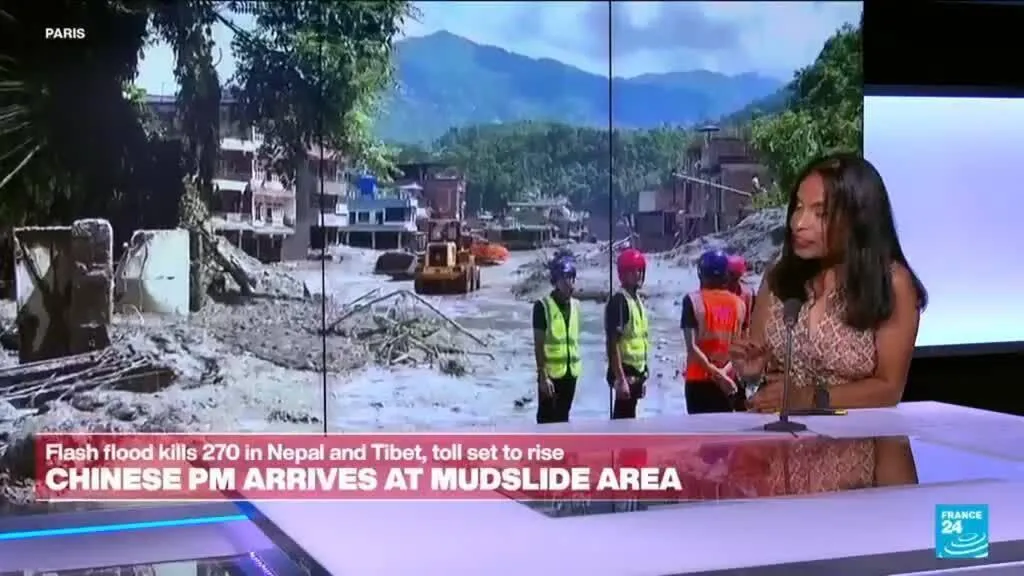
Glacial collapse, not rain, killed 180 in Nepal's Himalayan flood
The Himalaya's extreme geography hid the true cause of Nepal's catastrophic flood, a glacial collapse that turned a geological battleground into a mass-casualty zone.

Iran’s Esmail Baghaei says Oman talks start shipping via Hormuz, not US talks yet
Temporary route plans with Oman aim to restart commerce while Tehran says Washington dialogue is not on the table.

Standards watchdog opens probe into Reform UK deputy leader Richard Tice over interests
The parliamentary standards commissioner says it began an investigation on 28 July into a possible undeclared interest.