

Trump’s “Donroe Doctrine” rewires Latin America, trading quick wins for long-term risks
Foreign Affairs argues the short-term pull is real, but the future costs could be harder, broader, and stickier.
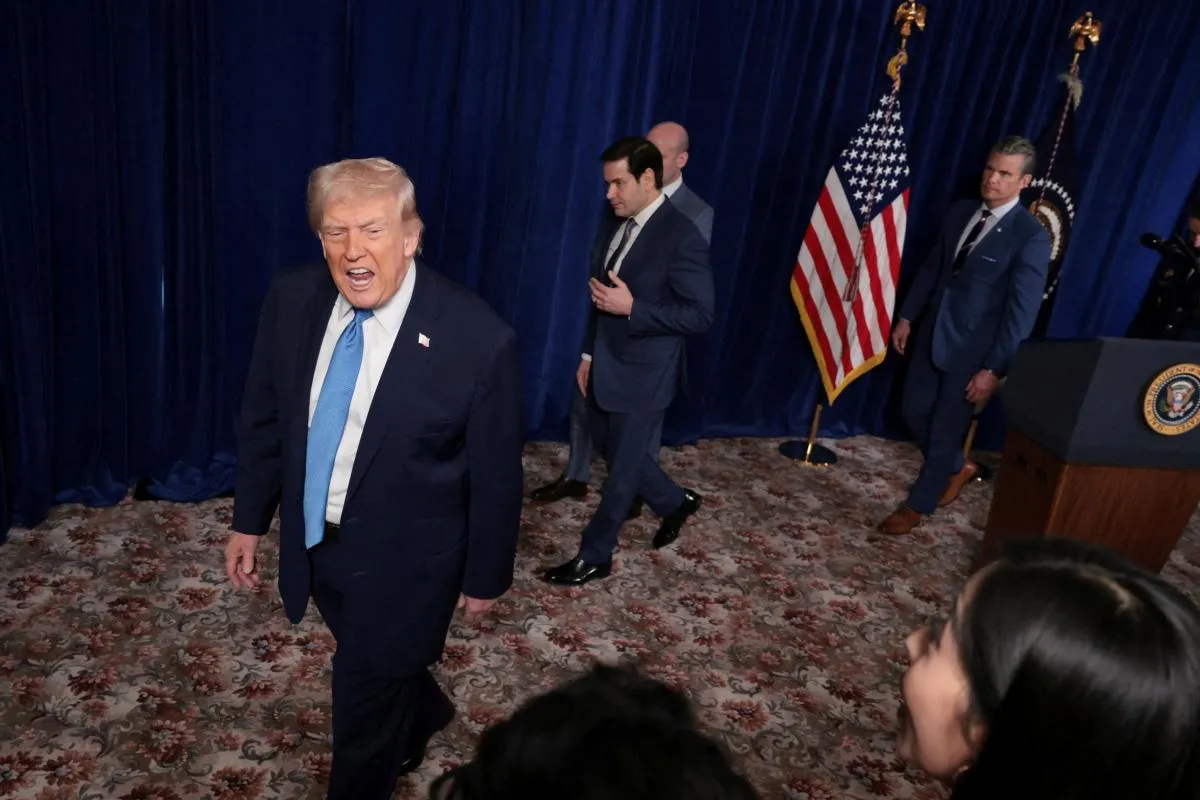
Foreign Affairs frames President Donald Trump’s approach to Latin America as a “Donroe Doctrine.” For decision-makers, the key is understanding how short-term results can mask longer-term risks that may compound across politics, markets, and governance.
If you care about Latin America, you have to track how U.S. policy is changing the incentives for everyone else. Foreign Affairs argues that Trump’s strategy can be understood as a “Donroe Doctrine,” a twist on an older idea that the U.S. should treat the region as its sphere of influence. The immediate payoff, the article suggests, is that aggressive, fast-moving moves can produce visible results quickly. The danger is that those same moves set up longer-term problems that are slower to show up, but harder to unwind.
The headline tension is simple: short-term results versus long-term risks. Foreign Affairs is essentially warning that policymakers might be tempted to judge success by what happens first, not what happens later. In the early stages, pressure can change behavior. It can push governments to negotiate, firms to adjust, and political actors to reposition. But the “Donroe Doctrine” framing points to a deeper risk: when U.S. policy is experienced as coercive or dismissive of local agency, it can encourage reactions that create instability down the road. That means the “win” today can become the “drag” tomorrow.
Why does this matter for executives and investors, not just diplomats? Because when government strategies shift abruptly, the first wave of consequences often hits policy expectations, and the second wave hits capital. Latin America is full of businesses that depend on predictable rules: trade and tariff regimes, licensing and regulatory approvals, cross-border enforcement, and sovereign risk pricing. When the U.S. changes course with a broad, doctrine-like approach, it can unsettle assumptions about how enforcement works, what trade routes will look like, and how quickly relationships can stabilize after a standoff. Even when companies are not directly targeted, uncertainty can still raise internal hurdles for expansion, new lending, and long-duration projects.
There is also a governance and regulatory background to consider. In many emerging markets, regulatory stability is not just a technical matter. It is a political bargain. When external powers signal that their preferred outcomes will be enforced regardless of local preferences, regulators may react defensively, change their priorities, or become more unpredictable to protect political legitimacy. From a board perspective, that is a risk that doesn't stay in one silo. It touches compliance costs, the timing of approvals, and the ability to run steady operations across jurisdictions. A policy posture that is effective in the short term can still contribute to a policy environment where local institutions have fewer degrees of freedom.
Then there is the political economy side. Doctrines, by definition, are meant to endure. They are not limited to a single negotiation or cycle. Foreign Affairs’ framing of the “Donroe Doctrine” implies that the U.S. approach is not just a series of tactical moves, but a broader attempt to reshape the region's strategic relationship with Washington. That can create second-order effects. For example, when external pressure becomes a defining feature of the environment, domestic political actors can benefit from framing their own stance as resistance or realism, depending on the audience. That makes compromise harder. It also can shift where resources go, from productivity investments to political signaling and coalition maintenance.
Executives should think about how these dynamics show up in real decisions. Boards often debate risk through known categories: currency, credit, demand, operational resilience. But doctrine-level policy shifts can change the “rules of the game” faster than many risk frameworks anticipate. If the strategy generates short-term results by applying intense pressure, it may still leave behind longer-term mistrust. And mistrust is expensive because it delays normalization, increases the chance of policy reversals, and encourages risk premiums to stay higher for longer than fundamentals would suggest.
The stakes, then, are strategic. Foreign Affairs is not just describing what is happening; it is pointing to a pattern where immediate outcomes are traded against future stability. For leaders in multinational companies, sovereign-linked financiers, and even domestic firms exposed to cross-border flows, the question is not only whether a policy creates near-term movement. It is whether the same approach builds a sustainable operating environment or whether it plants the seeds of the next crisis. The “Donroe Doctrine” lens is essentially a warning that the region’s trajectories can be affected not just by which deals get made, but by the tone and structure of the power behind them.
This story's Key Insights and Take-aways are locked.
Create a free account to unlock Executive Actions for one credit.
Register to UnlockAlways free for Executives Club members. Join the Club
More in Politics

Glacial collapse, not rain, killed 180 in Nepal's Himalayan flood
The Himalaya's extreme geography hid the true cause of Nepal's catastrophic flood, a glacial collapse that turned a geological battleground into a mass-casualty zone.

Iran’s Esmail Baghaei says Oman talks start shipping via Hormuz, not US talks yet
Temporary route plans with Oman aim to restart commerce while Tehran says Washington dialogue is not on the table.

Standards watchdog opens probe into Reform UK deputy leader Richard Tice over interests
The parliamentary standards commissioner says it began an investigation on 28 July into a possible undeclared interest.