

Trump says Iran wants a deal after strikes, despite calling the cease-fire “over”
A tone shift aboard Air Force One, but Trump adds doubt about whether Iran can be trusted to honor any agreement.
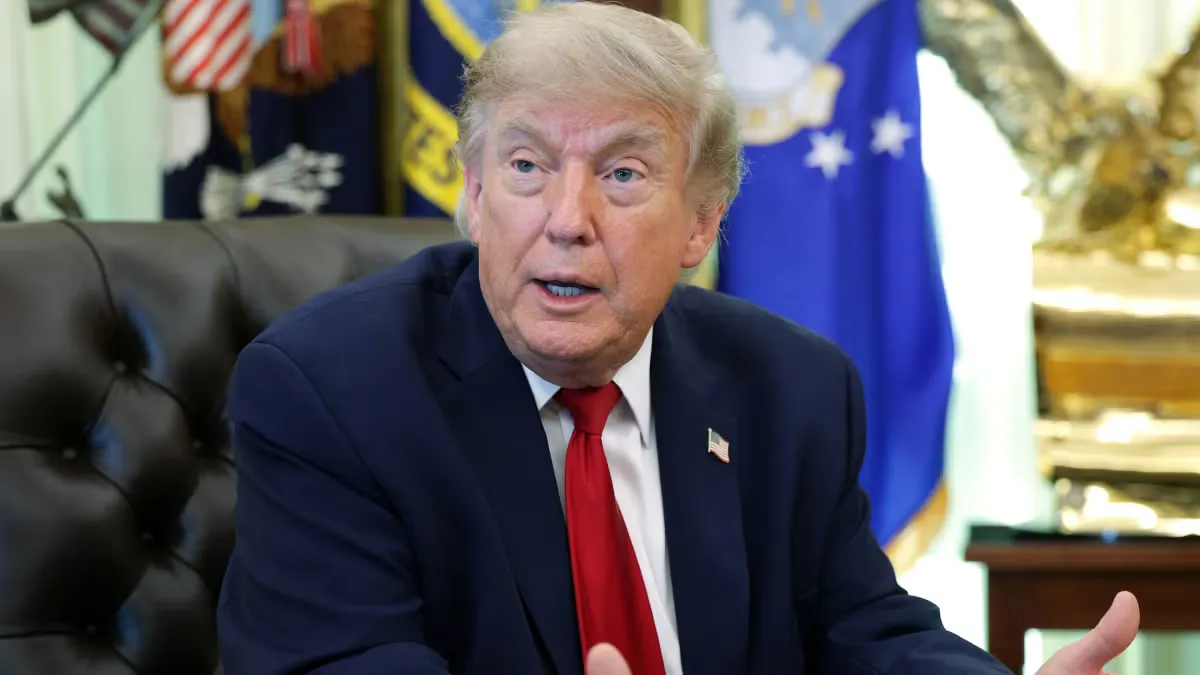
President Donald Trump told reporters aboard Air Force One that Iran reached out after a second straight night of U.S. military strikes and wants to make a deal. For decision-makers, the contradiction between “cease-fire over” and “they want talks” raises near-term risk for markets and shipping exposure tied to the Strait of Hormuz.
President Donald Trump said early Thursday that Iran “reached out” after a second straight night of U.S. military strikes, and that Iranian officials want to renew negotiations. The comments came aboard Air Force One, and they land less than a day after Trump declared the cease-fire between the two countries effectively “over.” In other words: the president is walking and talking at the same time, signaling both escalation and a possible off-ramp.
Trump told reporters, “They called a little while ago. They want to make a deal so badly.” That line matters because it suggests the latest U.S. strikes, including an overnight operation that reportedly targeted dozens of sites across Iran, did not end diplomacy entirely. The story gets sharper immediately though, because Trump did not sound like a man ready to sign anything. He questioned whether Iran would actually honor an agreement, saying he did not know if Iran was “worthy of making a deal” or whether the Iranian government would “honor” any future pact.
For executives, that skepticism is more than political theater. It changes how you model timelines. If a counterpart’s willingness to negotiate is real but trust is low, you can see negotiations stretch, stall, or produce short-lived headlines without durable compliance. The channel for risk becomes not just the next strike, but the next “we’re talking” announcement that might collide with enforcement, monitoring, and verification realities.
The president’s defense of the strikes was similarly blunt. Trump said, “We just hit them very hard,” and argued that the U.S. response was far more effective than anything Iran had done. He also framed deterrence as a numbers game: “Every time they hit us, we’re going to hit them 20.” He added operational specifics from his perspective, including that the administration hit “three boats, not two,” and that “when they hit, we hit back much harder.” He said, “They have very little left.” Whether or not you parse the exact claims, the thrust is clear: Trump is communicating that the U.S. is prepared to escalate in response, even as it keeps the door open for talks.
This latest cycle sits on top of an already widening conflict. Less than a day earlier, Trump declared the cease-fire effectively over after renewed attacks on commercial shipping in the Strait of Hormuz. According to the Pentagon, Wednesday night's strikes were meant to protect the ability to travel through the Strait after additional threats to maritime traffic. In the days that follow, that framing matters because it connects military decisions to the commercial infrastructure of global trade. The Strait of Hormuz is not an abstract geography lesson. It is a key corridor, and threats to maritime traffic can quickly translate into insurance costs, shipping delays, and energy price volatility.
After the Wednesday action, Iran launched attacks targeting Kuwait and Bahrain, further widening the conflict, according to the source. The latest U.S. operation reportedly struck dozens of targets across Iran. Iranian state media said at least three people were killed in the overnight bombardment, while explosions and power outages were reported in several areas along Iran's southern coast. Put together, the operational pattern is consistent with a feedback loop: shipping incidents lead to strikes, strikes create further incidents, and diplomatic statements arrive after kinetic moves rather than before them.
So what’s the second-order implication? When diplomacy arrives after military pressure, it often reflects a tactical need rather than a strategic reset. That doesn’t mean talks are fake. It does mean that any agreement, even if discussed quickly, may face immediate tests once both sides interpret each other’s next actions. In boardrooms, the practical question becomes: how do you plan for uncertainty in energy and trade flows while governments posture for both deterrence and negotiation?
For peers making risk decisions across energy, logistics, insurance, and capital allocation, the clearest takeaway is that “cease-fire over” and “they want talks” can coexist in the same news cycle. Markets may treat that as either a thaw or another step in escalation, but operationally both can be true at once. Until there is clarity on whether Iran will actually honor any agreement and whether the U.S. will pause strikes, executives should assume continued volatility in the corridor that supports global shipping. The headline may sound like diplomacy is back. Trump’s own framing suggests the core question is trust, not intent.
This story's Key Insights and Take-aways are locked.
Create a free account to unlock Executive Actions for one credit.
Register to UnlockAlways free for Executives Club members. Join the Club
More in Politics

Glacial collapse, not rain, killed 180 in Nepal's Himalayan flood
The Himalaya's extreme geography hid the true cause of Nepal's catastrophic flood, a glacial collapse that turned a geological battleground into a mass-casualty zone.

Iran’s Esmail Baghaei says Oman talks start shipping via Hormuz, not US talks yet
Temporary route plans with Oman aim to restart commerce while Tehran says Washington dialogue is not on the table.

Standards watchdog opens probe into Reform UK deputy leader Richard Tice over interests
The parliamentary standards commissioner says it began an investigation on 28 July into a possible undeclared interest.