

Trump says US never agreed Ukraine can produce Patriot missiles
A Zelensky claim after talks is contradicted by Trump, raising uncertainty for allies, defense planning, and procurement timelines.
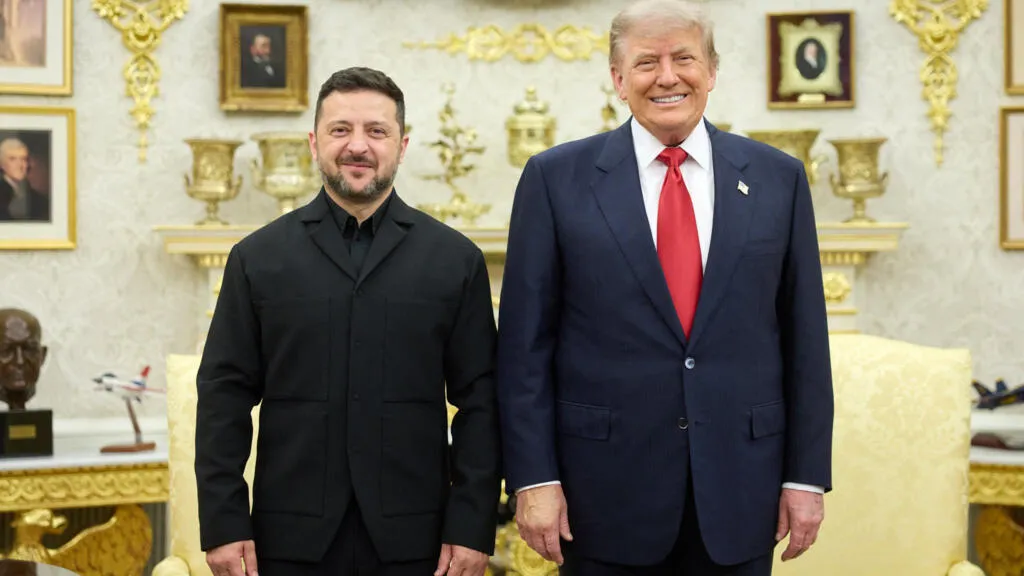
US President Donald Trump said on Friday that Washington had not agreed to allow Ukraine to produce Patriot missiles. The contradiction with Ukrainian President Volodymyr Zelensky following earlier talks between the two leaders complicates defense expectations and near-term planning for decision-makers.
US President Donald Trump said on Friday that Washington had not agreed to allow Ukraine to produce Patriot missiles. That statement directly contradicts remarks by Ukrainian President Volodymyr Zelensky after talks between the two leaders earlier this week.
For executives watching the defense supply chain, this is not a semantic dispute. It is about who gets access to advanced air defense capabilities, what manufacturing rights exist, and how fast partners can convert political agreements into real capacity. If Washington did not agree to Ukraine producing Patriot missiles, then any expectation of local production shifts from “coming soon” to “not confirmed, possibly blocked,” which changes operational and budget planning for governments and contractors.
Patriot systems are widely viewed as a core layer in air defense. In practical terms, producing complex missiles is not just a matter of ordering materials. It involves sensitive technical know-how, supply chain qualification, and strict control of where components come from and how they are assembled. Even when allies cooperate on military support, the rules for licensing production can be tight because they touch national security. The immediate question raised by Trump’s denial is whether there was a negotiating thread that Zelensky interpreted as authorization for Ukraine to manufacture Patriot missiles, or whether Zelensky’s remarks were based on a different scope of discussion that did not include production rights.
The timing matters. Trump’s comment on Friday comes right after Zelensky’s earlier remarks following talks between Trump and Zelensky earlier this week. That sequence creates a familiar kind of friction in coalition diplomacy: one side signals a capability pathway to bolster confidence domestically and internationally, while the other side clarifies the actual terms to avoid commitments that were not formally agreed. In alliance politics, messaging often outruns contracts, and when that happens, the downstream effect is confusion for anyone responsible for procurement schedules, industrial mobilization, and staffing.
For decision-makers, the second-order implication is that planning assumptions get reset. Defense ministries and contractors typically build scenarios around what a partner can deliver, including the possibility of licensed production or technology transfer. If the US position is that it never agreed to Ukraine producing Patriot missiles, then companies and governments that may have started internal planning for production pipelines face the prospect of re-scoping programs. That can affect everything from tooling and component sourcing to compliance workflows, because manufacturing authorization is usually paired with documentation, approvals, and controls.
There is also a coordination problem across stakeholders. Ukraine’s leadership has political reasons to highlight progress in negotiations, especially when air defense is a high-stakes need. The US government, by contrast, has reasons to keep tight control over sensitive defense technologies, especially advanced missile production. When the two narratives diverge, it can force additional rounds of clarification. That means more time spent reconciling statements rather than accelerating implementation, and it can also make it harder to align expectations with other allies who are watching how US commitments are defined.
From an investor and board-level lens, this kind of contradiction is a reminder that policy risk is real in defense. Contracts, partnerships, and industrial investments often depend on precise permission structures. If a statement about production rights is later contradicted, it can reshape market confidence around the probability of technology transfer and local manufacturing. That does not automatically mean no support will come, but it does change the expected timeline and the shape of potential deals.
Strategically, the stakes extend beyond Ukraine and beyond Patriot. Allies and partners learn from how Washington defines what it has and has not agreed to. For peers in similar roles, the lesson is that capability transitions in wartime still run through governance and authorization channels. If those channels do not formally open, then industrial plans can stall. Trump’s denial, paired with Zelensky’s earlier remarks, puts decision-makers in a familiar but tough position: tighten assumptions, demand clarity on scope, and treat “talks” as not equal to “agreed terms” until authorization is explicit.
This story's Key Insights and Take-aways are locked.
Create a free account to unlock Executive Actions for one credit.
Register to UnlockAlways free for Executives Club members. Join the Club
More in Politics

Obama Defends Ilhan Omar After Agents Search Her Home in Trump Inquiry
The former president's intervention raises the stakes in a federal probe into immigration paperwork that has put a prominent progressive lawmaker in the crosshairs.

Blair-era minister: cut welfare to fund youth job support
Alan Milburn's call for welfare cuts to fund employment support opens a Labour fight over benefits and the Neet crisis.
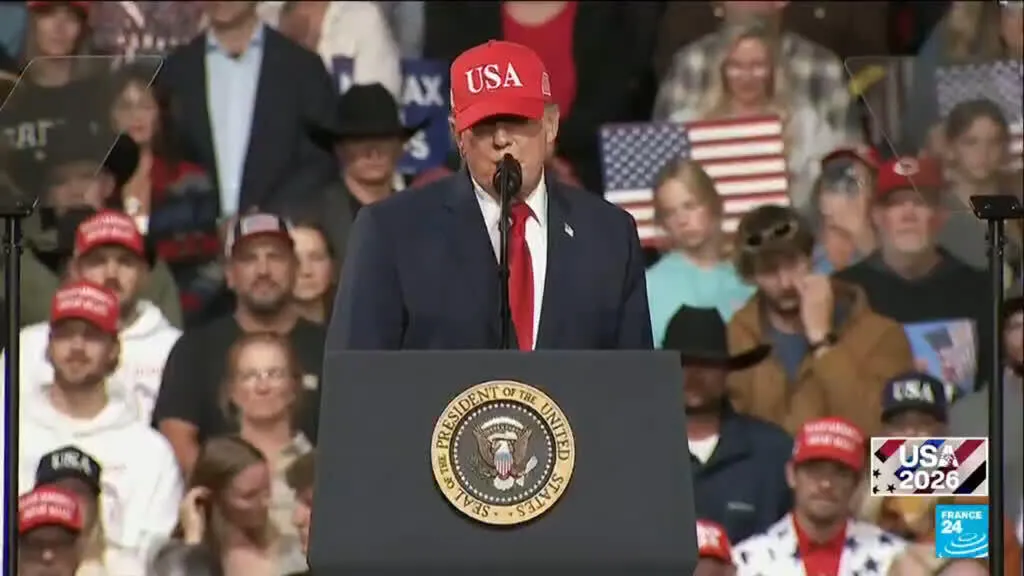
Hot September CPI: energy costs surge, voters feel the squeeze before midterms
The latest inflation print lands as Trump campaigns for GOP control of Congress, putting cost-of-living worries at the center of the midterm fight.