
Trump starts Syria delisting as a terror sponsor after meeting Ahmed al-Sharaa
A formal notification kicks off the process, signaling a policy shift with real compliance and geopolitical knock-ons.
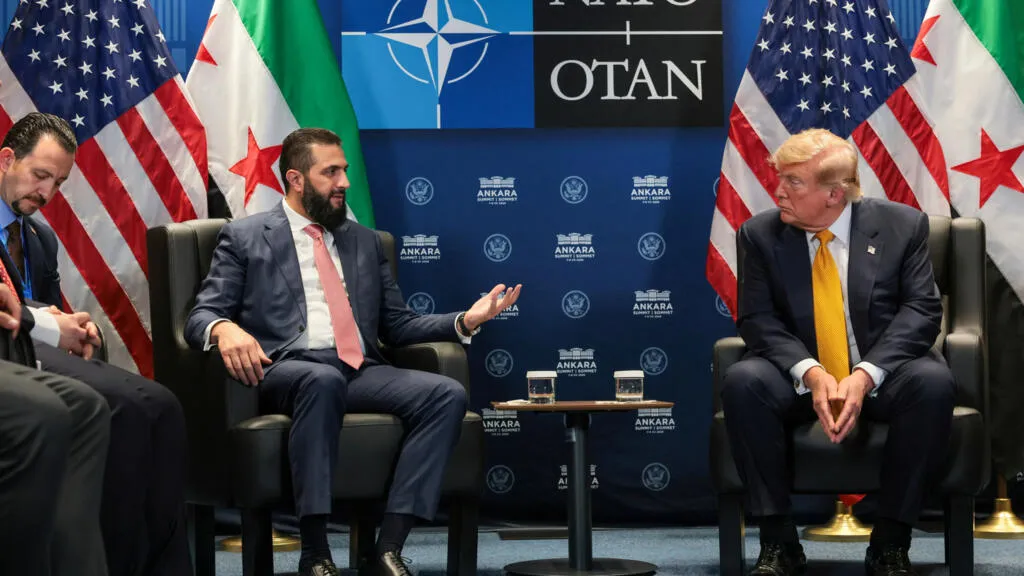
US President Donald Trump formally began the process of removing Syria from the US list of state sponsors of terrorism and notified Congress on Wednesday. For decision-makers, the move could reshape sanctions exposure and how compliance teams manage risk tied to Syria over the rebuild cycle.
US President Donald Trump formally began the process of removing Syria from the US list of state sponsors of terrorism on Wednesday, and notified Congress after meeting Syrian President Ahmed al-Sharaa. The immediate point is procedural, not symbolic: the notification is the start of an official process that Washington uses to make a policy reversal real on paper.
According to the report from France 24, Trump told Ahmed al-Sharaa that the move would help rebuild the war-ravaged country. That framing matters because it signals the administration’s logic for why this change is happening now: if the goal is reconstruction, the US is moving to alter one of the biggest political and economic handbrakes attached to Damascus.
To understand why this is such a consequential shift, you have to know what “state sponsor of terrorism” actually does in practice. In US policy, being on that list is not just a label. It is a foundational designation that tends to cascade into sanctions rules, screening burdens, financing constraints, and reputational risk for companies and intermediaries trying to touch the country. Even when individual transactions might be carved out or licensed, the starting assumption in compliance programs becomes stricter, documentation becomes heavier, and the bar for approvals rises.
So when the White House begins the removal process, it is not merely Washington talking to itself. It changes the risk calculation for banks, insurers, shipping and logistics providers, engineering firms, construction contractors, and any firm that might someday participate in reconstruction supply chains. The point is not that every restriction disappears overnight. The point is that the trajectory can change. Compliance teams generally build controls around the expected regulatory posture, and expected posture can shift when a formal delisting pathway is underway.
There is also a regulatory timeline angle. The source says Trump notified Congress on Wednesday, which underlines that this is not an ad hoc announcement. Congress is brought into the process, which typically means the removal path is subject to political scrutiny and procedural steps rather than a simple executive button. For corporate decision-makers, that translates into a “watch the process, not the press release” mindset. The market reads headlines, but the risk manager reads the procedural reality.
This is where second-order implications start to matter for boards and leadership teams. First, companies with existing exposure or active diligence on Syria-linked projects will need to update their risk models. Even if no deal is signed today, decisions about counterparties, banking partners, and insurance terms often happen in anticipation. Second, companies that are not directly involved may still face indirect effects through supply chain partners. If certain categories of activity become more feasible, intermediaries will adjust, and those shifts can ripple through contract pricing, payment terms, and due diligence requirements.
Third, geopolitical policy shifts can also change the incentives around humanitarian and rebuilding work. The report ties the move to reconstruction, the war-ravaged reality of Syria, and the meeting with Ahmed al-Sharaa. Even without adding new details beyond what the source states, the direction is clear: Washington is signaling a different relationship posture toward Damascus than what many firms have planned for in prior cycles. That can affect how governments and multilateral partners design programs, which in turn affects vendor lists and procurement pathways.
Finally, there is the competitive and strategic angle for peers in adjacent roles. If the US begins removing Syria from the list of state sponsors of terrorism, other governments and regulators are likely to interpret it as a signal about normalization and future policy alignment. That does not automatically mean the entire compliance environment relaxes instantly. But it does change how executives should think about timing: readiness for potential licensing opportunities, updated sanctions screening logic, and scenario planning around reconstruction-related contracts.
In short, the headline is real because the source anchors it in a specific action: Trump began the process and notified Congress on Wednesday after telling Ahmed al-Sharaa the move would help rebuild Syria. The strategic stake for decision-makers is that this is a Washington policy pivot toward Damascus, and policy pivots are what reshape compliance, financing, and opportunity cost across entire industries that orbit conflict zones.
This story's Key Insights and Take-aways are locked.
Create a free account to unlock Executive Actions for one credit.
Register to UnlockAlways free for Executives Club members. Join the Club
More in Politics

Glacial collapse, not rain, killed 180 in Nepal's Himalayan flood
The Himalaya's extreme geography hid the true cause of Nepal's catastrophic flood, a glacial collapse that turned a geological battleground into a mass-casualty zone.

Iran’s Esmail Baghaei says Oman talks start shipping via Hormuz, not US talks yet
Temporary route plans with Oman aim to restart commerce while Tehran says Washington dialogue is not on the table.

Standards watchdog opens probe into Reform UK deputy leader Richard Tice over interests
The parliamentary standards commissioner says it began an investigation on 28 July into a possible undeclared interest.