

TSMC adds $100B in Arizona after Q2 profit jumps 77%
What a 77% profit surge means for TSMC's Arizona capex and the chips supply chain decision-makers can’t ignore.

TSMC announced it will invest an additional $100 billion in Arizona after its second-quarter profit soared 77%. The move raises the stakes for supply-chain planning, subsidy strategy, and global capacity bets for executives across semiconductors.
TSMC is leaning even harder into Arizona. After reporting a second-quarter profit that soared 77%, the company announced it will invest an additional $100 billion in the state.
For decision-makers, this is the clearest signal yet that TSMC’s Arizona buildout is not a side project. It is a long-term capacity commitment, tied to a moment when its profitability is improving sharply, with the headline figure at 77% for the quarter. In other words: stronger earnings are backing stronger industrial intent.
To understand why this matters, zoom out to how semiconductor capacity gets built. Leading-edge chipmaking depends on massive capital expenditures, specialized facilities, and long construction and ramp timelines. When a foundry like TSMC decides where to place that capital, it effectively shapes regional industrial policy and global supply patterns for years, not quarters. An “additional” $100 billion is not subtle. It suggests TSMC is translating current financial momentum into manufacturing footprint at a time when demand visibility and customer commitments often require upfront certainty.
This announcement also comes in the context of TSMC’s reporting cadence. CNBC notes that the second-quarter profit announcement followed June revenue figures that the company released earlier in the week. That sequencing matters because it lets investors and planners connect the dots: top-line performance during June, then profitability strengthening in the second quarter, then a major investment update. Executives watching the sector should treat that chain as more than a press rhythm. It is a capital roadmap being revealed alongside financial results.
Arizona is the stage where business strategy meets industrial policy. Governments in the US and elsewhere have spent years trying to bring advanced chip manufacturing closer to domestic demand and critical infrastructure. Subsidies, incentives, permitting acceleration, and workforce development efforts are often designed with one goal: reduce dependence on offshore capacity and stabilize supply for industries like automotive, industrial equipment, telecom, defense, and consumer electronics. When a flagship provider like TSMC increases investment on that timeline, it changes what local policymakers can credibly plan for, and it increases the pressure on other parts of the ecosystem. Supplier clusters, equipment procurement schedules, and talent pipelines all have to scale to meet the factory buildout.
Now consider the boardroom angle. A 77% jump in quarterly profit gives management something boards typically like to see: evidence that execution and demand conditions are aligning, at least temporarily. That does not guarantee every quarter will look the same, but it does affect the risk appetite for big commitments. Capital projects of this scale require confidence that returns will justify the outlay and that competitive positioning will be maintained. By pairing a sharp profit increase with a massive additional investment, TSMC is effectively saying it can finance expansion while the financial window is open.
There is also a competitive second-order effect for peers. Foundry competition is not just about which technology node is “best.” It is about who can deliver manufacturing capacity where customers want it, with supply chain resilience and predictable lead times. A bigger Arizona investment base can influence customer allocation decisions and encourage OEMs and fabless companies to lock in long-term wafer planning. Even if those customers are not named in the CNBC summary, the operational reality is the same: when a leading foundry expands, demand forecasting becomes easier for partners who need stable access.
For executives across semiconductors, the stakes are immediate: this announcement affects how they think about capacity constraints, pricing dynamics, and supply risk management. If TSMC’s profitability strengthens and then funding ramps into additional $100 billion for Arizona, the industry’s center of gravity shifts. That can change negotiating leverage with foundries, alter timing assumptions for downstream product roadmaps, and reshape how boards evaluate geography in capital allocation. The headline fact is the investment amount and the profit jump, but the real consequence is strategic. TSMC is turning financial strength into manufacturing footprint, and the ripple will be felt across the supply chain that depends on its throughput.
This story's Key Insights and Take-aways are locked.
Create a free account to unlock Executive Actions for one credit.
Register to UnlockAlways free for Executives Club members. Join the Club
More in Business

Epic and Google drop settlement bid, forcing rival Android app stores by July 22
Google told the court it is ready to carry third-party app stores starting Wednesday, July 22.
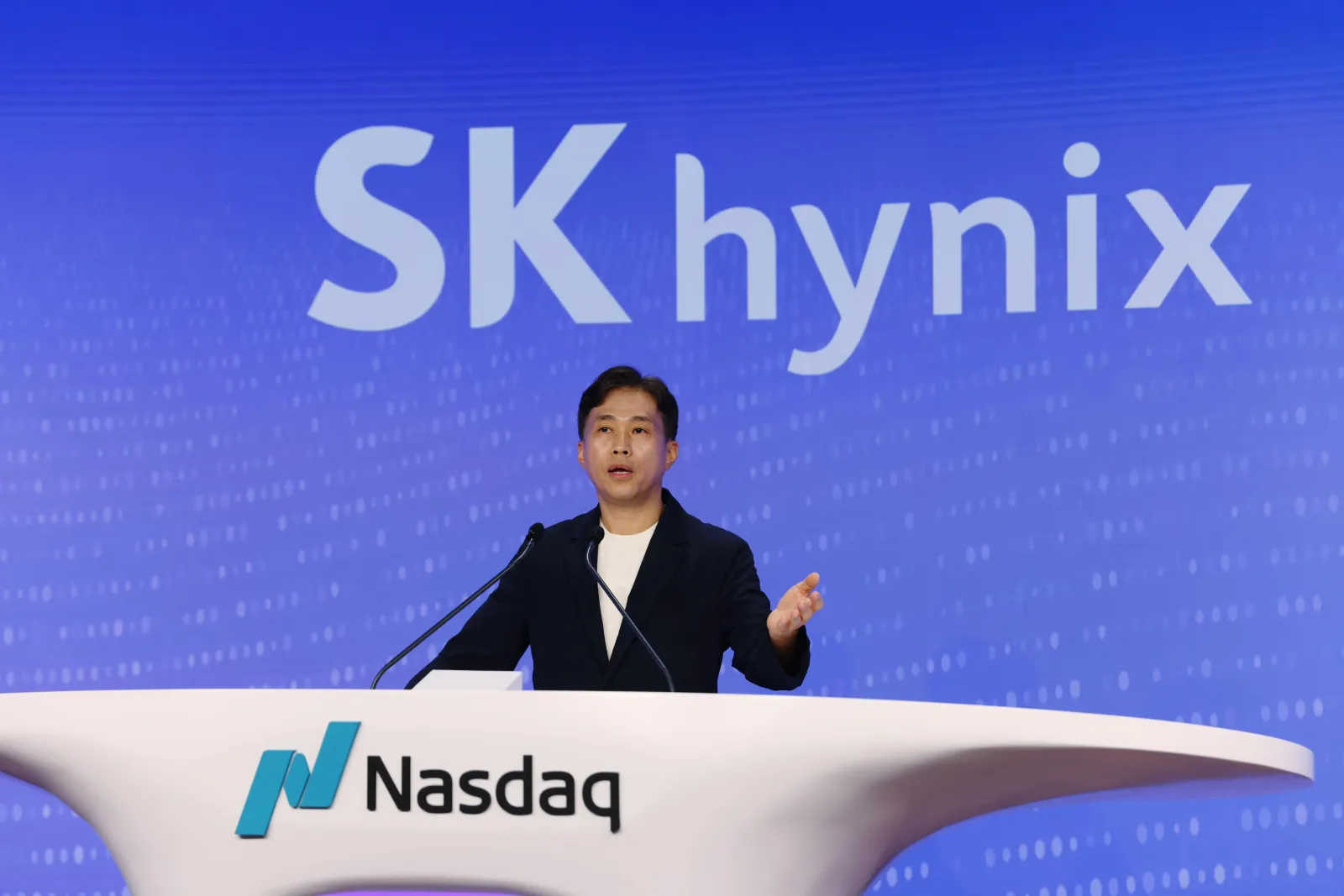
SK Hynix opens at $170, raises $26.5B, and tops foreign IPO records
In Friday's Wall Street debut, SK Hynix turns AI RAM demand into a $26.5B fundraising moment that rewrites comps.

China lands a reusable Long March booster, a first that matches SpaceX and Blue Origin
A barge landing and net-based recovery move China from theory to proof, reshaping the reusability race and satellite ambitions.