

Tulloch, who rejected Zuckerberg's $1.5B, leaves Meta for Anthropic
The AI talent war escalates as a top researcher who spurned a $1.5B offer jumps to Anthropic to optimize training and inference.
Andrew Tulloch, a star AI researcher, is leaving Meta for Anthropic to work on optimizing AI training and inference. The move underscores the intensifying battle for top AI talent, giving researchers like Tulloch significant leverage and earning power.
Andrew Tulloch, the AI researcher who last year turned down a pay offer from Meta CEO Mark Zuckerberg that could have totaled $1.5 billion, is leaving Meta for Anthropic after less than a year. He will start next week, an Anthropic spokesperson told Business Insider, joining the startup's inference and performance team to optimize how Anthropic trains its AI models and how they respond to users. The move, first reported by Semafor, is the latest salvo in the AI industry's relentless talent war, where a handful of elite researchers command outsized influence and compensation.
Tulloch's resume reads like a tour of AI's most consequential labs. He spent 11 years at Meta before leaving for OpenAI in 2023, where he helped train GPT-4o, GPT-4.5, and o3. In 2025, he cofounded Thinking Machines Lab, a startup focused on AI research. While there, he rejected Zuckerberg's $1.5 billion offer, only to decamp for Meta in October. Now, after just a few months, he is jumping to Anthropic, bringing deep experience in both model training and inference - the two areas Anthropic is betting on to stay competitive.
The talent war has been raging since ChatGPT's release, with Anthropic, Meta, OpenAI, Google, and others poaching researchers with massive pay packages and equity. For experienced workers like Tulloch, this competition has created extraordinary leverage. The $1.5 billion offer he turned down is a stark illustration of how much a single researcher can be worth when they sit at the intersection of cutting-edge AI and business strategy. His departure from Meta, so soon after joining, signals that even the most generous retention packages may not be enough to keep top talent in a market where mission and technical challenge matter as much as money.
For Anthropic, the hire arrives at a pivotal moment. The company is preparing for its initial public offering, dueling with rivals for enterprise and consumer business, and reckoning with mounting concerns about AI's adverse effects. Just this week, researcher Jacob Coxon resigned from Anthropic, writing that "people building AI earnestly believe that it could kill us all by the end of the decade." Tulloch's arrival offers a counterweight - a proven builder who can help Anthropic ship faster and more efficiently, potentially easing investor nerves ahead of the IPO.
Tulloch's focus on training and inference is strategically significant. Inference - the process of generating responses from a trained model - is where costs and latency live, and optimizing it directly impacts profitability and user experience. As AI models grow larger and more complex, the ability to train them faster and run them cheaper becomes a competitive moat. Anthropic's investment in this area suggests it is thinking beyond research breakthroughs to operational excellence, a shift that could define its post-IPO trajectory.
The broader lesson for executives is clear: in AI, talent is the ultimate currency. The battle for researchers like Tulloch is not just about salaries; it is about who gets to define the next generation of models. Companies that fail to create environments where top researchers can do their best work - whether through technical freedom, mission alignment, or financial upside - will find themselves losing their most valuable assets. Tulloch's move is a reminder that even a $1.5 billion offer is not a guarantee of loyalty.
For peers in similar roles, the takeaway is twofold. First, retention requires more than money; it demands a compelling technical vision and a culture that supports ambitious research. Second, the market for AI talent remains frothy, and the leverage researchers hold is unlikely to fade soon. As Anthropic, Meta, and others continue to invest heavily in AI, the competition for minds will only intensify, making it imperative for boards and CEOs to treat their top researchers as strategic assets, not just employees.
Tulloch's departure also raises questions about Meta's AI strategy. The company recently launched Muse, an AI agent designed to autonomously complete tasks for users, and losing a researcher of Tulloch's caliber could slow its progress. Yet Meta's deep pockets and Zuckerberg's willingness to spend suggest it will simply find the next star. The real winner may be Anthropic, which gains a proven expert at a critical juncture - and a signal to the market that it can attract the best, even as it prepares to go public.
This story's Key Insights and Take-aways are locked.
Create a free account to unlock Executive Actions for one credit.
Register to UnlockAlways free for Executives Club members. Join the Club
More in Business

Royal Caribbean just spent $3B to own half of Sandals
The cruise giant is buying a 50% stake in the all-inclusive resort chain for $3 billion, a bet that land-based vacations are the next growth engine.

Paramount's Ellison: Merger Clearance Done, WBD Deal by Oct 1
David Ellison says the Paramount-WBD merger has full clearance after settling with state AGs, clearing the path for an October 1 close.
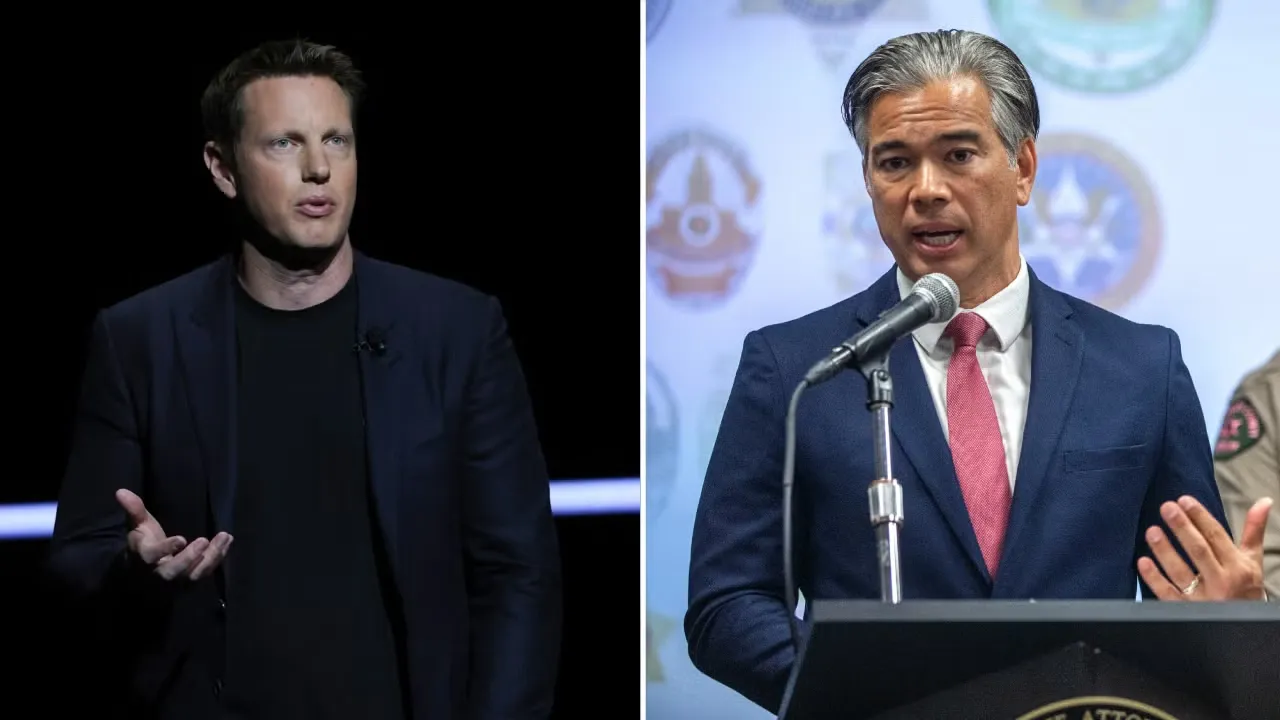
Paramount settles with 12 states, $110B Warner merger clears final hurdle
David Ellison's studio avoids a March trial and a $7M-a-day ticking fee by settling with state AGs over local job losses.