
Typhoon Bavi triggers 1.7 million evacuations in Zhejiang, while hundreds of flights stop
The storm is already the second typhoon to hit China in just over a week, disrupting air and rail.
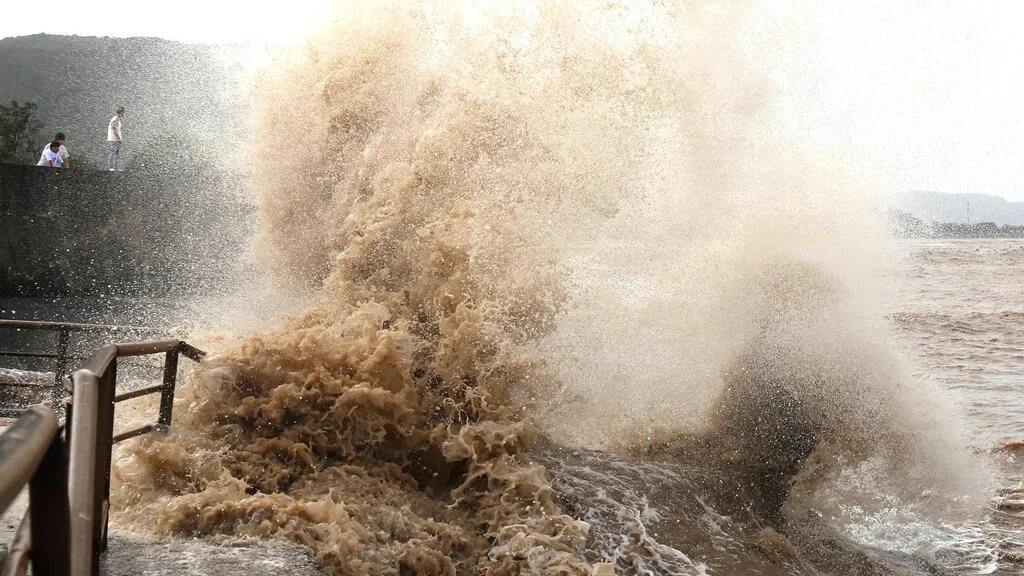
Chinese authorities evacuated more than 1.7 million people as Typhoon Bavi made landfall in Zhejiang in eastern China. The disruption is already showing up in hundreds of cancelled flights and halted parts of the high-speed rail network, a compounding stressor for decision-makers.
Typhoon Bavi forced Chinese authorities to evacuate more than 1.7 million people as it made landfall in the country’s eastern province of Zhejiang, according to France 24. The scale is not just a headline number. It is a real operational stress test for emergency systems, logistics networks, and the businesses that depend on them, happening in real time.
As the storm moves through, hundreds of flights have been cancelled and some high-speed railway services have been halted. In plain terms: this is a mobility shock. It strands people, interrupts inventory flows, delays staff, and can force last-minute cancellations for everything from manufacturing inputs to wholesale shipments. And because Bavi is the second typhoon to impact China in just over a week, the country is not starting from baseline. Recovery from the prior event is already underway, which means crews, infrastructure, and budgets are more likely to be stretched.
For executives, the key is to think in second-order effects, not just immediate damage. When authorities evacuate large populations, they typically shift demand and workforce availability across regions and time windows. Even if a company’s core assets are outside the hardest-hit zones, its operations can still be disrupted by road, airport, and rail capacity constraints. The cancellation of flights and halting of some high-speed rail services is especially consequential for time-sensitive sectors where just-in-time delivery matters, because rerouting through alternate transport corridors is slower and more expensive.
Then there is the operational governance piece. In a country like China, where large-scale weather events can become fast-moving crises, response tends to involve coordination between local authorities, transportation operators, and private sector stakeholders. Businesses often need to decide quickly: whether to preemptively pause operations, how to protect staff who might be at risk, and when to switch routes or suppliers to maintain continuity. These are board-relevant calls because service interruptions can quickly translate into revenue loss and contractual penalties, even when the underlying cause is external and non-discretionary.
Typhoon season also has an incentive angle. When events stack close together, risk models and business continuity planning get stress-tested. Executives should interpret this kind of news as a validation check on assumptions they might have baked in after the previous storm. If the same corridors and capabilities are impacted again within a short window, companies may need to update contingency playbooks: alternative transportation plans, emergency staffing arrangements, and inventory buffers that account for the probability of repeated disruption.
The rail and air disruption is a practical reminder that transport systems are tightly coupled. High-speed rail is often used for passenger travel and, depending on the specific logistics setup, can be part of time-sensitive planning for personnel and commercial movement. When “some high-speed railway services” are halted, the impact can ripple into workforce scheduling and customer fulfillment. Flight cancellations can be even more disruptive because air travel is less flexible in the moment, and rescheduling depends on airport capacity and airline decisions that can change quickly.
There is also a market-facing implication for executives managing supply chains across Asia. A typhoon that hits eastern China can affect demand upstream and downstream. Even without specific industry numbers in the report, the mechanics are straightforward: fewer flights and paused rail services can slow shipments, delay purchasing, and create temporary shortages of both inputs and finished goods. With Bavi arriving as the second typhoon in just over a week, the likely outcome is a broader synchronization problem across regional schedules, where many companies are trying to recover at the same time.
Finally, the governance and stakeholder communication stakes rise with scale. Evacuating more than 1.7 million people implies a high level of urgency from authorities. For boards and senior leaders, that is a signal that this is not a minor disruption. The strategic question for peers in similar roles is how quickly they can convert a weather headline into an operational plan: where to adjust logistics, how to protect employees, how to manage customer commitments, and how to document risk decisions while the situation is still unfolding.
This story's Key Insights and Take-aways are locked.
Create a free account to unlock Executive Actions for one credit.
Register to UnlockAlways free for Executives Club members. Join the Club
More in Politics

Glacial collapse, not rain, killed 180 in Nepal's Himalayan flood
The Himalaya's extreme geography hid the true cause of Nepal's catastrophic flood, a glacial collapse that turned a geological battleground into a mass-casualty zone.
Iran’s Esmail Baghaei says Oman talks start shipping via Hormuz, not US talks yet
Temporary route plans with Oman aim to restart commerce while Tehran says Washington dialogue is not on the table.

Standards watchdog opens probe into Reform UK deputy leader Richard Tice over interests
The parliamentary standards commissioner says it began an investigation on 28 July into a possible undeclared interest.