
Ubisoft quietly pauses after Black Flag Resynced, betting on 2027-28 free cash flow rebound
A lighter 2026-27 release slate sets up “significantly bigger” content in 2027-28, plus faster live ops to restore positive free cash flow.
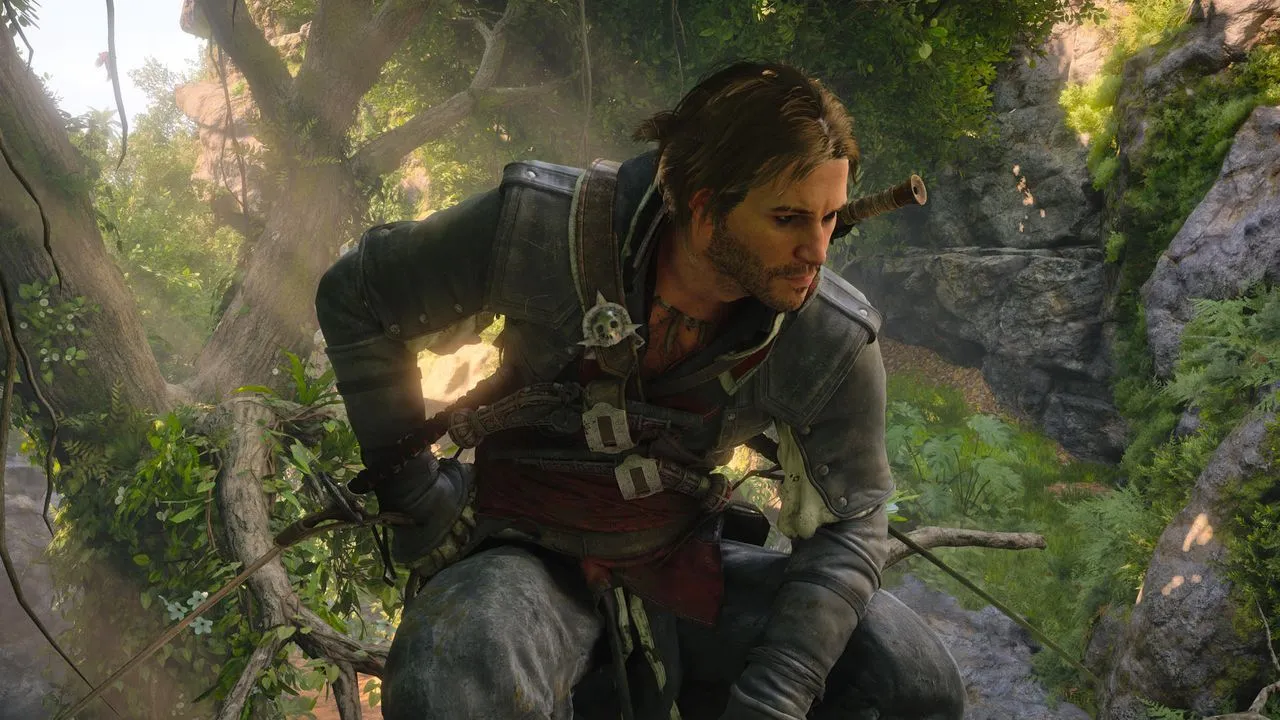
Ubisoft says it is entering a relative period of quiet after Assassin's Creed Black Flag Resynced, while it expects stronger releases in fiscal years 2027-2028. Decision-makers should treat the company’s guidance as a capital and portfolio reset: acceleration in live services plus cost reductions is meant to drive a return to positive free cash flow.
Assassin's Creed Black Flag Resynced is here, Ubisoft is seeing positive momentum, and yet the release calendar immediately after it looks… almost suspiciously light. In its latest financial report, the company admits it is going into a “lighter new release slate” following Black Flag Resynced, before it ramps up with “stronger releases in fiscal year 2027-2028.” That fiscal year runs April 1, 2027 to March 31, 2028. In other words: you may be feeling “wait, where’s the next hit?” now, but Ubisoft is telling investors to look two years ahead.
Ubisoft also ties that quieter near-term stretch to a specific financial goal: an “important rebound with a return to positive free cash flow.” The report says live service operations will see an “acceleration,” and that, combined with a “refocused portfolio” and “continued reduction of its fixed cost base,” should help produce that rebound. So the story is not just what Ubisoft is launching. It is how the company plans to finance the gap between major releases, and whether its live services and cost structure can bridge the time.
Context matters because Ubisoft is one of the companies where product cadence and capital discipline both have to work at the same time. Big open-world titles like Assassin's Creed, plus long-running franchises such as Far Cry and Ghost Recon, typically carry huge development budgets and long lead times. When a studio has a period with fewer major launches, it either leans harder on live operations, leans on cost reductions, or it draws down financial flexibility. Ubisoft’s framing in the report suggests it wants to do all three, but with the emphasis on live service acceleration and controlling the fixed cost base.
The “quiet” note is not the same as “nothing is happening.” Ubisoft says its live service operations will accelerate, and the company expects that this stronger release schedule in the later fiscal years, paired with portfolio refocusing and fixed cost reductions, leads to the rebound in free cash flow. It even clarifies that it has “premium games based on established Ubisoft brands that will be announced at a later date.” The message for decision-makers is pretty clear: the pipeline exists, but Ubisoft is choosing timing, and it is choosing to de-risk cash flow in the interim.
If you zoom out, this is also a portfolio and risk-management play. Ubisoft is effectively telling stakeholders: we have a blockbuster remake landing now, like Assassin's Creed Black Flag Resynced, but do not judge our long-term content pipeline based on the immediate schedule. Instead, the company points to fiscal year 2027-2028 and even 2028-2029, where it expects a “significantly bigger content pipeline over fiscal year 2027-28 and fiscal year 2028-29 across its major brands including Assassin’s Creed, Far Cry and Ghost Recon.” For boards and investors, the subtext is that Ubisoft wants to align major creative beats with the financial reality of sustaining a game business between big releases.
For players and the broader market, the report’s “quiet” period raises the practical question: does the live services layer have enough pull to compensate for the calendar? Ubisoft seems to think yes, at least financially. The report suggests acceleration in live services will be a key mechanism, while the free cash flow rebound depends on both revenue continuity and lower fixed costs. That is where second-order effects show up. If Ubisoft succeeds, it reinforces the playbook that live ops can stabilize cash flow while the big-brand pipeline catches up. If it fails, the company could end up with the worst of both worlds: fewer premium launches and underperforming live metrics.
Ubisoft also signals that the pipeline is real even if it is not fully scheduled yet. Beyond the remake, it notes that it has “premium games” coming later, including what the industry already knows about future Assassin's Creed plans. The source notes that the next mainline Assassin's Creed game is codenamed Hexe, described as a “darker,” witchy adventure set “during a pivotal moment in history.” It also points to Assassin's Creed Jade, which is mobile-exclusive, and mentions Beyond Good and Evil 2. The source does not claim dates for these projects, but it does connect the dots that Ubisoft is building multiple branded bets across platforms.
Finally, there is a reminder that execution always comes with bumps. Assassin's Creed Black Flag Resynced was briefly unplayable over the weekend on PC despite being a single-player “offline” game. Operational issues like this can temporarily distort sentiment and metrics, even when the long-term product narrative is positive. For executives at peers, Ubisoft’s report is a case study in managing timing risk: you can ship a major release and still ask the market to look past the immediate lull. The stakes are the same everywhere, whether you publish games, build subscriptions, or run a product portfolio: can your live layer and cost structure carry the business until the next content wave arrives, and does that strategy translate into free cash flow turning positive again?
This story's Key Insights and Take-aways are locked.
Create a free account to unlock Executive Actions for one credit.
Register to UnlockAlways free for Executives Club members. Join the Club
More in Entertainment

12TB Steam 'teraleak' goes beyond Valve: GTA 3, Mafia 2 prototypes exposed
A 12-terabyte dump of Steam data reveals prototypes and builds of third-party classics like GTA 3 and Mafia 2, plus unreleased Valve content, rewriting game history.

LinkedIn's romance problem: 1 in 4 workers say dating on it is fair game
A new survey shows a quarter of U.S. employees treat the professional network as fair game for romance, even as LinkedIn bans it and removes hundreds of thousands of offending posts.

Enhypen's first No. 1 album breaks K-pop's Billboard 200 streak
The K-pop group's 98,000-unit debut tops the chart while Dolly Parton's catalog reentry shows how death reshapes streaming.