
Ubisoft says Assassin's Creed Black Flag Resynced sold 3M units in a week
A remake hit 3 million sales across platforms fast, changing the math for Ubisoft and the remake playbook.

Ubisoft announced that Assassin's Creed Black Flag Resynced has sold over 3 million units in its first week across all platforms, following a big 2 million opening. For decision-makers, that early traction tightens expectations for remake momentum, marketing spend, and publisher cash-flow timing.
Ubisoft just put hard numbers on the early momentum for Assassin's Creed Black Flag Resynced. After a reported 2 million sales opening, the publisher says the remake has now sold over 3 million units in a week across all platforms.
That matters because the “first week” is where performance turns into forecasting. If a remake can add roughly another million plus units after the initial spike, it suggests demand is sticking beyond the day-one wave and beyond the small group of super-fans who would have preordered no matter what. Ubisoft’s announcement anchors that idea with a simple headline metric: over 3 million in a week.
To understand why executives care so much about a number like this, zoom out to how remake economics typically work. Remakes are usually judged on whether they can combine two things: the familiarity that reduces marketing friction and the modernized production value that can justify new pricing and new sales targets. Early sales milestones are not just bragging rights. They influence internal decisions about how much to invest in ongoing promotion, whether to accelerate content plans, and how to think about the long tail versus the short burst.
There is also the board-level angle. Investors and boards want to see that the product pipeline is producing measurable revenue outcomes, not only engagement metrics. A figure like “3 million in a week across all platforms” gives a common language for risk discussions. It can change how executives talk about remaining budgets and timelines, especially when companies have multiple projects competing for attention and capital.
Platform distribution is another quiet but important detail in Ubisoft’s framing. “Across all platforms” signals the sales are not limited to a single hardware ecosystem. That matters because cross-platform breadth usually reduces dependence on one segment of the market, and it can stabilize revenue expectations when platform-specific demand is uneven. For decision-makers, that can affect channel planning, retailer negotiations, and how teams prioritize future releases.
Now layer in the broader market context. The games industry has been swinging toward proven brands and recognizable franchises, particularly when development timelines are long and budgets are high. Remakes are a way to take a previously successful property and repackage it for current audiences. Early sales benchmarks like the ones Ubisoft reported help validate whether that strategy still works in practice, not just in theory.
From a second-order perspective, fast sales milestones can also reshape competitive behavior. If Ubisoft’s remake is clearly finding buyers in week one, competitors may recalibrate how they position their own titles. That can include shifting marketing focus, reconsidering release timing, or increasing emphasis on features that help a remake feel meaningfully different rather than merely “updated.” Even without new public statements from rivals, the market tends to respond to visible traction.
Regulatory framing is less front-and-center in consumer entertainment than in industries like banking or healthcare, but there is still a governance layer worth noting. Public company announcements around sales figures are the kind of data that management teams must handle carefully to avoid misleading investors. When Ubisoft chooses to share a “sold over 3m units in a week across all platforms” milestone, it effectively puts a stake in the ground for what it expects to be a credible, comparable performance signal. That kind of clarity can reduce internal ambiguity for finance teams and improve the quality of subsequent guidance discussions.
For executives at publishers and studios, the practical strategic stake is straightforward: does a remake sustain demand after the launch day spike? Ubisoft’s reported move from “big 2m sales opening” to “over 3m units in a week” offers an answer at least for the earliest stretch. The takeaway is not that every remake will match it, but that the remake strategy can still produce scalable results quickly when the product lands with real buyers. In a market where teams are constantly balancing creative risk against commercial discipline, those first-week numbers can decide what gets funded, what gets supported, and what gets quietly deprioritized.
This story's Key Insights and Take-aways are locked.
Create a free account to unlock Executive Actions for one credit.
Register to UnlockAlways free for Executives Club members. Join the Club
More in Business

Uber buys Delivery Hero for nearly $15B, vaulting to top food delivery outside China
The deal doubles Uber's dual-services footprint and pushes a ride-and-eats bundling play into 50 more markets.

Epic and Google drop settlement bid, forcing rival Android app stores by July 22
Google told the court it is ready to carry third-party app stores starting Wednesday, July 22.
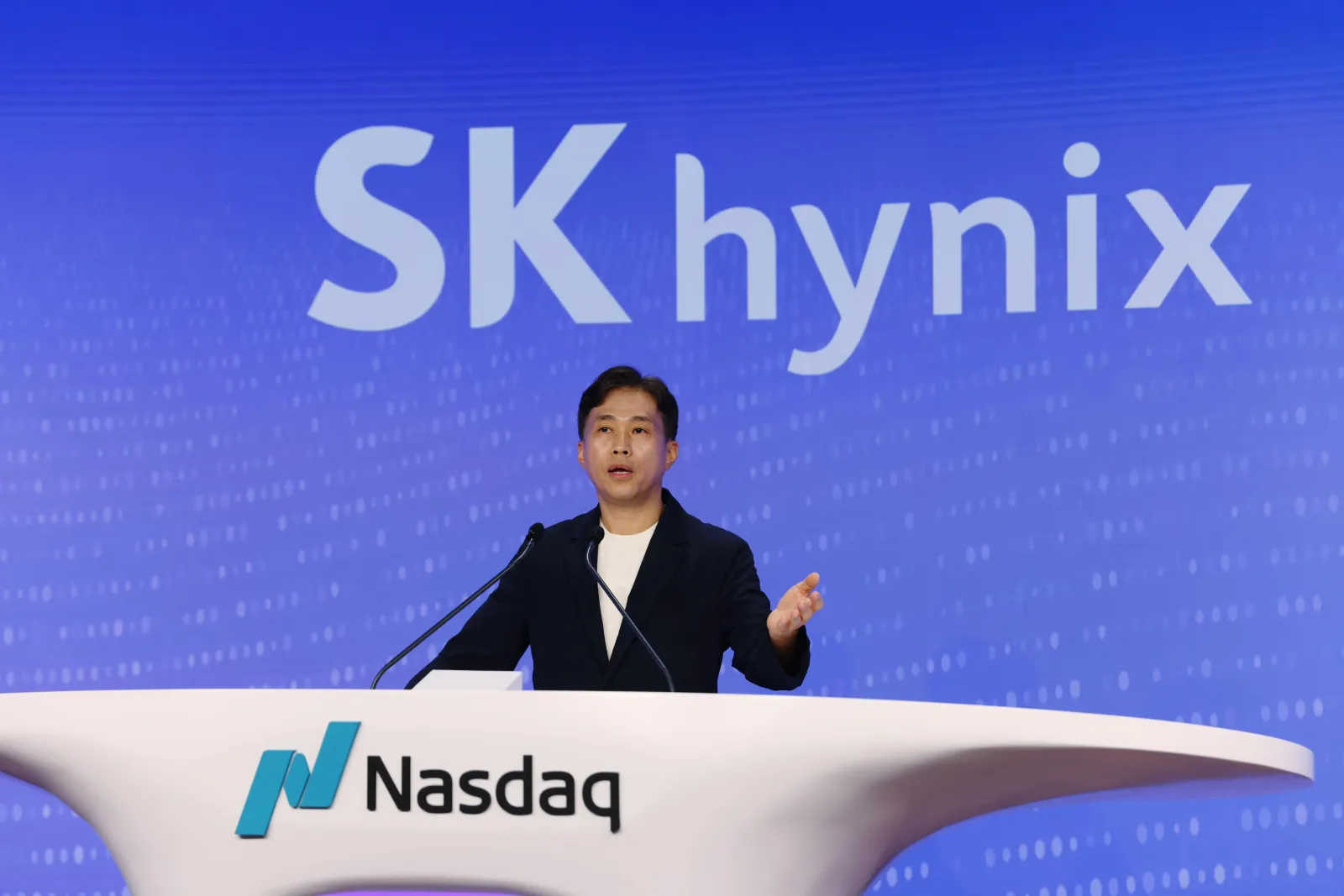
SK Hynix opens at $170, raises $26.5B, and tops foreign IPO records
In Friday's Wall Street debut, SK Hynix turns AI RAM demand into a $26.5B fundraising moment that rewrites comps.