
Ukraine intensifies strikes on Crimea logistics and energy to pressure Russia’s war machine
Kyiv is targeting supply lines and power infrastructure in Crimea, and the wager is about readiness, not just damage.
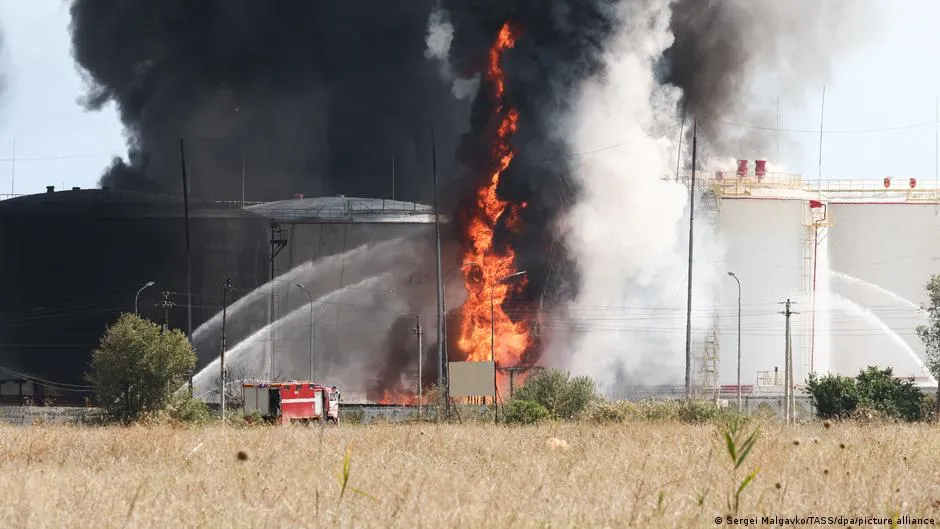
Ukraine has stepped up attacks on Russian logistics centers and energy facilities in Crimea. For decision-makers, the key question is how disruptions to local supplies and power translate into pressure on Russia’s ability to fight.
Ukraine has stepped up attacks on Russian logistics centers and energy facilities in Crimea. The immediate consequence is straightforward but politically sensitive: when you hit the places where materiel moves and where electricity is generated or distributed, you can strain what local areas can use and what troops can sustain.
This is where the strategy matters for Ukraine’s war aims. The question is not only whether Crimea suffers disruption, but whether those disruptions force Russia to reroute shipments, increase protection, and manage power and fuel constraints in a region that is geographically tied to its operational footprint. Kyiv’s bet is that pressure on logistics and energy creates second-order effects across readiness and tempo, which then influences how the war unfolds.
To understand why logistics and energy are such magnetic targets, it helps to translate military terms into business logic. Logistics centers are the “inventory and distribution” layer. They do not just store things, they organize movement. When that layer is disrupted, the downstream effect is delays, shortages, and longer routes. Energy facilities, meanwhile, are the “operating stability” layer. Without reliable power, industrial output and infrastructure performance degrade, and even ordinary maintenance becomes harder. In wartime, those frictions compound quickly.
Crimea is an especially strategic environment for this kind of pressure. Crimea functions as a connective point between contested lines and rear support. That means that strikes there can be designed to reach beyond the immediate blast radius. If Russian forces must divert resources to guard logistics nodes and stabilize energy operations, they are spending attention and assets on damage control rather than on offensive planning. For Kyiv, that trade-off is the point. The goal is to shape costs and constraints on the Russian side, not to simply create headlines.
There is also a local-supply angle that decision-makers should watch closely. The source frames the key consequence as impact on local supplies. In practical terms, when energy infrastructure faces repeated stress, communities can experience reductions in reliability. When logistics facilities are targeted, distribution networks can become less efficient. Even if supplies continue to move, the risk is that timing becomes unpredictable, and unpredictability is often what breaks systems. In war, timing can determine whether units are resupplied before they run out, whether repair cycles are completed, or whether equipment can be powered and maintained.
For boards and executives thinking in “systems resilience” terms, the second-order implications are brutal. Disrupting logistics and energy tends to increase demand for redundancy, security, and backup capacity. That is expensive. It also creates bureaucratic overhead: shifting routes, updating protection plans, and reallocating engineering resources. Over time, the cost curve rises for the defender, especially when damage cannot be fully prevented.
Regulatory and governance context also matters, even when the topic is military operations. In conflict zones and disputed territories, attacks can trigger additional sanctions scrutiny, export-control enforcement, and compliance pressure for firms operating supply chains connected to energy and transportation. While the source does not specify particular legal actions, the broader pattern is that infrastructure targeting typically widens the compliance footprint for international counterparties. Any escalation that affects energy and logistics can ripple into procurement uncertainty, insurance costs, and risk assessments.
Ultimately, Kyiv’s strategy is about leveraging Crimea as a pressure point. The source asks what Kyiv hopes this strategy will affect in the course of the war. The most direct way to read that is: Ukraine wants to degrade the functionality of Russian logistics and energy support in Crimea, thereby constraining operations and raising the defender’s burden. For leaders in any role that depends on global flows, the takeaway is clear. In both wartime and peacetime, systems are only as strong as the links that move goods and keep power running, and targeting those links is a lever with reach far beyond the initial strike.
This story's Key Insights and Take-aways are locked.
Create a free account to unlock Executive Actions for one credit.
Register to UnlockAlways free for Executives Club members. Join the Club
More in Politics

Obama Defends Ilhan Omar After Agents Search Her Home in Trump Inquiry
The former president's intervention raises the stakes in a federal probe into immigration paperwork that has put a prominent progressive lawmaker in the crosshairs.

Blair-era minister: cut welfare to fund youth job support
Alan Milburn's call for welfare cuts to fund employment support opens a Labour fight over benefits and the Neet crisis.

Hot September CPI: energy costs surge, voters feel the squeeze before midterms
The latest inflation print lands as Trump campaigns for GOP control of Congress, putting cost-of-living worries at the center of the midterm fight.