
Ukraine protests pushed Zelensky to reinstate a popular minister after the firing backlash
A mass crowd forced a leadership reversal, proving domestic politics still override even a decisive executive agenda.

In Ukraine, mass protests compelled President Volodymyr Zelensky to reverse course on the firing of a popular minister. For decision-makers, the consequence is clear: legitimacy and public support can overrule formal authority faster than policy plans.
Mass protests in Ukraine forced President Volodymyr Zelensky to reverse course on the firing of a popular minister, turning a personnel decision into a legitimacy test. The headline fact is the whole story: the crowd pressure was strong enough to change the outcome, not just the messaging.
That matters because personnel moves are rarely “just” personnel. Firing or reinstating a minister signals who has power inside the state and what kind of coalition the president can actually hold. When Zelensky moved to fire a widely liked minister, he was effectively betting that executive authority and administrative control would carry the day. The protests show the counterweight Ukraine’s political system can still generate when public sentiment aligns, quickly and visibly, behind a specific grievance.
For executives, investors, and board members watching from the outside, the lesson is less about Ukraine’s unique political texture and more about a universal governance reality: formal decisions live inside informal constraints. You can have the legal right to act, the communications strategy to justify it, and the internal process to execute it. But if a policy or a leadership change triggers sustained public mobilization, the “license to operate” can become the real constraint.
In many modern systems, including corporate ones, organizations treat public backlash as a reputational risk. Ukraine’s episode reframes it as an operational forcing function. Protests did not merely threaten political optics; they compelled a reversal. That is a step beyond “damage control.” It is a reminder that in high-salience environments, legitimacy can be operationalized through mass behavior, and that behavior can override executive intent.
There is also a market-style incentive logic underneath it. Ministers often sit at the intersection of policy delivery and day-to-day life. That makes them vulnerable to public sentiment and, at the same time, makes them politically “expensive” to remove. If the dismissed minister had durable popularity, then the president’s move would likely be interpreted as a broader assault on the public’s priorities, not a narrow administrative reset. Zelensky’s reversal suggests the political cost of pushing forward was higher than the cost of backing down.
This kind of political back-and-forth echoes how regulatory frameworks can constrain leadership choices even when plans look internally coherent. In business, regulators do not need to “win arguments.” They need to create process friction, compliance burdens, or enforcement risk. Here, protests played a similar role: they created a pathway in which continuing the firing became harder to sustain, not because of a legal impossibility, but because the political system’s practical equilibrium shifted.
Second-order implications for decision-makers are sharp. Boards and executive teams often underestimate how quickly legitimacy can become a bargaining chip. A firing can unify opponents faster than a planned agenda can persuade neutrals. Then, once the leadership reversal happens, the new question becomes what it signals about future moves: does the president have to recalibrate every controversial decision around the risk of mass action? Or can this be treated as an exception that proves the cost of misreading public mood? The article’s core point, that people still matter, lands on the first-order truth. But the aftershock is the strategic uncertainty it creates.
Peers in similar roles, especially those operating in sensitive political or social environments, should take the implication seriously: stakeholder engagement is not a “nice-to-have.” It is part of operational risk management. If public support can force a reversal of a ministerial firing, then leadership strategy must account for the probability of mobilization and the speed at which it can change outcomes. In other words, the constituency is not just watching. It can reach into the decision loop and rewrite the result.
This story's Key Insights and Take-aways are locked.
Create a free account to unlock Executive Actions for one credit.
Register to UnlockAlways free for Executives Club members. Join the Club
More in Politics
DOJ reversed its subpoena process while chasing Air Force One leak leads
A judge’s comments on reporter subpoenas quickly turned a procedural fight into a spotlight on two cabinet candidates.
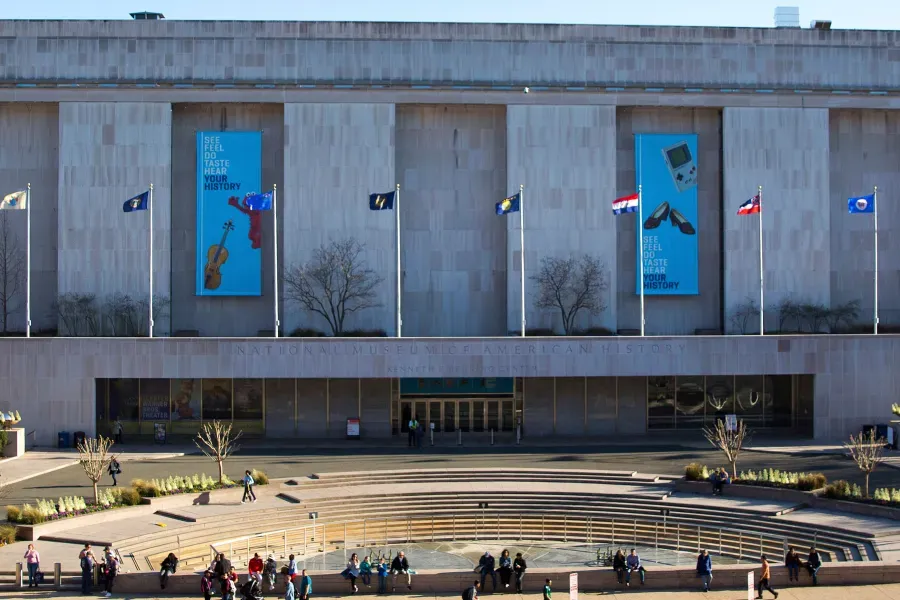
Trump orders Smithsonian Museum of American History to add disclaimers on exhibits
The executive order directs new exterior warnings, forcing leaders to rethink risk, optics, and governance at public institutions.

Trump swapped aircraft in Turkey after Iran-linked proxy threat, NYT says
A Qatari-donated jet lacked advanced defenses, so US officials reset plans during a NATO summit.