

Ukraine replaces Gen. Oleksander Syrsky with Gen. Mikhailo Dapraty after mass protests
Days of public pressure force a leadership swap, amid accusations tied to Defence Minister Mikhailo Fedorov and army reform.
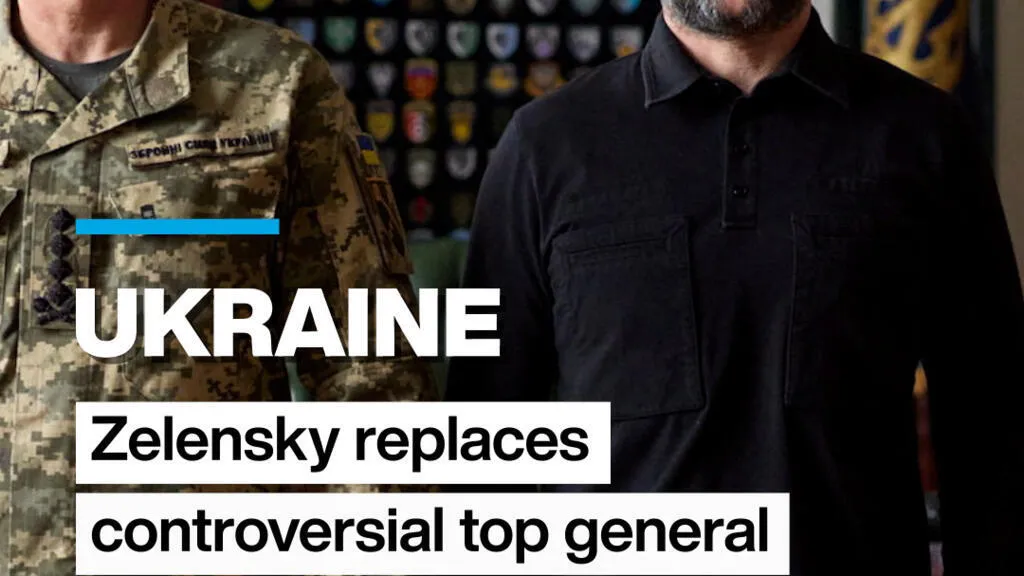
Ukraine is replacing its top general Oleksander Syrsky with general Mikhailo Dapraty after days of protests demanding Syrsky's departure. For decision-makers, the move signals how public legitimacy and reform politics can quickly reshape command structure.
Ukraine has replaced its controversial top general, Oleksander Syrsky, with general Mikhailo Dapraty after days of protests demanding Syrsky's departure. The change lands in a moment when the country cannot afford long internal delays, yet it also reflects something more volatile than routine military rotation: public anger is now powerful enough to push leadership decisions.
According to the report, Syrsky had been accused of forcing Defence Minister Mikhailo Fedorov out. The accusation is tied to a specific political and operational friction point: Fedorov was described as being reticent to engage with reforms aimed at modernising the army. So this is not only a personnel story. It is a signal about how disagreements over modernization can spill out of ministries and into the public square, then come back as a command reshuffle.
To understand why this matters to executives and boards, think about what typically drives leadership changes during high-stakes missions. In most organizations, leadership swaps are handled through internal channels: performance metrics, strategic alignment, and chain-of-command decisions. Here, the source points to mass protests as the mechanism that accelerates the replacement. That is a second-order risk many leaders do not model well. When people outside formal governance structures start chanting names and demanding departures, the organization loses the luxury of slow deliberation.
There is also a governance and incentives angle. Modernising an army is not a single project with a clean start date and a tidy finish. It usually involves painful tradeoffs: procurement choices, process changes, training and doctrine updates, and the reshuffling of authority. If the defence minister is perceived as cautious about those reforms, it creates a political friction that can become existential. The accusation described in the report, that Syrsky forced Mikhailo Fedorov out because of his reluctance to engage with modernisation, suggests a scenario where top military leadership and civilian defence leadership were not aligned on pace and approach.
Now layer in the public legitimacy factor. Protest pressure can be a form of real-time stakeholder feedback, but it can also be destabilizing noise. Either way, leadership has to respond. In corporate terms, it is like a critical strategy being contested not only by internal stakeholders but by a broader audience with enough momentum to make inaction costly. If command leadership is seen as obstructing reforms, the reputational and operational consequences can compound. If leadership is swapped too aggressively or without clear rationale, morale and coordination can take a hit. Ukraine is essentially trying to thread that needle under wartime urgency, where the cost of coordination failure is immediate.
Second, the swap highlights how personal accountability narratives can drive organizational action. The report frames Syrsky as the person at the center of accusations related to Fedorov’s exit and the broader modernization agenda. When an individual becomes the symbol of disagreement, replacing them can serve multiple goals at once: calm protests, reassert reform momentum, and restore confidence that decision-making is moving in the direction the public wants. Dapraty’s appointment becomes the narrative reset. Even without extra details in the source, the structure is clear: change the face, change the perceived direction.
For decision-makers, the implication is not that military command resembles a boardroom. The implication is that legitimacy, reform alignment, and internal politics can converge faster than formal processes. Executives in any sector that relies on major transformation, particularly under stress, should treat external pressure as an early warning system. If modernization becomes politicized, leadership will be judged not just on outcomes, but on whether people believe the organization is serious about change.
Ukraine’s leadership swap, driven by mass protests and accompanied by accusations about the defence minister’s departure, shows how quickly reform battles can translate into command reshuffling. In environments where every delay matters, the hardest question for any leader is whether you can execute modernization while keeping both internal governance and public trust from breaking apart. This is a live case study in what happens when those two forces collide.
This story's Key Insights and Take-aways are locked.
Create a free account to unlock Executive Actions for one credit.
Register to UnlockAlways free for Executives Club members. Join the Club
More in Politics

LA County: DOJ's 20,000 'noncitizen' voter list is 'unreliable,' includes U.S.-born
Preliminary review by Los Angeles County election officials finds errors in the federal list, raising the stakes for voter roll integrity ahead of November.

Trump's $1.5B Pentagon chip investment lands in North Carolina
A $1.5 billion defense infusion for North Carolina chipmaking signals a new era of Pentagon-backed reshoring - here's what it means for the industry.

Nigeria confirms first Ebola case in Abuja, a woman just off a Uganda flight
Health Minister Muhammad Ali Pate says the patient flew in from Uganda, putting Africa's latest outbreak on Nigeria's doorstep.