
Universal, Warner say union's own admission kills AI pay suit
In a motion to dismiss, the labels argue a single concession by the musicians' union leaves no payment obligation for AI training data, threatening artist compensation claims.

Universal Music Group and Warner Records have moved to dismiss the American Federation of Musicians' AI licensing lawsuit, citing the union's admission that no separate AI agreement exists. If the court agrees, it could undercut musicians' claims to compensation for AI training data across the industry and reshape how labels license recordings to AI firms.
Universal Music Group and Warner Records are betting that the musicians' union already talked itself out of court. In a motion to dismiss the American Federation of Musicians' (AFM) lawsuit over AI licensing, the labels point to a July 21 pre-motion conference where the union's counsel, Eyad Asad, conceded that no separate agreement exists for AI use of recordings. That concession, UMG's lawyers argue, ends the case: 'A payment obligation measured by an agreement that does not exist is no payment obligation at all.'
The AFM had sued UMG and Warner Records, alleging that recordings performed by its members were licensed to AI companies Suno and Udio without the musicians receiving compensation or proper notice. The union invoked the 'new use' clause in the Sound Recording Labor Agreement (SRLA), which obligates labels to compensate musicians when a recording is used in a new way not anticipated by the contract. But the labels contend the clause does not specifically reference AI, and because the union admitted no AI-specific agreement exists, the mechanism fails. 'Article 21(a) does not state a rate,' UMG's lawyers wrote, per Music Business Worldwide. 'It imports one from the separate AFM agreement governing the new purpose. And AFM has conceded that no such agreement exists for the AI Use.'
The motion also highlights a pre-motion conference where US District Judge Edgardo Ramos asked whether such an agreement exists for AI. 'No. So, there is no underlying agreement for AI use. We conceded that,' Asad answered, according to the transcript quoted in the filing. UMG's brief seized on that: 'That concession ends this case. Discovery cannot change that fact, much less create the missing agreement.'
This is the latest front in a broader battle over how AI companies train their models on copyrighted music. Last year, Warner, Sony Music Entertainment, and UMG sued Suno and Udio for copyright violations of 'an almost unimaginable scale.' But Warner later settled with Suno, signing a licensing deal that reportedly introduces a licensed model, allowing users to pay for AI-generated songs while ensuring opt-in artists and songwriters are compensated and retain control over their music and likeness. The settlement was designed to move Suno toward a licensed approach, but it also highlights the divide: labels are willing to cut deals with AI firms even as unions push for broader compensation.
The dispute underscores a core unresolved question in AI music: where does the training data come from, and how are artists paid? Earlier this month, artists including Jason Isbell filed a separate lawsuit against Suno, alleging the software lets users copy an artist's identity and style without consent. And last month, Suno lost a copyright infringement case to German licensing agency GEMA, which argued Suno used songs like Boney M's 'Daddy Cool' and Alphaville's 'Forever Young' without licenses. That ruling also forces other AI companies to pay for GEMA-repped music going forward, setting a precedent outside the US.
For executives, the labels' dismissal motion is a strategic play to keep AI licensing costs down. If the court accepts the argument, it could establish a precedent that unionized musicians have no automatic claim to AI training revenue unless a specific agreement is negotiated. That would shift leverage back to labels and AI firms, potentially accelerating licensing deals that bypass unions altogether. For the AFM, the outcome could force a renegotiation of the SRLA to explicitly cover AI, a process that would take time and likely spark contentious bargaining. The judge's ruling, expected in the coming months, will determine whether the case proceeds to discovery or is dismissed outright.
The stakes extend beyond music. As AI training data becomes a premium asset, every creative industry is watching how courts define 'new use' and what constitutes fair compensation. A dismissal here would not only affect musicians but could also influence how visual artists, writers, and other unionized workers approach AI licensing. For now, the labels are betting that a simple concession is enough to kill the case - and that no amount of discovery can resurrect a contract that doesn't exist. The union, meanwhile, is left to argue that the absence of an explicit AI agreement doesn't mean the 'new use' clause is void, but rather that the clause itself creates an obligation to negotiate one. That argument, however, faces an uphill battle given the court's earlier questioning.
This story's Key Insights and Take-aways are locked.
Create a free account to unlock Executive Actions for one credit.
Register to UnlockAlways free for Executives Club members. Join the Club
More in Business

Royal Caribbean just spent $3B to own half of Sandals
The cruise giant is buying a 50% stake in the all-inclusive resort chain for $3 billion, a bet that land-based vacations are the next growth engine.

Paramount's Ellison: Merger Clearance Done, WBD Deal by Oct 1
David Ellison says the Paramount-WBD merger has full clearance after settling with state AGs, clearing the path for an October 1 close.
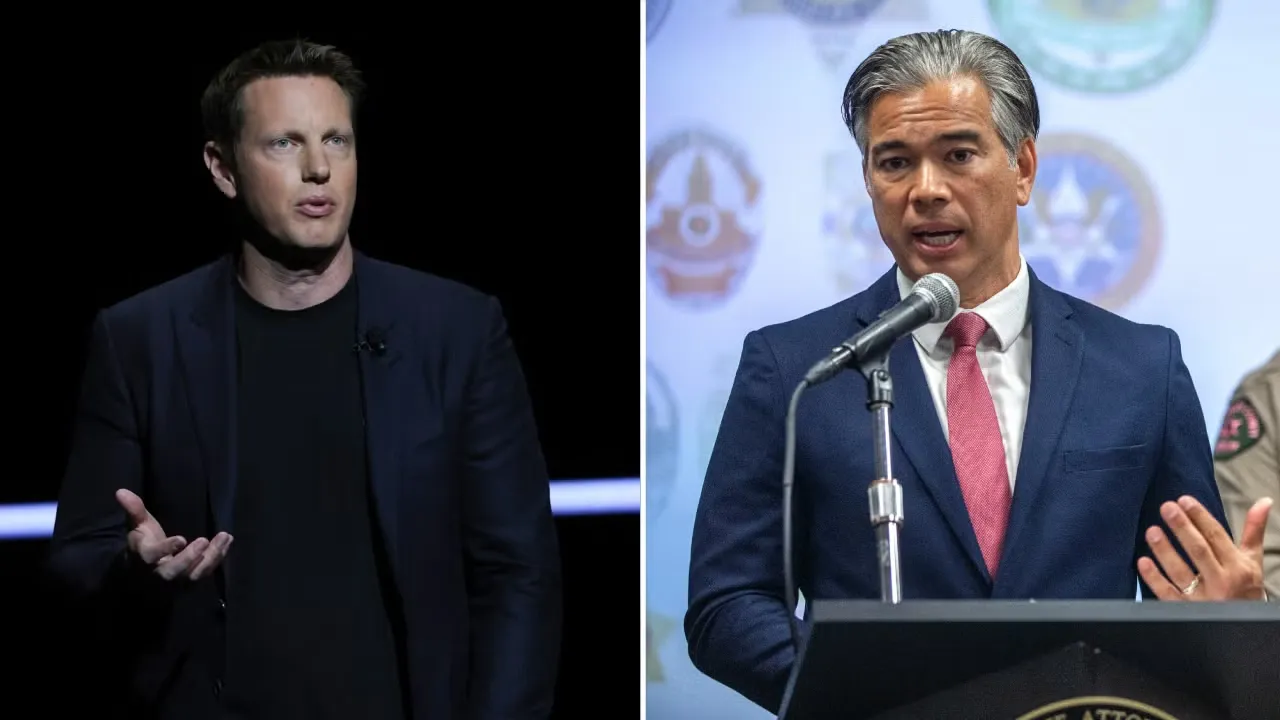
Paramount settles with 12 states, $110B Warner merger clears final hurdle
David Ellison's studio avoids a March trial and a $7M-a-day ticking fee by settling with state AGs over local job losses.