
US hits 140 targets after Iran torches Hormuz container ship; Gulf states brace
Central Command says it struck missile and drone sites, while Iran threatens to keep the strait closed.

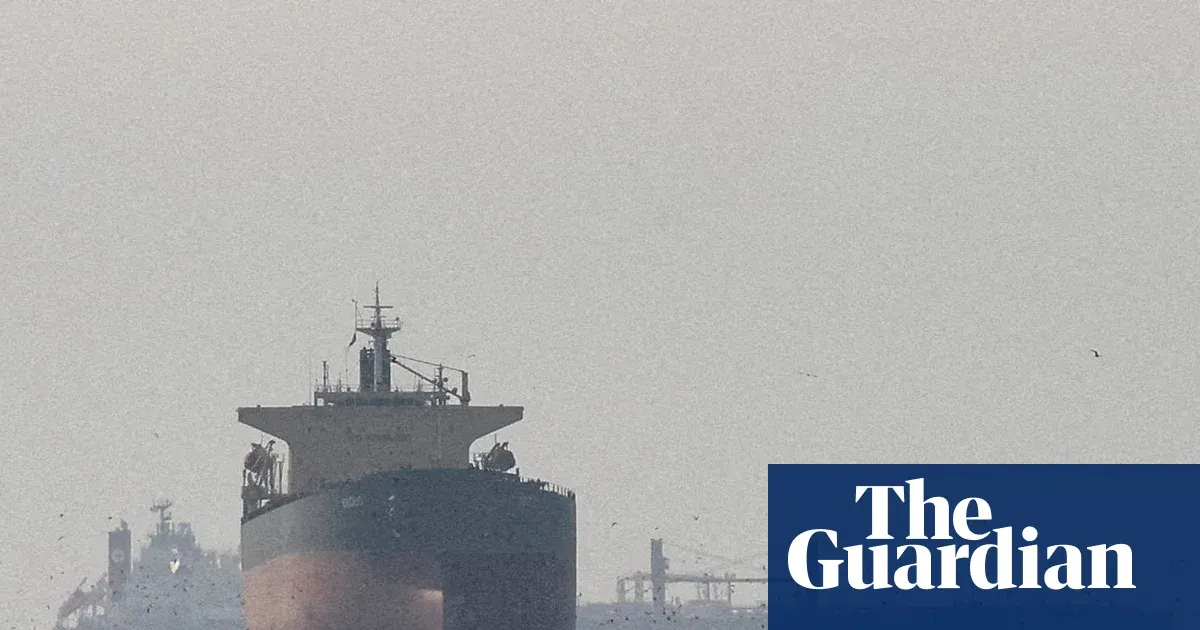
The U.S. military's Central Command says it hit around 140 targets after an Iranian strike in the Strait of Hormuz set a Cyprus-flagged container ship ablaze and forced the crew to abandon it. The escalation is rippling through Bahrain, Kuwait, Qatar, and the UAE, threatening the negotiations that hinge on the strait.
DUBAI, United Arab Emirates - The U.S. struck Iran early Sunday morning and said it hit about 140 targets, after an Iranian attack earlier set a container ship on fire in the Strait of Hormuz and forced its crew to abandon the vessel. Central Command also said the U.S. went after missile and drone launch sites, ammunition dumps, communication equipment, and other locations. In a region where disruptions can change shipping schedules and energy pricing fast, the scale of Sunday morning's strikes is the story decision-makers should focus on first.
The Strait of Hormuz is the key sticking point in any further negotiations between Iran and the United States to reach a permanent end to the war that began on Feb. 28. About a fifth of all traded oil and natural gas passed through the strait before the war began, and Iran’s grip on it during the war previously contributed to a global energy crisis, even as oil prices have since dropped sharply from wartime highs of $120 a barrel. Translation for executives: even if the headline only screams “military,” the downstream risk is commercial, operational, and financial, because a chokepoint like this changes costs for everyone tied to global energy and maritime logistics.
The U.S. did not describe Sunday’s action as a one-off. Central Command framed the strikes as degrading Iran’s ability to “attack civilian mariners and commercial vessels freely transiting the strait.” That framing matters, because it suggests the U.S. is aiming for sustained pressure on the capability side, not just responding once. Central Command specifically said the ship was hit by Iran, suffered “significant engineroom damage,” and that a civilian crew member is missing. The ship’s crew abandoned the vessel as it was ablaze, according to the United Kingdom Maritime Trade Operations center, overseen by the British military.
The routing details underline why this is not just theater. UKMTO said the Cyprus-flagged container ship was traveling on a route hugging the shoreline of Oman, the path ships have used to enter and exit the Persian Gulf while avoiding Iranian territorial waters. Iran’s paramilitary Revolutionary Guard claimed multiple vessels “disregarded our warnings and instructions to correct their course and proceed along the approved route,” adding that one was struck by a warning shot and brought to a stop. Iran also said the strait would remain closed “until further notice,” and that it would consider targeting “additional enemy bases in the region” if it faced more attacks. For operators and boards, conflicting narratives about the “approved route” create practical uncertainty: even routing compliance can look like provocation when the rules are enforced by force.
The crossfire after Thursday’s airstrikes adds another layer of risk. The U.S. launched new airstrikes against Iran early Thursday, and Tehran responded by targeting Bahrain, Kuwait, and Qatar. Sunday brought similar signals, with the United Arab Emirates warning the public of an incoming missile and drone attack and explosions heard in nearby Qatar. Qatar’s military said it intercepted incoming Iranian fire, and Bahrain’s missile alerts sounded as well. Kuwait’s military said it was intercepting incoming fire too. It wasn’t immediately clear what UAE locations were under attack, and the Emirates had not been targeted in the latest round of Iran attacks, though it did experience a May incident when a drone sparked a fire near the edge of the country’s sole nuclear power plant.
Politics is now braided directly into operational risk. The latest violence comes days after U.S. President Donald Trump suggested an interim deal in the Iran war was “over.” Defense Secretary Pete Hegseth wrote online: “Iran made a poor choice. Now they pay.” Mohammad Bagher Qalibaf, the speaker of Iran’s parliament and a main negotiator, responded on X: “The era of one-sided deals is OVER,” and “Reality is knocking.” In other words, the effort to manage the conflict through interim understandings is under strain, and the strait is the pressure point where those understandings break down into missiles, drones, and rerouted commerce.
Even as the U.S. and Iran trade blows, the war’s economics are still hanging in the air. Oil prices have dropped from wartime highs of $120 a barrel, but the strait’s importance does not disappear when markets calm down; it usually just delays the adjustment until the next disruption. And when you combine that with the operational specifics of Sunday’s incident, including a missing civilian crew member and “significant engineroom damage,” boards should treat maritime chokepoints as a recurring enterprise continuity risk, not a distant geopolitical footnote.
For executives watching peers across shipping, energy, insurance, defense-adjacent supply chains, and any company with exposure to Gulf transit, the signal is straightforward: escalation can arrive quickly, and it can involve broader regional targeting beyond the immediate theater. The U.S. says it struck around 140 targets to degrade Iran’s ability to hit commercial mariners. Iran says it will keep the strait closed until further notice and may target additional regional bases if attacked. When those two claims collide with real ships on real routes, the strategic stakes go beyond headlines and into schedules, costs, and the risk assumptions that drive capital decisions.
This story's Key Insights and Take-aways are locked.
Create a free account to unlock Executive Actions for one credit.
Register to UnlockAlways free for Executives Club members. Join the Club
More in Politics

Glacial collapse, not rain, killed 180 in Nepal's Himalayan flood
The Himalaya's extreme geography hid the true cause of Nepal's catastrophic flood, a glacial collapse that turned a geological battleground into a mass-casualty zone.
Iran’s Esmail Baghaei says Oman talks start shipping via Hormuz, not US talks yet
Temporary route plans with Oman aim to restart commerce while Tehran says Washington dialogue is not on the table.

Standards watchdog opens probe into Reform UK deputy leader Richard Tice over interests
The parliamentary standards commissioner says it began an investigation on 28 July into a possible undeclared interest.