

US launched new Iran strikes Sunday after Hormuz attacks hit Gulf allies
The flare-up strains the interim US-Iran deal and threatens another round of shipping and energy market stress.
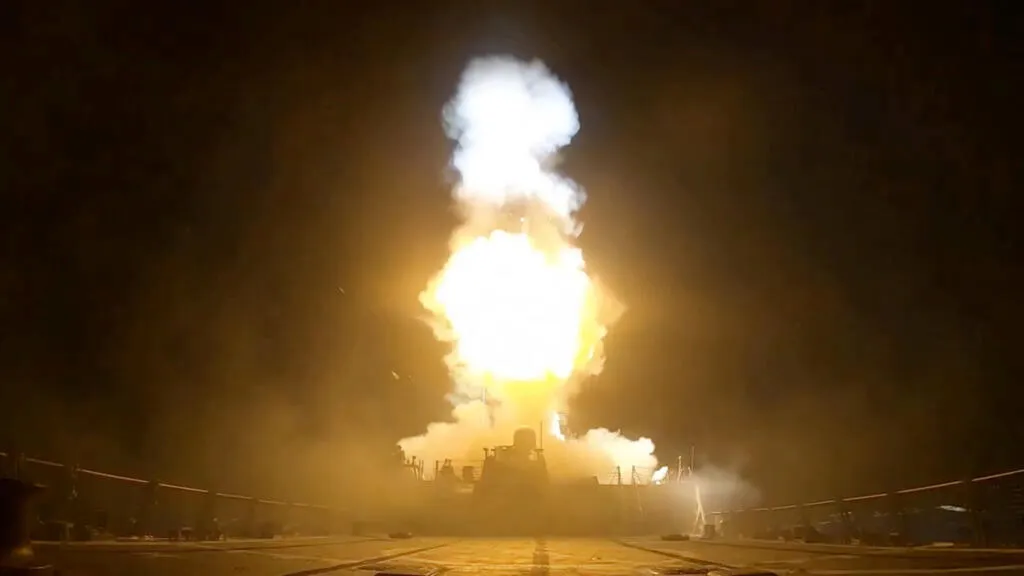
The US military said it launched a new wave of attacks against Iran on Sunday, following renewed fighting over the Strait of Hormuz that targeted several US Gulf allies. For decision-makers, the escalation adds risk to the interim agreement between Washington and Tehran and could intensify global economic shockwaves tied to Hormuz disruptions.
On Sunday, the US military said it launched a new wave of attacks against Iran after renewed fighting over the Strait of Hormuz saw several of Washington's Gulf allies targeted by incoming fire. That single sequence matters because it links three things that markets normally keep separate: battlefield headlines, alliance credibility, and the flow of goods through one of the world's most strategically critical waterways.
If you are tracking this as an executive, the key is the immediate rationale behind the escalation. The source is explicit that the Hormuz flare-up preceded the strikes, and that US Gulf allies were hit by incoming fire during the renewed fighting. In other words, this was not a distant dispute. It became a direct problem for partners positioned around the Strait, and the US response came quickly after the targeting.
Now zoom out to the political and commercial backstory the source points to. The flare-up is described as the latest in a pattern that undermines an interim agreement between Washington and Tehran aimed at ending their war. That kind of interim deal is typically built on a fragile logic: reduce the frequency and visibility of escalation while leaving enough room for bargaining to continue. But the moment violence reappears at a hotspot like Hormuz, the incentives shift fast. Hardliners on any side gain leverage, and moderates lose the ability to argue that the calm will hold.
The source also ties this broader escalation to economic consequences that have already rippled outward. It notes that the war, which began in late February, has caused global economic shockwaves. Even without the granular numbers in this excerpt, the mechanism is straightforward: when the Strait of Hormuz is in play, shipping routes face higher risk premiums, energy supply fears spread, and companies with exposure to shipping, insurance, logistics, and downstream fuel costs feel the pressure in their forecasts and hedging plans. Executives do not need a new dataset to know how quickly that story changes. When escalation headlines hit, assumptions about transit reliability and cost stability get rewritten overnight.
There is another reason this matters for leadership teams: the interim agreement itself is part of the “risk architecture” that investors and counterparties try to price. When the source says the latest flare-up undermines the interim agreement, it signals a credibility problem for the negotiation track. Markets hate uncertainty, but they especially hate uncertainty about whether an off-ramp exists. The more the deal gets stressed by renewed fighting, the harder it becomes for boards to justify assumptions built on stabilization.
For Gulf-based stakeholders and multinational firms with operations, suppliers, or customers tied to the region, the targeting of US Gulf allies is not a footnote. It is a reminder that escalation can turn coalition dynamics into an operational risk. If incoming fire reaches partners, contingency planning stops being theoretical. It becomes about how quickly communications systems, travel plans, cross-border logistics, and safety protocols need to move from “monitor” to “prepare.” In these situations, the challenge for leadership is to keep decisions grounded and fast, without overreacting based solely on the first wave of headlines.
Look at the strategic stakes for executives across the board: this is a story about timing and second-order effects. The US strikes are presented as a response to renewed fighting and targeted allies, and the flare-up is presented as another blow to a deal designed to reduce war dynamics. That combination increases the probability of continued volatility. For peers in energy, transportation, insurance, industrials with complex supply chains, and for investment committees that allocate risk, the takeaway is simple: the interim agreement is not just diplomacy. It is a market variable, and today’s violence signals that variable is moving in the wrong direction.
And while the source frames this as a live update situation, the executive job is to translate “live” into “manage.” That means treating the Strait of Hormuz as a continuously repriced risk, treating the interim deal as fragile, and treating alliance security as something that can directly influence operational continuity. If the conflict narrative keeps escalating, the economic shockwaves mentioned in the source are not a historical footnote. They are a warning label for what could come next.
This story's Key Insights and Take-aways are locked.
Create a free account to unlock Executive Actions for one credit.
Register to UnlockAlways free for Executives Club members. Join the Club
More in Politics

Glacial collapse, not rain, killed 180 in Nepal's Himalayan flood
The Himalaya's extreme geography hid the true cause of Nepal's catastrophic flood, a glacial collapse that turned a geological battleground into a mass-casualty zone.

Iran’s Esmail Baghaei says Oman talks start shipping via Hormuz, not US talks yet
Temporary route plans with Oman aim to restart commerce while Tehran says Washington dialogue is not on the table.

Standards watchdog opens probe into Reform UK deputy leader Richard Tice over interests
The parliamentary standards commissioner says it began an investigation on 28 July into a possible undeclared interest.