

Valarian raises $50M Series A so governments can lock down AI data under the CLOUD Act
Valarian’s ACRA “sealed operating room” lets buyers keep using Amazon or Microsoft, while controlling what data leaves and who can access it.

Max Buchan, co-founder of London startup Valarian, raised a $50 million Series A led by NEA. The funding backs ACRA, a software layer for AI workloads that aims to reduce exposure to the U.S. CLOUD Act by making sovereignty part of the infrastructure, not a configuration setting.
Max Buchan and co-founder Josh McLaughlin are betting that the biggest AI risk for governments and enterprises is not model quality. It is control. Valarian, the London-based startup they run, just raised a $50 million Series A led by NEA, bringing its total funding to $70 million. The premise is simple but politically spicy: organizations should be able to keep using familiar cloud infrastructure like Amazon or Microsoft while still deciding exactly what data leaves, who can touch it, and when.
Buchan’s argument is that “infrastructure sovereignty” cannot be a settings toggle inside someone else’s environment. It has to be built into the infrastructure itself, because legal obligations can reach across borders faster than tech buyers can negotiate. That is where the U.S. CLOUD Act enters the story. If U.S. authorities compel U.S.-based companies to hand over data they hold anywhere in the world, then the location of your operations and the location of your data access controls start to diverge. Valarian’s ACRA is designed to act like a sealed operating room around AI workloads and sensitive applications, so the “escape routes” for data are limited by design, not hope.
This is not a generic defense-tech pitch. Valarian is not selling missiles, production lines, or explosions. Its approach targets the software layer that sits underneath AI deployments. In practical terms, ACRA wraps sensitive operations so that government departments and enterprises can continue to use mainstream cloud providers for compute, storage, and the general plumbing, while Valarian’s layer controls access boundaries for data and permissions during AI use. That distinction matters to investors because the classic defense startup trap is often about build time and hardware timelines. NEA’s Mustafa Neemuchwala, who led the round, explicitly frames Valarian as avoiding that trap: if it fails, it is not likely because it “overspent on a production facility.”
The company’s leadership background is also part of why this funding round lands now. Buchan is a former Palantir executive who has been advocating for infrastructure sovereignty for a while, dating back to an era when, as he puts it, globalization and Davos were still “cool.” He said he worried Western governments were quietly handing over the keys to sensitive operations to American tech giants, and would eventually lose the ability to control what their own intelligence and infrastructure ran on. McLaughlin comes to Valarian after a career as a managing director at Palantir. In other words, the pitch is not coming from people who only studied geopolitical risk as theory; it is coming from executives who have worked at the intersection of data, deployments, and security.
What makes the “sovereignty problem” feel urgent is that it is increasingly being forced into real-world emergencies. The story points to multiple geopolitical kerfuffles and policy shocks. European defense spending hit $447 billion last year, signaling not just funding but procurement pressure. An incoming U.K. prime minister is moving to cancel a state Palantir contract, which is described as part of a broader European pullback from the U.S. data giant. And in the Trump administration period this year, the Trump administration cut off Anthropic’s access abroad. Buchan links that to the lived reality of infrastructure sovereignty: “No one could use their model anymore, because the president of another country had shut it off,” he told Fortune. That quote is doing heavy lifting, because it translates a policy debate into an operational shutdown.
For decision-makers, the strategic question is what changes when sovereignty becomes infrastructure, not aspiration. If organizations can keep using Amazon or Microsoft while placing stronger boundaries around what AI workloads can read, export, or expose, then they reduce the blast radius of cross-border legal and political leverage. That also changes how procurement and security teams think about vendor risk. Instead of treating cloud choice as a one-time decision that you can revisit every few years, Valarian’s model implies that the real control might need to sit in a layer dedicated to sensitive operations.
The funding itself also signals a broader shift in how capital is finding defense and “dual-use” opportunities in Europe. NEA’s Mustafa Neemuchwala describes Valarian as the firm’s first defense and dual-use investment in Europe. That matters because it suggests investors are looking for less headline-grabbing, but potentially more defensible, ways to secure national capabilities in the age of AI. Software layers like ACRA are less visible than hardware programs, but the dependency chain for data access is often just as critical. If the next procurement cycle starts treating infrastructure sovereignty as a requirement, boards and executives will want to understand whether they can meet that requirement without abandoning the ecosystems where compute already lives.
This story's Key Insights and Take-aways are locked.
Create a free account to unlock Executive Actions for one credit.
Register to UnlockAlways free for Executives Club members. Join the Club
More in Business

T. rex sells for $50M, eclipsing Ken Griffin’s $44.6M stegosaurus to set auction record
The $50 million T. rex sale makes it the priciest dinosaur fossil ever auctioned, reshuffling the “trophy” market.
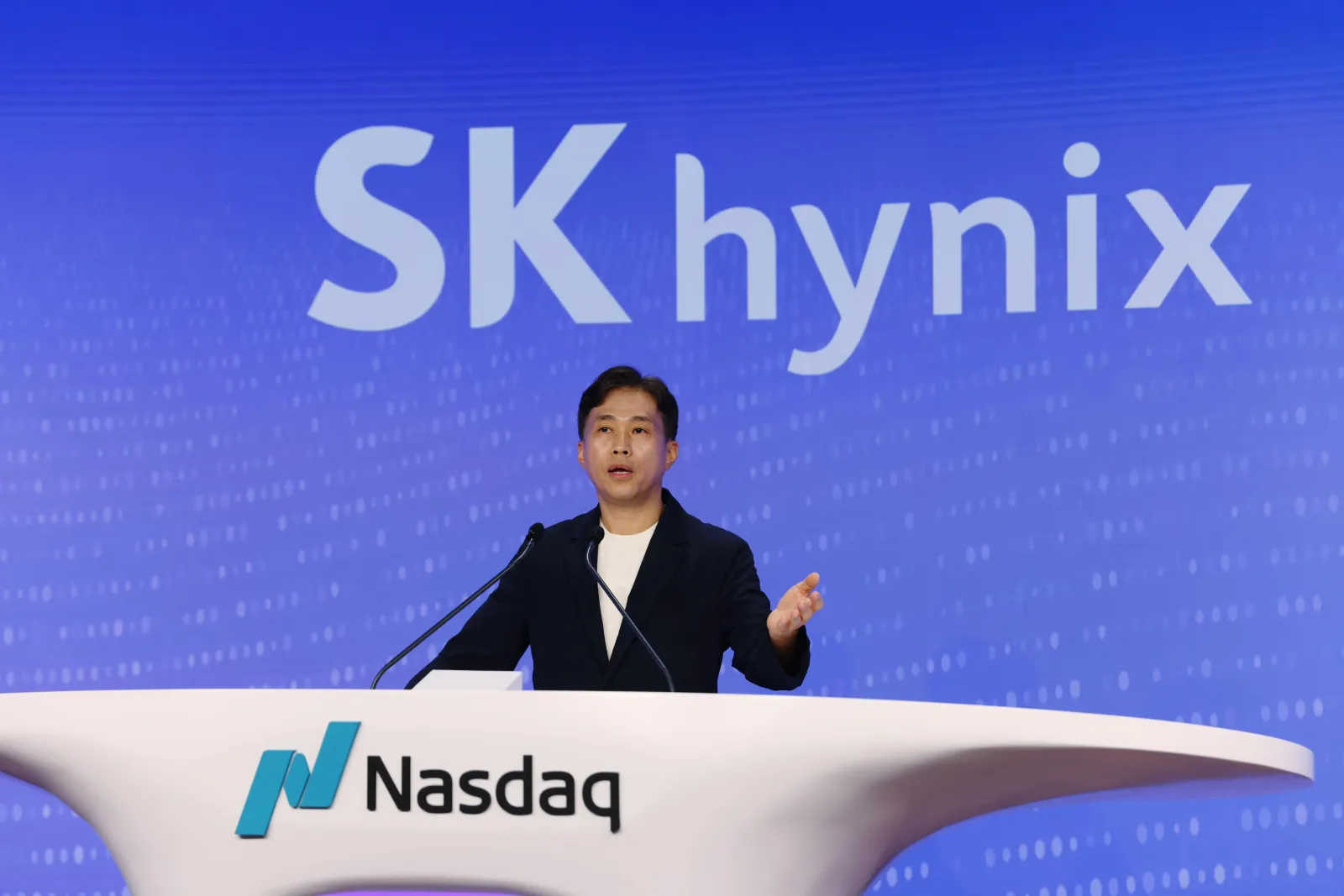
SK Hynix opens at $170, raises $26.5B, and tops foreign IPO records
In Friday's Wall Street debut, SK Hynix turns AI RAM demand into a $26.5B fundraising moment that rewrites comps.

China lands a reusable Long March booster, a first that matches SpaceX and Blue Origin
A barge landing and net-based recovery move China from theory to proof, reshaping the reusability race and satellite ambitions.