

Vanessa Ruta shows fruit flies track invisible smell filaments, beating the “surge-and-cast” dogma
The Rockefeller neuroscientist’s work explains how tiny brains follow chaotic odor across long distances.

Vanessa Ruta of Rockefeller University led a study showing fruit flies use more than the classic “surge and cast” reflexes to track odor. For decision-makers, it is a reminder that complex navigation can emerge from algorithms, not just hardwired rules.
Fruit flies do not just “sniff and zigzag” their way toward rotting fruit or a mate. Vanessa Ruta, a neuroscientist at the Rockefeller University, has shown that the insects’ navigation through turbulent air is more advanced than the long-accepted “surge and cast” model.
That matters because the original dogma assumes a simple loop: when a fly’s antennae register an odor plume, it flies upwind until the signal disappears, then it flies side to side trying to catch the plume again. The problem is that the real world does not cooperate. Out in the wild, odor is carried by turbulent airflow, breaking the plume into chemical filaments threaded through long stretches of clean air. The fly gets the smell in stutters, constantly shifting direction, with no guarantee that the next whiff is coming at all. Ruta’s team argues that this chaotic signal can not be fully explained by reflex-only behavior.
To understand why this is such a big deal, zoom out to how navigation-by-sensing works when the “thing you need” is both invisible and unreliable. Odors are, by definition, invisible. The air is turbulent. That combination turns a navigation task into a guessing game. When signals are sparse, the brain must infer whether what it just detected is noise, a temporary fluctuation, or a fragment of a longer trajectory. If the algorithm is wrong, the insect wastes time and space. If it is right, it can converge on a source even when the sensory data looks broken.
Researchers have spent years trying to decode how insects do this with a brain described in the article as “the size of a pinhead.” For a long time, biologists leaned on surge and cast because it is testable in theory and easy to map to hardwired instincts. But the same real-world properties that make odor navigation biologically impressive also make it difficult to test in practice. Since odors are carried along by turbulent airflow, scientists have little way of knowing what an animal is smelling from one moment to the next. That is not a minor experimental nuisance. It is the difference between studying a clean input-output system and studying a moving target.
The study’s contribution is essentially a mechanistic upgrade. The trouble with surge and cast is that it struggles to explain how an insect tracks a meandering plume across long distances. A plume is not a straight arrow from source to target. It is a chaotic landscape of chemical filaments that appear, disappear, and relocate as turbulence scrambles the flow. Over long stretches, an insect has to stitch together intermittent fragments of information into a consistent plan. That means the insect must do more than react to the presence or absence of odor. It has to interpret temporal changes and spatial consequences in a way that survives the turbulence.
In other words, the fly must solve what engineers would call a partially observable tracking problem. It gets intermittent measurements (smell stutters). It knows nothing directly about the hidden source location. And it must decide where to move next while the sensory input is being reshaped by airflow. The article frames this as a “far more advanced” approach than a reflex loop. While the piece does not enumerate every computational detail, it clearly positions Ruta’s work as evidence that fruit flies use a richer strategy than “fly upwind until it’s gone, then sweep side to side.”
Why should executives care, beyond the sheer coolness of watching a pinhead-brained insect outsmart turbulence? Because this is a real-world case study in how systems behave under noisy, delayed, and ambiguous signals. In tech and product, teams routinely ship models that assume signals are either stable or at least interpretable. In physical systems, the world fights back through noise, missing data, and non-stationary environments. Nature’s solution is not guaranteed to translate directly into your roadmap, but it does sharpen the underlying lesson: if the environment scrambles inputs, the strategy has to be resilient, not just reactive.
Second-order implications for decision-makers show up in how you evaluate performance and how you fund research. When the input is unpredictable and hard to observe, simplistic baselines can look convincing until you test them under realistic conditions. Ruta’s framing points to a broader governance question for boards and R&D leaders: are you measuring outcomes in the messy setting that actually matters, or in an easier lab version that flatters the baseline? Also, if a solution emerges from algorithmic interpretation rather than fixed reflexes, it changes what you should prioritize. You might invest more in sensing, state estimation, and adaptive control, rather than “if-then” rules that assume the world will behave.
Ultimately, the strategic stakes are the same as they are in any domain where sensing and control meet uncertainty: if you misunderstand the mechanism, you can misallocate resources and build the wrong kind of system. Ruta’s work suggests fruit fly navigation is not a simple reflex, it is a sophisticated response to chaotic odor dynamics. For peers designing AI, robotics, sensor networks, or any system that must navigate the invisible, that is a warning and an inspiration at once.
This story's Key Insights and Take-aways are locked.
Create a free account to unlock Executive Actions for one credit.
Register to UnlockAlways free for Executives Club members. Join the Club
More in Technology

Samsung puts silicon carbon batteries into the new Fold, joining China’s adoption wave
See why silicon carbon batteries are spreading fast in phones, and what it signals for smartphone battery life bets.
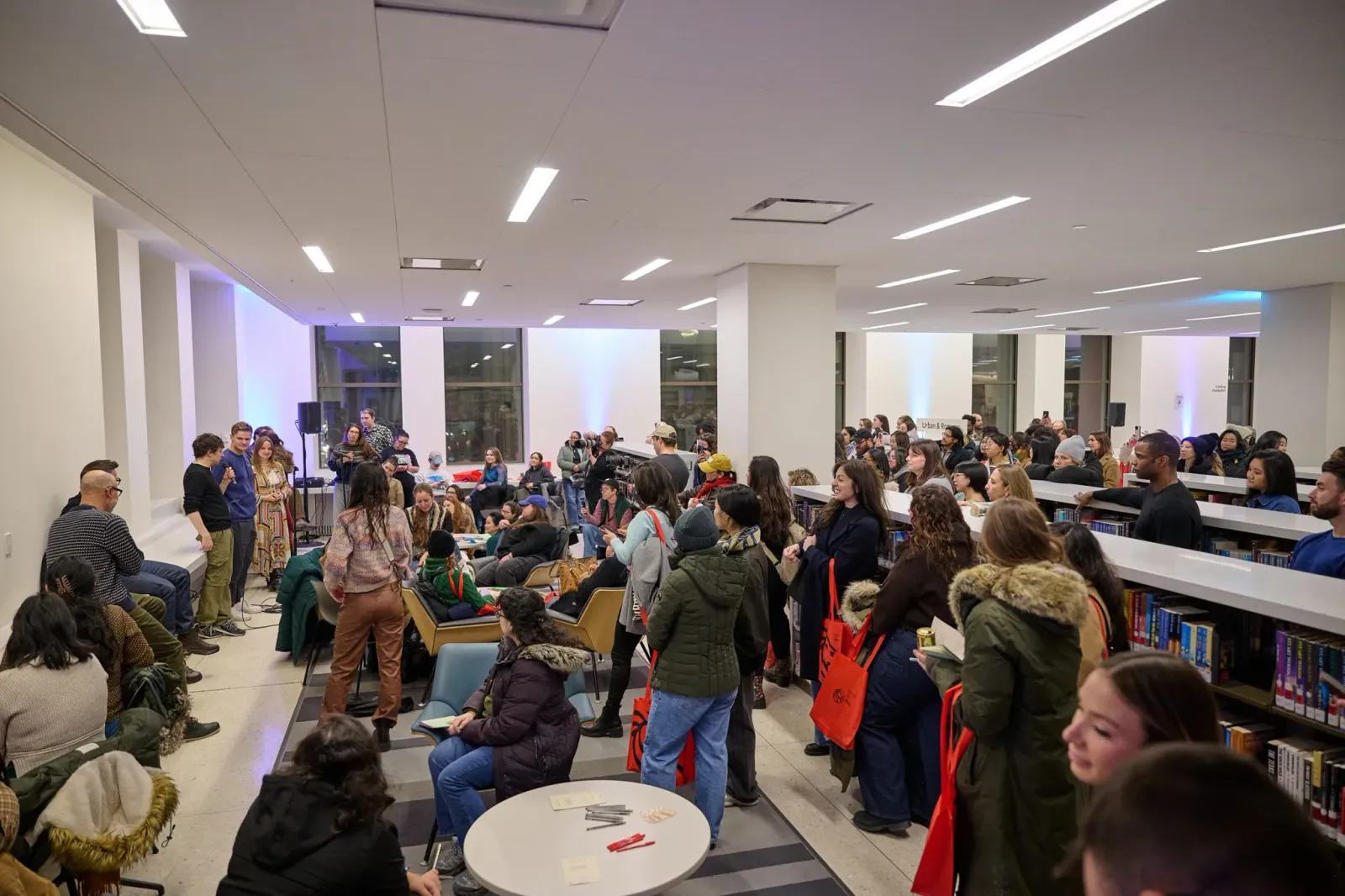
NYPL saw teen programming attendance jump 27% since 2023 by designing curiosity-driven “third spaces”
Loneliness and screen fatigue are pushing young adults toward libraries, chess clubs, and book bars that make learning the social glue.
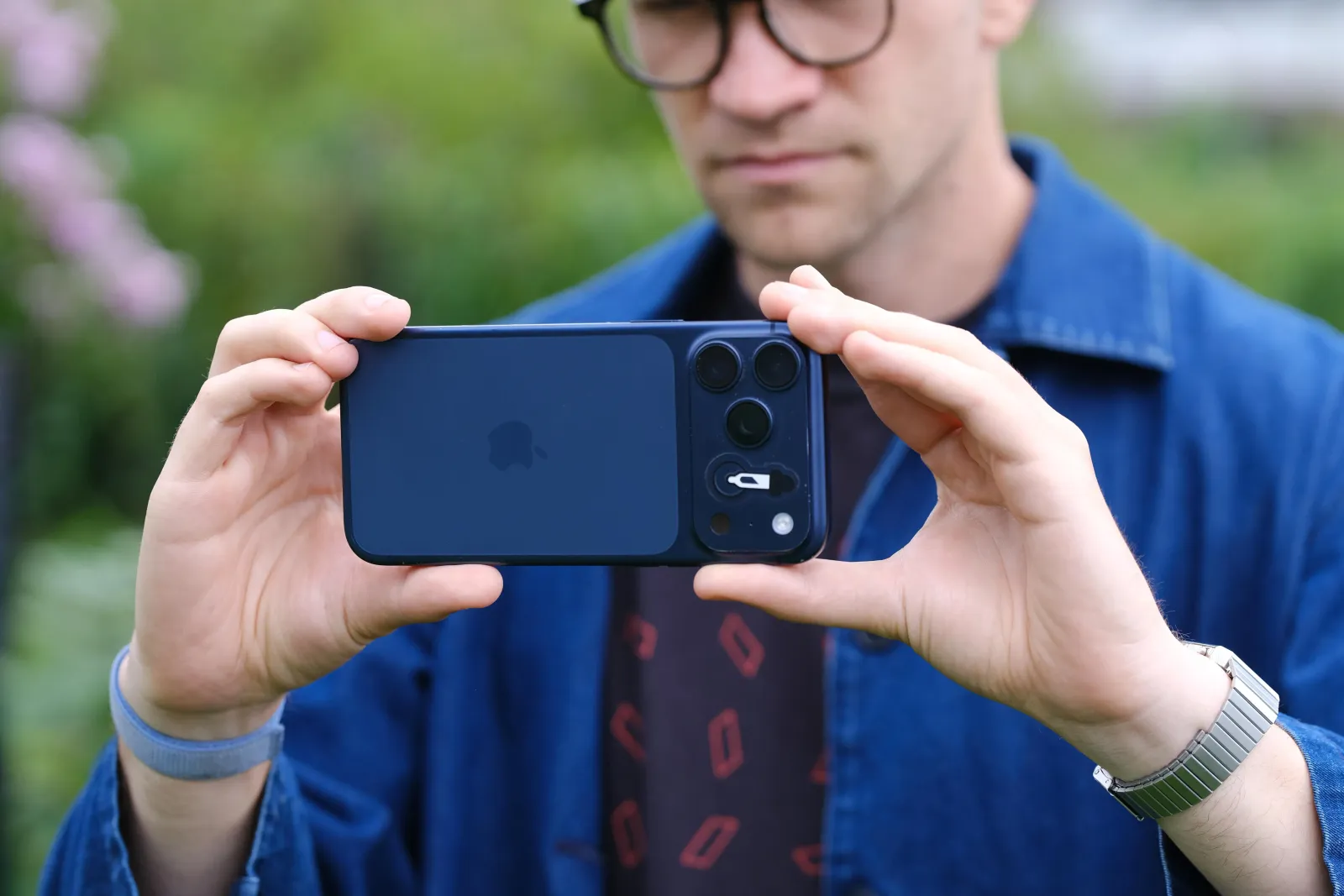
Stop settling for phone photos: third-party apps and editing can rival cameras
Smartphone sensors are getting better, but you can unlock near-camera results with extra tools and time.