

Viktor Antonov’s final project: Guns of Eschaton, a Wild West soulslike now on Steam
The Half-Life 2 art director’s last stamp heads to Steam wishlist, with co-op, firearms, and occult powers.
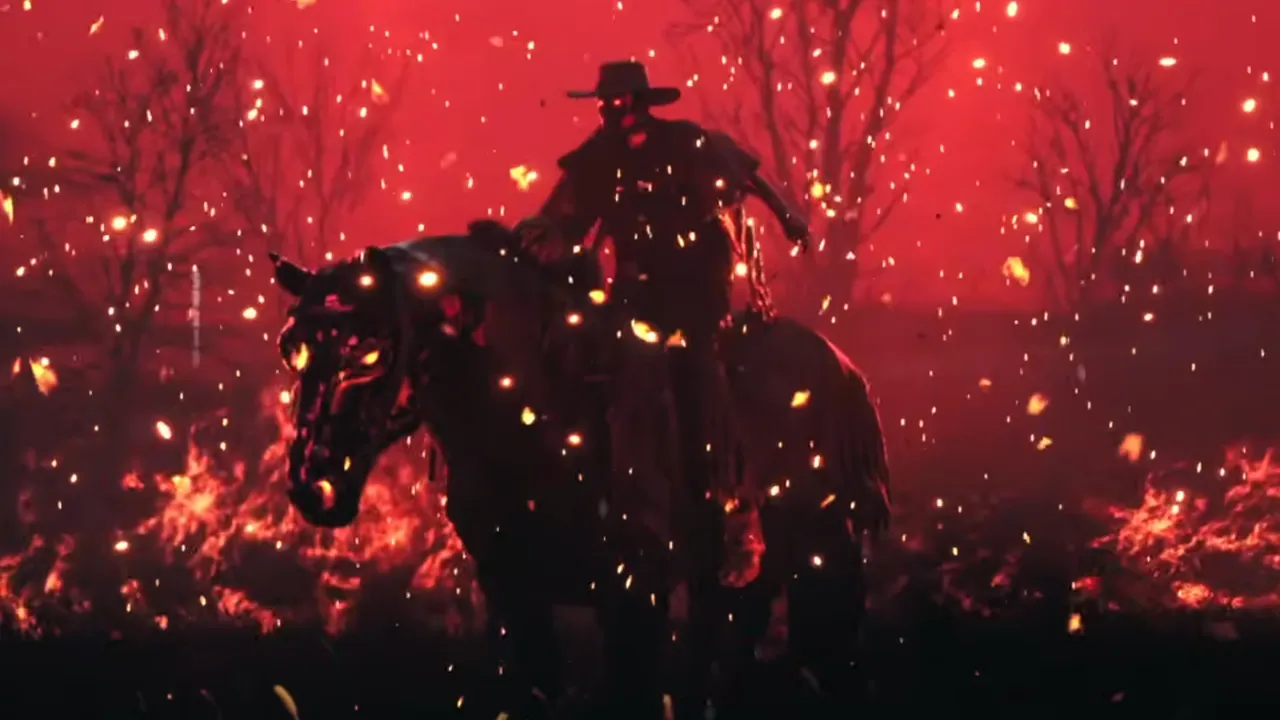
Viktor Antonov, the art director known for games like Half-Life 2, Dishonored, Wolfenstein: The New Order, and Weird West, worked on one last game before his 2025 death. Eschatology Entertainment revealed Guns of Eschaton, a fantasy Wild West soulslike shooter inspired by Old West figures, now available to wishlist on Steam.
Viktor Antonov is gone, but his last game is now visible on Steam. PC Gamer reports that before his death in 2025 at age 52, the Half-Life 2 art director worked on one final project: Guns of Eschaton, a fantasy Wild West shooter with soulslike combat and co-op support, currently “coming soon” and up for wishlist on Steam.
Eschatology Entertainment says Antonov shaped the world from the earliest stages of development alongside the team, and the pitch is unusually specific. Guns of Eschaton is described as a darkly twisted 19th century, “inspired” by historical figures, legends, and archetypes of the Old West, but populated with bizarre enemies and powerful bosses. The journey runs from the West Coast to the East Coast of “a dying America,” with gunplay front and center, plus the soulslike playbook: parries, dashes, using limited special ammunition effectively, and leaning into enemy weaknesses.
For executives and operators, this matters because it is not just another announcement. It is an example of how a recognizable creative brand can reduce go-to-market risk in a crowded market, especially when the gameplay loop is already legible to a core audience. Soulslikes have a well-understood engagement pattern: players tolerate difficulty because mastery feels rewarding. Pair that with an aesthetic that is both familiar (Old West archetypes) and off-kilter (occult powers, talismans, bizarre enemies), and you get something that can spread through communities faster than a purely generic “RPG with guns.” Antonov’s name also carries signaling value, given his track record in defining visual language across multiple hit franchises.
The Guns of Eschaton feature set is doing the usual heavy lifting, but with a frontier twist. The game promises deep character customization, including “a vast arsenal of firearms, ammunition types, occult powers, talismans, armor, and consumables,” along with numerous passive and active abilities. It also includes full co-op multiplayer, which is a major lever for retention because it turns a tough single-player rhythm into something you can coordinate. In practice, co-op can also broaden the addressable market: players who bounce off punishing combat solo may stick around when the load-bearing system becomes teamwork.
If there’s a second-order point here for boards and investors, it’s how much of the “promise” is gameplay plus content architecture, not just art direction. Swanky visuals do not guarantee performance or long-term success in soulslikes. The underlying mechanics have to land, because timing, movement, and reactions are the difference between “cool moment” and “rage quit.” Guns of Eschaton has to deliver on that mechanics contract while also justifying its fantasy Wild West setting beyond novelty. A frontier theme can be a retention engine if it translates into enemy design, boss behavior, progression pacing, and moment-to-moment variety.
The quote from Fuad Kuliev, head of Guns of Eschaton developer Eschatology Entertainment, frames that responsibility as a collaborative process built into development itself. He said, “We are incredibly honoured to be revealing Guns of Eschaton, the final project shaped by the extraordinary vision of Viktor Antonov.” Kuliev also emphasized that from the earliest stages, he had the privilege of shaping the world with Antonov, and that the game is the result of an “incredible collaborative effort” from the entire team to bring that vision to life. For decision-makers, that language matters: it implies the project’s identity was not a thin wrapper on someone else’s engine, but something integrated into production.
On the commercial timeline, there is no release date announced. That keeps the near-term focus on wishlists and visibility rather than revenue recognition. But it also puts pressure on execution planning: with a “coming soon” label, teams often need to use early signals like Steam wishlist momentum, community feedback loops, and media interest to de-risk further development spend. The strategic stakes for anyone in the game industry are straightforward: you are not only launching a title, you are trying to cash in on a moment where a famous creative legacy and a clearly defined genre formula can pull attention forward.
Ultimately, Guns of Eschaton is positioned as Antonov’s final creative stamp and as a soulslike that aims to bring a dark, twisted version of the American frontier to life. For players, the hook is obvious: gunplay with parries, dashes, limited ammunition, and boss fights that reward learning. For executives, the hook is sharper: it’s a high-effort genre bet carrying recognizable creative authority, and it will only convert interest into sustainable engagement if the mechanics and content depth hold up when the West Coast to East Coast journey finally ships.
This story's Key Insights and Take-aways are locked.
Create a free account to unlock Executive Actions for one credit.
Register to UnlockAlways free for Executives Club members. Join the Club
More in Entertainment

Russell Brand's accuser 'bewildered and confused' as he denies 7 sex charges
The criminal case against the comedian is a live test of how media companies manage talent risk when serious allegations go public.

'It's a Magic Trick': Ballet Experts Say Rosalía's SNL Pose Is Impossible
Three ballet experts tell Rolling Stone Rosalía's gravity-defying SNL stillness shouldn't be possible - and why the debate is now part of the show.

Activision CMO: GTA 6 Will Boost Call of Duty, Not Bury It
Activision's top marketer says Rockstar's blockbuster will drive players back to consoles and into Modern Warfare 4, even as the company admits its recent strategy failed.