

Warren Buffett warns markets reward gambling, not values: “tough to find” buys
Buffett argues today’s market tilts toward speculation. Here is what that means for capital allocation and risk.

Warren Buffett criticized the stock market for becoming increasingly defined by speculative trading instead of long-term investing. For decision-makers, the implication is a harder environment for value strategies and a higher risk of mispricing.
Warren Buffett is not impressed with the stock market today. In comments reported by CNBC, he says it has become “tough to find values,” because “everybody is preferring gambling” instead of long-term investing.
That framing is the whole story, and it matters because Buffett is describing a shift in market behavior, not just a mood. If investors are leaning toward gambling, you should expect more price action driven by short-term bets, momentum, and sentiment, and less discipline from investors focused on fundamentals over years. The consequence is that value signals can get drowned out, making it harder for even seasoned allocators to find stocks that look meaningfully cheap relative to long-term reality.
To understand why this gets sticky, zoom out to how markets actually allocate attention. In a long-term investing world, the market pays you for patience. The price of a stock tends to reflect business performance and the present value of future cash flows, with volatility acting as noise around a longer-term signal. But in a speculation-heavy world, the market can start paying you for timing. When many participants prefer fast wins, prices can move based on catalysts, headlines, derivatives positioning, and reflexive trading rather than slower-moving fundamentals.
Buffett’s critique also lands in the middle of a regulatory and plumbing backdrop that has been changing for decades. Modern market structure can amplify short-term behavior through faster execution, greater liquidity in trading venues, and the ability for investors to adjust positions quickly. That does not mean regulation is “bad” or that every trader is a gambler. It does mean incentives can tilt. When capital can move instantly and leverage options exist, the market can become more sensitive to temporary narratives.
There is another second-order effect too: the feedback loop between what companies do and what investors reward. Public-company managers are not immune to market incentives. If buyers increasingly reward near-term trades, companies may prioritize actions that make earnings look better today or fit a trending valuation story, even when the strategic payoff is longer-dated. Boards and executive teams then face a balancing act: invest for the future, or manage the market’s interpretation of the future. Buffett’s observation implies that this balancing act gets harder when the investor base shifts from patient capital to opportunistic trading.
For value-oriented investors, the “tough to find values” point is not just philosophical. It is an operational constraint. Value investors rely on dislocations, mispricings, or prolonged periods where the market overreacts in a way that can be corrected over time. If the crowd prefers gambling, dislocations can become less common, or they can be repaired quickly in ways that do not allow deep value to reprice. You can still find opportunities, but the margin of safety can shrink as prices incorporate hype or risk premia driven by trading rather than business outcomes.
For executives, the boardroom takeaway is practical: if markets are rewarding speculation, strategic misalignment becomes easier to miss. You may be building a company around long-term fundamentals while your stock price is being driven by short-term trades that can reverse quickly. That mismatch can affect everything from capital raising to employee retention to how the market interprets guidance. Buffett’s warning is basically an alarm bell for governance. When investor attention is fickle, the board’s job is to keep the company anchored to measurable strategy, even when the valuation narrative is changing every week.
None of this requires believing that long-term investing is dead. Buffett’s comments are sharper than that. They are saying that the current environment is skewed: the market is increasingly shaped by speculative trading, which makes it harder to identify value. For CEOs, CFOs, and directors, that is a reminder to stress-test assumptions about what the market is rewarding today, and to design communication, risk management, and capital allocation with a world in which “values” can be obscured by “gambling.”
This story's Key Insights and Take-aways are locked.
Create a free account to unlock Executive Actions for one credit.
Register to UnlockAlways free for Executives Club members. Join the Club
More in Business

Epic and Google drop settlement bid, forcing rival Android app stores by July 22
Google told the court it is ready to carry third-party app stores starting Wednesday, July 22.
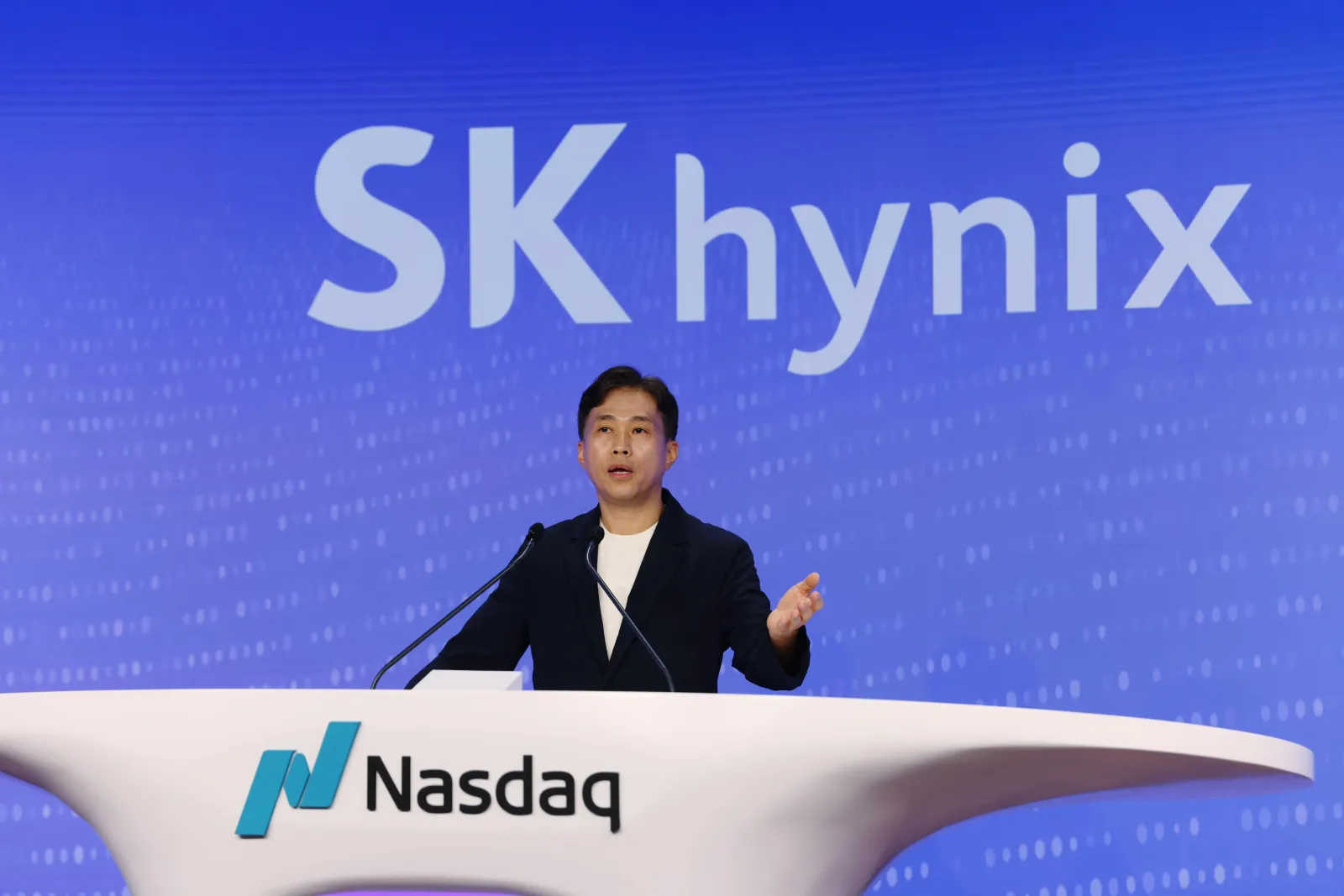
SK Hynix opens at $170, raises $26.5B, and tops foreign IPO records
In Friday's Wall Street debut, SK Hynix turns AI RAM demand into a $26.5B fundraising moment that rewrites comps.

China lands a reusable Long March booster, a first that matches SpaceX and Blue Origin
A barge landing and net-based recovery move China from theory to proof, reshaping the reusability race and satellite ambitions.