

Washington Post names Doom a top American cultural work, beating The Simpsons
The paper’s 25-decade list anoints a 1993 shooter alongside classics and music, with real consequences for how games are valued.
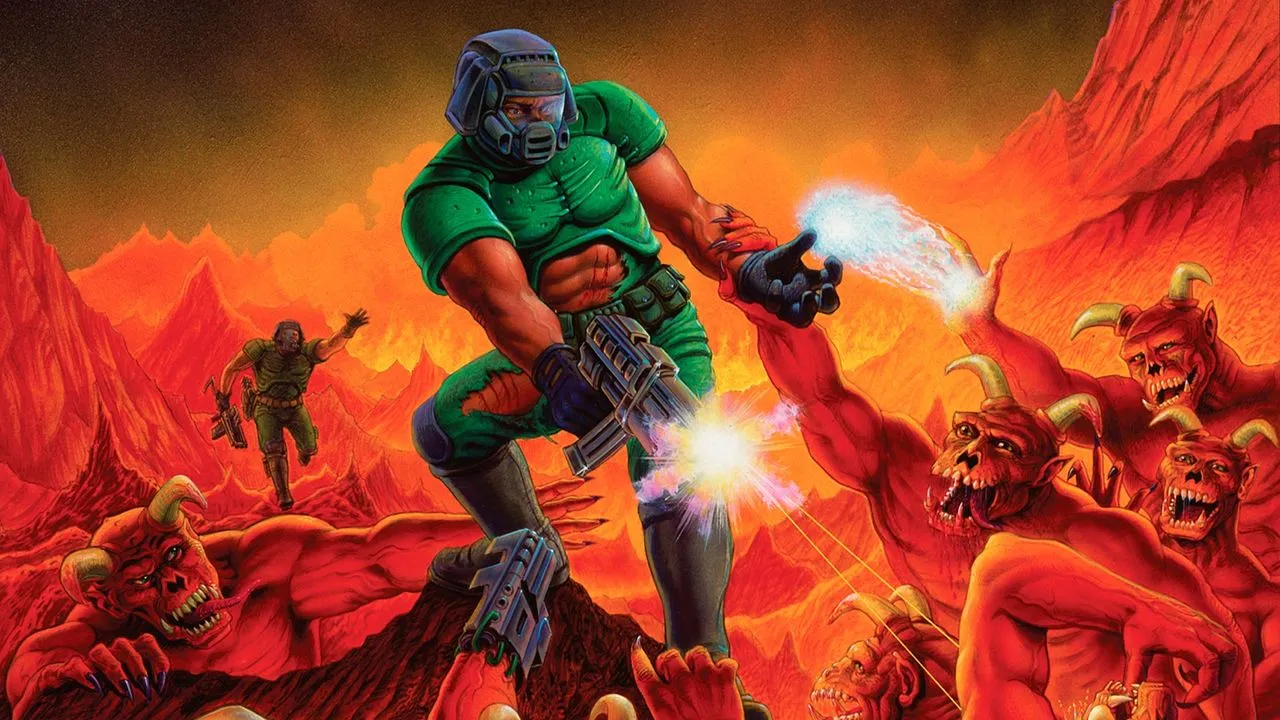
The Washington Post selected id Software’s 1993 game Doom as one of the 25 most influential works of American culture. For decision-makers, it signals that mainstream cultural gatekeeping is shifting, and that video games are increasingly treated like enduring national artifacts.
The Washington Post just placed Doom on its 25 most influential works of American culture list, spanning decades of U.S. history and cultural output. The game, released in 1993, is slotted as the defining highlight of the 1986 to 1995 decade, and it is listed ahead of heavyweight competition including Amy Tan’s The Joy Luck Club, Spike Lee’s Do the Right Thing, The Simpsons, Seinfeld, and the MTV reality series The Real World.
This is not a casual “games are art” moment. The Post is tying Doom’s impact to a specific, widely referenced turning point in how digital entertainment spread. In December 1993, id Software gave away part of its new videogame free over the internet. Washington Post videogame critic Gene Park wrote that “College networks buckled under the traffic, and bulletin boards lit up,” and that the game was eventually installed on more computers than Microsoft Windows 95 at the time.
Why this matters beyond nerd trivia is that it reframes “influence” in a way business leaders and board members actually have to care about. Doom is described in the piece as foundational in digital entertainment, not just because it was a 3D, first-person experience, but because it arrived with radically low friction. Park’s framing emphasizes a self-published model with no gatekeepers and no retail store, and it highlights how Doom effectively enabled user-generated content years before the term “user-generated content” became mainstream. Programmer John Carmack is credited with handing audiences tools to build their own corners of hell.
That “tools” detail is more than marketing mythology. It is a direct explanation for why Doom keeps resurfacing in cultural debates, funding arguments, and platform strategies. When a game is treated as a system that other people can remix, the company that ships it becomes closer to a software platform than a one-and-done product. Doom’s ability to catalyze community behavior also shows up in the list’s broader design principle: the Post says it is not a best-of list. Instead, it’s intended as a set of “historical signposts,” each decade defined by works that mattered in their era.
The Post’s selection also doesn’t ignore the controversy. Park acknowledges that Doom was scapegoated in the public imagination over the years, including being linked to the 1999 Columbine High School shooting in Colorado, described as “ground zero of America’s ongoing nightmare.” Park’s response in the piece draws a boundary between entertainment and violence: “It was people with guns, not a game, that took lives.” He adds that hearings were held on games and music, a template that would replay after nearly every mass shooting since. In other words, the cultural conversation around Doom is not just about creativity. It is about regulation, risk narratives, and how society assigns blame.
That regulatory and political context is exactly why this kind of cultural validation can have second-order business effects. When major institutions normalize games as defining works of culture, it can shift how lawmakers, libraries, educators, and mainstream media structure their arguments and funding priorities. The Post’s article explicitly notes that this is not Doom’s first recent recognition. In May, the Doom soundtrack was added to the United States’ “national playlist” in the U.S. Library of Congress.
For executives watching peers, this is a signal about legitimacy as much as it is about nostalgia. The list includes items like Thomas Paine’s Common Sense, the Star Spangled Banner, Narrative of the Life of Frederick Douglass, an American Slave, the Battle Hymn of the Republic, Levi’s jeans, Mickey Mouse, and recordings of legendary blues man Robert Johnson. In that company, the message is that games are now in the conversation for preservation and cultural canon status, not merely “youth entertainment.” Even the Post’s culture critic Philip Kennicott frames it as an American reflection: the list is “imperfect” and “incomplete,” but “then that is America, imperfect and unfinished.”
One final note: Park calls Doom a “foundational” work, but the piece also admits the list can feel like pop culture fluff in later entries, citing Keeping Up with the Kardashians for the 2006 to 2015 decade. The reason leaders should still pay attention is that Doom is being used as the example of a decade-defining work that changed how audiences interacted with digital media. That kind of threshold shift is what eventually influences procurement, institution partnerships, and the long-term valuation of game IP as cultural capital, not just as entertainment revenue.
In short, Doom is no longer treated as a controversial outlier. It is being positioned as a structural moment in American culture: a self-published, internet-distributed, tool-enabled 3D experience that helped build community behavior before the industry had language for it. If you run a studio, a platform, or an investment strategy, you should notice the direction of travel. Cultural gatekeepers are moving, and when they do, the business rules around legitimacy tend to follow.
This story's Key Insights and Take-aways are locked.
Create a free account to unlock Executive Actions for one credit.
Register to UnlockAlways free for Executives Club members. Join the Club
More in Business

Epic and Google drop settlement bid, forcing rival Android app stores by July 22
Google told the court it is ready to carry third-party app stores starting Wednesday, July 22.

SK Hynix opens at $170, raises $26.5B, and tops foreign IPO records
In Friday's Wall Street debut, SK Hynix turns AI RAM demand into a $26.5B fundraising moment that rewrites comps.

China lands a reusable Long March booster, a first that matches SpaceX and Blue Origin
A barge landing and net-based recovery move China from theory to proof, reshaping the reusability race and satellite ambitions.