

Waymo Premier hits $29.99/month for frequent riders, with invite-only rollout in 3 cities
The robotaxi operator turns rider frequency into subscription leverage, bundling priority, credits, and limited free cancellations.
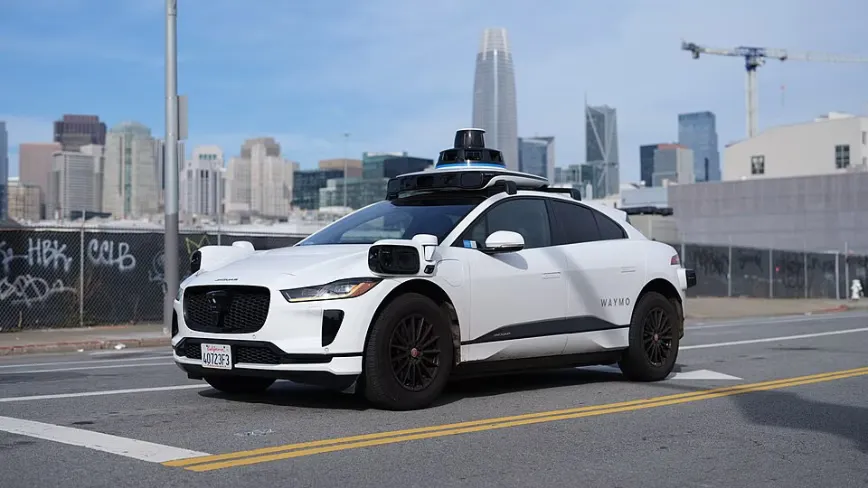
Waymo is launching Waymo Premier, a $29.99 per month subscription tier for its most frequent robotaxi riders in San Francisco, Los Angeles, and Phoenix. Decision-makers should pay attention to how Waymo bundles incentives for retention while normalizing monetization ahead of broader regulatory scrutiny.
Waymo is adding a new $29.99 per month tier for its most frequent robotaxi riders, called Waymo Premier. It starts invite-only, rolling out across three markets where Waymo already runs robotaxi service: San Francisco, Los Angeles, and Phoenix.
Here is what subscribers get, and why it matters: Waymo Premier customers receive prioritised matching, can make up to five free cancellations per month, and earn 10% back in loyalty credits on every trip. Those loyalty credits are called Waymo Cash. In plain English, Waymo is trying to make frequent riders feel like the “preferred lane” customers of its network, not just random trips competing with everyone else.
This is an unusually concrete pricing and retention move for a robotaxi business. Subscription models are rarely a first step in mobility because the demand problem usually comes first: prove that enough people want rides reliably and safely. But Waymo has already identified a specific group, “its most frequent riders,” and is willing to price for predictability. The offer is not just revenue. It is operational leverage. Prioritised matching can reduce friction for riders who are showing up repeatedly, which can increase rider satisfaction and improve the economics of each vehicle dispatch.
The invite-only design is equally telling. An invite-only rollout lets Waymo test a tiered loyalty system without fully committing to a mass-market pricing play that might be harder to manage operationally. If prioritised matching changes how requests queue and how cars get assigned, you would want tight control during the early learning period. Also, invite-only can function as a low-noise customer segmentation tool: the company can observe how loyalty credits influence ride frequency, how cancellations affect utilization, and how riders respond to a bundle rather than a standalone fare.
And the bundle is built to nudge behavior in multiple directions at once. The 10% back in Waymo Cash rewards trips, effectively creating a partial rebate loop. That can raise the lifetime value of frequent riders, not just by subsidizing them, but by making their decision calculus more “sticky.” Meanwhile, up to five free cancellations per month reduces perceived risk for subscribers. If the cancellation policy is otherwise costlier or more restrictive, that benefit can convert hesitant riders into “try it” behavior. Even when a rider still cancels, the subscription package aims to keep them within the system, not outside it.
On the ground, these features also have implications for how Waymo might operationally think about supply and demand. Prioritised matching is a direct knob over how quickly riders are paired with available robotaxis. That means Waymo can treat demand from Premier subscribers differently from non-subscribers, at least within the first phase. For an operator, that is valuable because the hardest operational challenge is often variability, not averages. A subscription that concentrates benefits around high-frequency riders can help smooth demand patterns or at least make them more measurable.
There is also a regulatory and public-scrutiny layer that executives should not ignore. Robotaxi services typically operate under permissions and conditions set by regulators and local stakeholders. While the source does not detail regulatory filings or approvals, the move toward a monthly tier and a loyalty-credit program is exactly the kind of commercial change that regulators, cities, and public-interest advocates may want to understand. Anytime a transport service changes incentives, you create new questions: how will the policy affect service levels, fairness, and access? An invite-only launch can be viewed as a way to manage that scrutiny by limiting scope while Waymo demonstrates how the tier works in practice.
Second-order, this product could also pressure peers. If Waymo is the first major player to formalize frequent-rider monetization with prioritised matching, free cancellations, and loyalty credits, other operators and platform models will have to respond to the expectation that “the best experience” comes with a membership lever. Boards and investors should watch whether subscription economics turn into a defensible competitive edge: not just “we have robotaxis,” but “we can build repeat behavior.” In a market where trust and operational performance are hard-won, turning repeat demand into a structured plan is a meaningful step.
In short, Waymo Premier is not a vague loyalty upgrade. It is a $29.99 monthly subscription tier for frequent riders in San Francisco, Los Angeles, and Phoenix, launching invite-only. Subscribers get prioritised matching, up to five free cancellations per month, and 10% back in Waymo Cash on every trip. For decision-makers, the strategic stake is clear: Waymo is monetizing repeat usage and shaping how its network serves demand, while giving itself a controlled runway to learn before scaling the commercial model further.
This story's Key Insights and Take-aways are locked.
Create a free account to unlock Executive Actions for one credit.
Register to UnlockAlways free for Executives Club members. Join the Club
More in Technology

OpenAI says 10,000 agents cracked a 90-year math problem in 88 hours
The company's claim is audacious, but one mathematician is pushing back. Here's what it means for AI-driven discovery.

Meta still serves child sexual abuse ads on Instagram in India - BBC report
A new report following the BBC Eye investigation says the ads are still there - what it signals for every platform with a self-serve ad engine.

White House yanks 'Build the Wall' game after Tetris Company copyright warning
The administration's arcade game vanished in hours - and the takedown playbook every brand can learn from.