
Workers spend 6.4 hours weekly botsitting AI, Glean says, and it drives job exits
Glean’s Work AI Institute finds AI productivity gains stall because employees burn almost a full day supervising and fixing models.
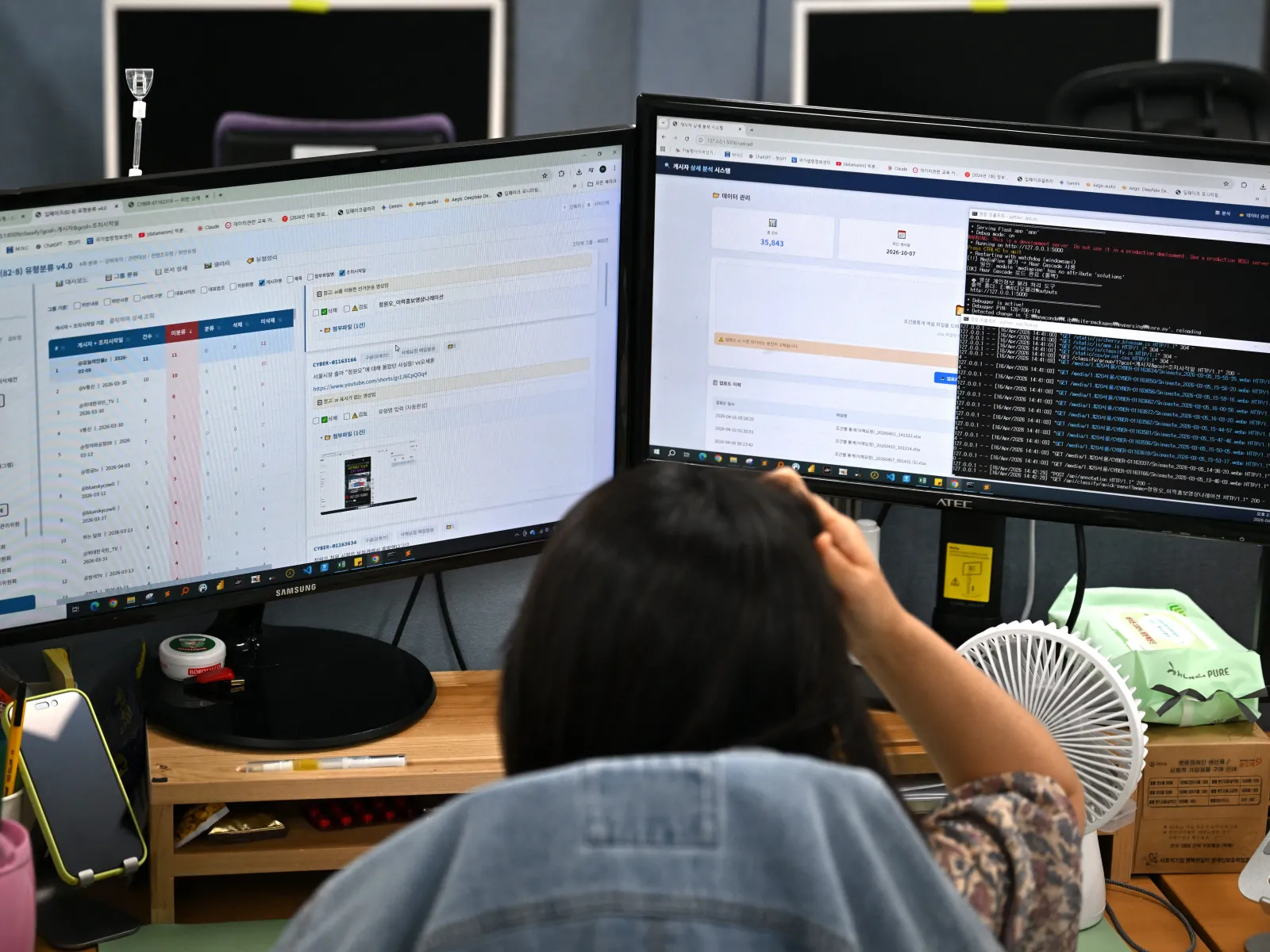
Glean’s Work AI Institute, with researchers from universities including Notre Dame, Stanford, and UC Berkeley, reports white-collar workers spend an average of 6.4 hours a week “botsitting” AI. For executives, the consequence is clear: morale and retention risk rise when organizations don’t provide standards, context, and governance for AI-assisted work.
Here’s the uncomfortable part of the AI hype cycle: workers are spending almost a full working day each week not using AI, but babysitting it. A new Glean report says white-collar workers spend an average of 6.4 hours a week “botsitting” AI, a term the report authors coined to describe the often-overlooked work required to make AI actually useful.
That “botsitting” is not theoretical. It includes feeding AI context, checking outputs, debugging mistakes, and cleaning up errors. The report frames this as the productivity paradox executives know too well: AI is supposed to save time, but some employees say they are spending hours every week repairing what the tools get wrong. In other words, the time savings can evaporate at the point of use.
Glean’s research team, part of the Work AI Institute, produced the study with researchers from universities including Notre Dame, Stanford, and UC Berkeley. They surveyed 6,000 full-time workers in the US, UK, and Australia who primarily work on computers or digital tools between December 2025 and January 2026. The geography matters because it suggests this is not a one-country workflow quirk. It is showing up across mature white-collar labor markets where “AI transformation” has already been a board-level topic.
The report also highlights a disconnect between what individuals experience and what companies achieve. In Glean’s findings, 87% of workers said they use AI at work, and 75% said it makes them more productive. Yet only 13% said their organization was performing significantly better because of it. That gap is where “botsitting” lives. Workers may personally feel faster at first, but the organization may still absorb the downstream cost in the form of rework, verification, and extra coordination.
Rebecca Hinds, head of the Work AI Institute at Glean and one of the report’s authors, described the work as “often tedious,” “exhausting” and “not rewarded and it’s not appreciated or tracked or measured and certainly not incentivized within the organization” on the “Cognitive Revolution” podcast on Wednesday. The detail is important for leaders because it reframes “AI productivity” from a tooling problem into an incentives and measurement problem. If the job that grows is not tracked, recognized, or built into how work is planned, then the organization is effectively asking people to absorb cost without accounting for it.
And then there is the retention story, which is where boards start to pay attention. The report found that workers who spend an unusually large share of their AI time botsitting are 73% more likely to be actively looking for another job. The study ties that morale decline to a recognizable pattern: workers absorb extra work without recognition or reward, become exhausted, grow resentful, and then begin “polishing their résumés.” That is more than a vibe. It is an operational risk because it suggests an AI rollout could quietly increase labor churn, even as executives see usage metrics climb.
Glean also points to what botsitting looks like in practice when AI tools do not behave like a coherent system. Many employees spend time moving information between disconnected AI systems, fixing mistakes, and providing context the tools should already have. In some cases, the work extends beyond correction and into redefining roles: Hinds said on the podcast that workers may be asked to automate parts of their jobs they enjoy most. She used customer-service employees as an example, people who often build relationships but may increasingly be expected to supervise AI agents instead. The report calls this “very dangerous,” because it attacks meaning at the same time it increases supervision burden.
So what should organizations do? The solution, according to Glean’s researchers, is not simply deploying more AI. Instead, the companies seeing the biggest gains are often doing more work around AI: helping employees access the right context, teaching them how to use the technology effectively, and establishing clearer standards for what good AI-assisted work looks like. As the report puts it, those companies “aren’t spending a greater share of their AI time using AI. They’re spending a greater share on the work around it: setting context, defining what ‘good’ looks like, building judgment, and deciding what should never have been handed to a model in the first place.”
That’s a governance sentence masquerading as operations. It implies executives need to treat AI like a socio-technical system, not just a feature upgrade. The alternative is the “steady departure of the people who got tired of cleaning up after the bots.” And even if you believe you can out-execute that risk with hiring, the signal is still bad: when 6.4 hours a week goes into botsitting, your AI initiative is quietly charging your workforce, not just your software budget.
This story's Key Insights and Take-aways are locked.
Create a free account to unlock Executive Actions for one credit.
Register to UnlockAlways free for Executives Club members. Join the Club
More in Business

SpaceX IPO: Wedbush calls a Tesla merger “holy grail,” Morningstar pegs $63 fair value
Trading starts June 12 at $135, but analysts are split over a $72-per-share “option premium” on orbital AI dreams.

10% of large employers will drop obesity drug coverage next year as costs rise
As use surges, a growing share of big employers plan to end coverage, shifting the bill and the politics of benefits.

SpaceX IPO looms as A.I. spending frenzy triggers tougher questions on rocket economics
DealBook frames the go-public moment as scrutiny grows over the sector's spending spree and what it means for investors.