

Xi’s 2018 Star Market idea turns SSE into a frontier-tech capital engine
China’s Sci-Tech Innovation Board, launched after Xi Jinping’s 2018 proposal, now funds AI, robotics, and semiconductors.

President Xi Jinping floated the idea in 2018 of a tech-focused board on the Shanghai Stock Exchange, later dubbed the Star Market. The Sci-Tech Innovation Board has become a financial engine backing frontier technologies including artificial intelligence, robotics, and semiconductors.
In 2018, President Xi Jinping floated an idea that sounded like policy theater until it started doing real work: a tech-focused board on the Shanghai Stock Exchange (SSE). That proposal did not stay on paper. It became what investors now call the Star Market, officially known as the Sci-Tech Innovation Board on the Shanghai bourse.
The result is straightforward and consequential for decision-makers: the Star Market has turned into a financial engine backing breakthroughs in frontier technologies, including artificial intelligence, robotics and semiconductors. In other words, China did not just talk about innovation. It built a market structure designed to route capital toward the technologies that typically need patience, risk tolerance, and specialized investor attention.
To understand why this matters, you have to look at how capital typically moves in public markets. Stock exchanges are not neutral plumbing. They reflect the kinds of companies the system is willing and able to fund. When a market creates a distinct “home” for innovation-focused issuers, it changes incentives for everyone involved: companies that want funding think about their listing strategy differently; investors think about where growth or technical differentiation might be priced; and regulators gain a channel to shape how tech risk is assessed and disclosed.
The Star Market is exactly that kind of structural bet. Under the SSE, the board is positioned as tech-centric, and it is tied to an innovation narrative that has clear real-world components. The source is explicit about the board’s impact: it powers breakthroughs in frontier technologies such as artificial intelligence, robotics and semiconductors. That trio is not accidental. AI is the software layer powering new products and workflows. Robotics pushes from lab concepts into physical-world deployment. Semiconductors are the upstream hardware bottleneck that can make or break entire downstream industries. Building a capital pathway for all three signals an attempt to support both near-term application momentum and longer-cycle foundational infrastructure.
The “surprise” element matters too. The source describes Xi’s 2018 idea as something that “gave investors a surprise,” which hints at how much this was not simply an incremental change. Instead, it was a new framing for the exchange, with a different orientation toward technology. When policy introduces a genuinely new category of listing venue, it can scramble expectations. Investors who were trained to look for traditional business profiles might have to re-learn how to evaluate technical risk. Companies that previously might have sought other funding routes might now see an IPO path that looks more aligned with their growth story.
Over time, that alignment can compound. If frontier tech issuers increasingly access financing through the Star Market, that concentrates attention and capital in one place, which can lower friction for future issuers. It can also create a feedback loop where market participants develop expertise in evaluating the kinds of technologies that are backed there, making it easier for additional companies in the same ecosystem to raise funds.
For executives, the second-order question is not just “what does the board fund?” It is “how does this reshape competition and expectations for funding cycles?” If China’s Sci-Tech Innovation Board becomes a credible outlet for AI, robotics, and semiconductors, then peers in the same sectors have to plan against a system where the capital markets are tuned for their category. Even for companies outside China, the existence of a dedicated tech board pressures global benchmarks: investors and policymakers everywhere will notice that market structure can be designed to accelerate innovation finance, not just reflect it.
Bottom line: Xi Jinping’s 2018 proposal to create a tech-focused board on the Shanghai Stock Exchange has evolved into the Star Market, officially the Sci-Tech Innovation Board. And the source’s central claim is that this board is now acting as a financial engine powering frontier breakthroughs in artificial intelligence, robotics, and semiconductors. If you run a company in those areas, or oversee board strategy for an innovation-heavy portfolio, this is the kind of infrastructure shift that can change who gets funded, at what pace, and with which expectations attached.
This story's Key Insights and Take-aways are locked.
Create a free account to unlock Executive Actions for one credit.
Register to UnlockAlways free for Executives Club members. Join the Club
More in Business
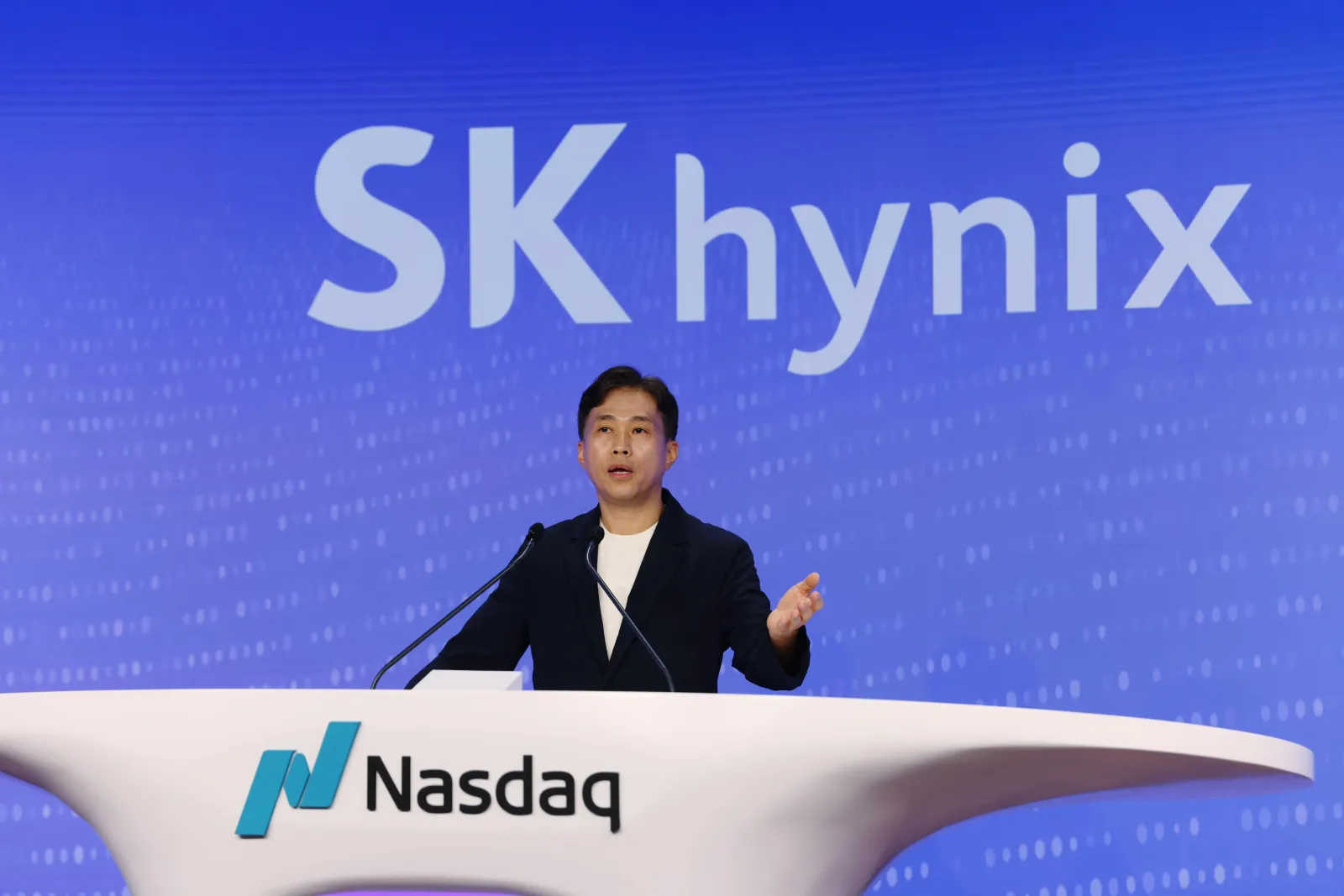
SK Hynix opens at $170, raises $26.5B, and tops foreign IPO records
In Friday's Wall Street debut, SK Hynix turns AI RAM demand into a $26.5B fundraising moment that rewrites comps.
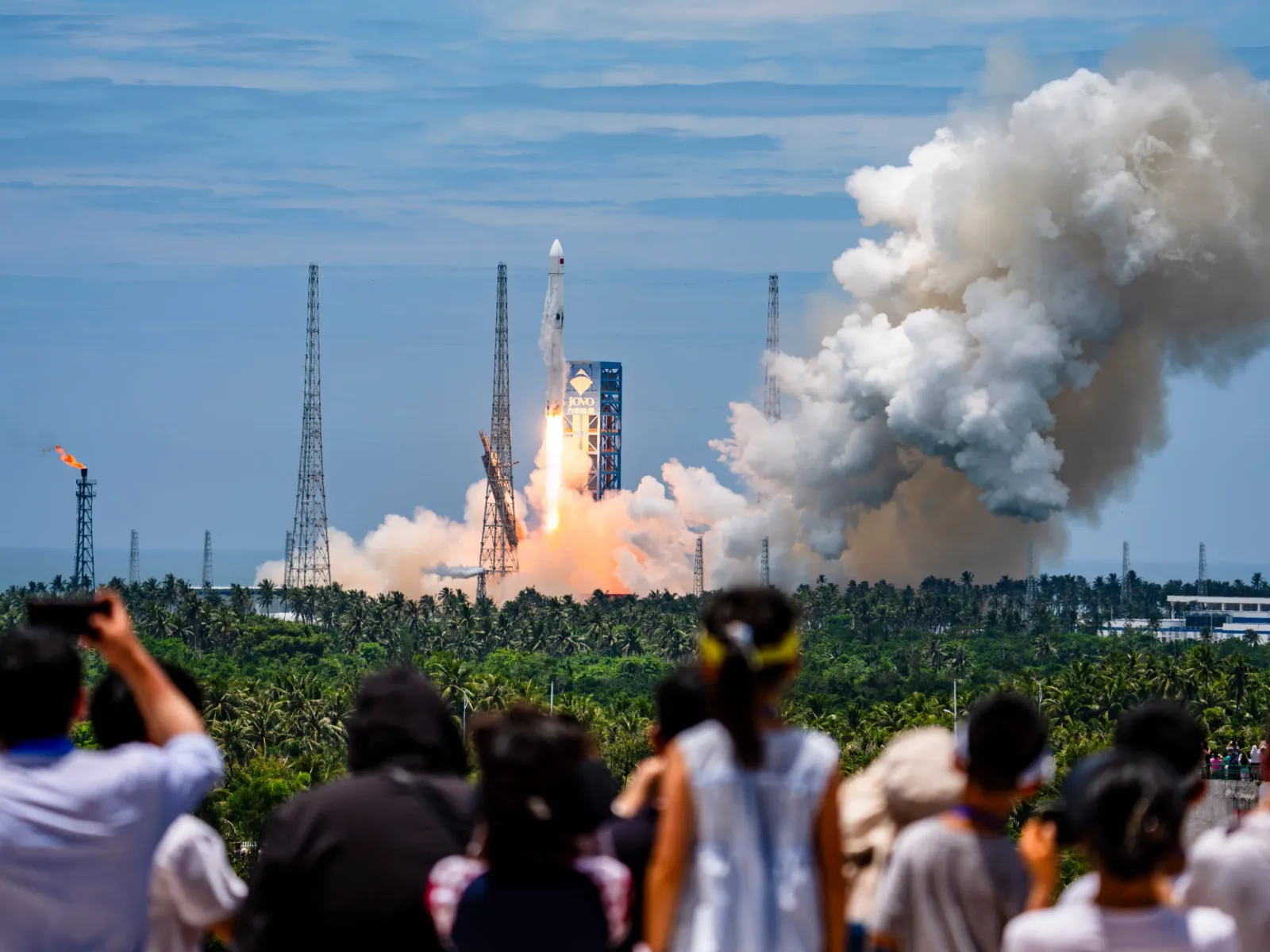
China lands a reusable Long March booster, a first that matches SpaceX and Blue Origin
A barge landing and net-based recovery move China from theory to proof, reshaping the reusability race and satellite ambitions.

AstraZeneca $27B wipeout as Wainua late trial misses cardiovascular target
A failed late-stage heart study triggered a swift market punishment, forcing investors and boards to reset timelines and risk.