
Zohran Mamdani’s $50 NYC World Cup jerseys resell for up to $999 within hours
Only 1,500 jerseys hit the market Friday, and resellers quickly turned “affordable” into a four-figure premium.
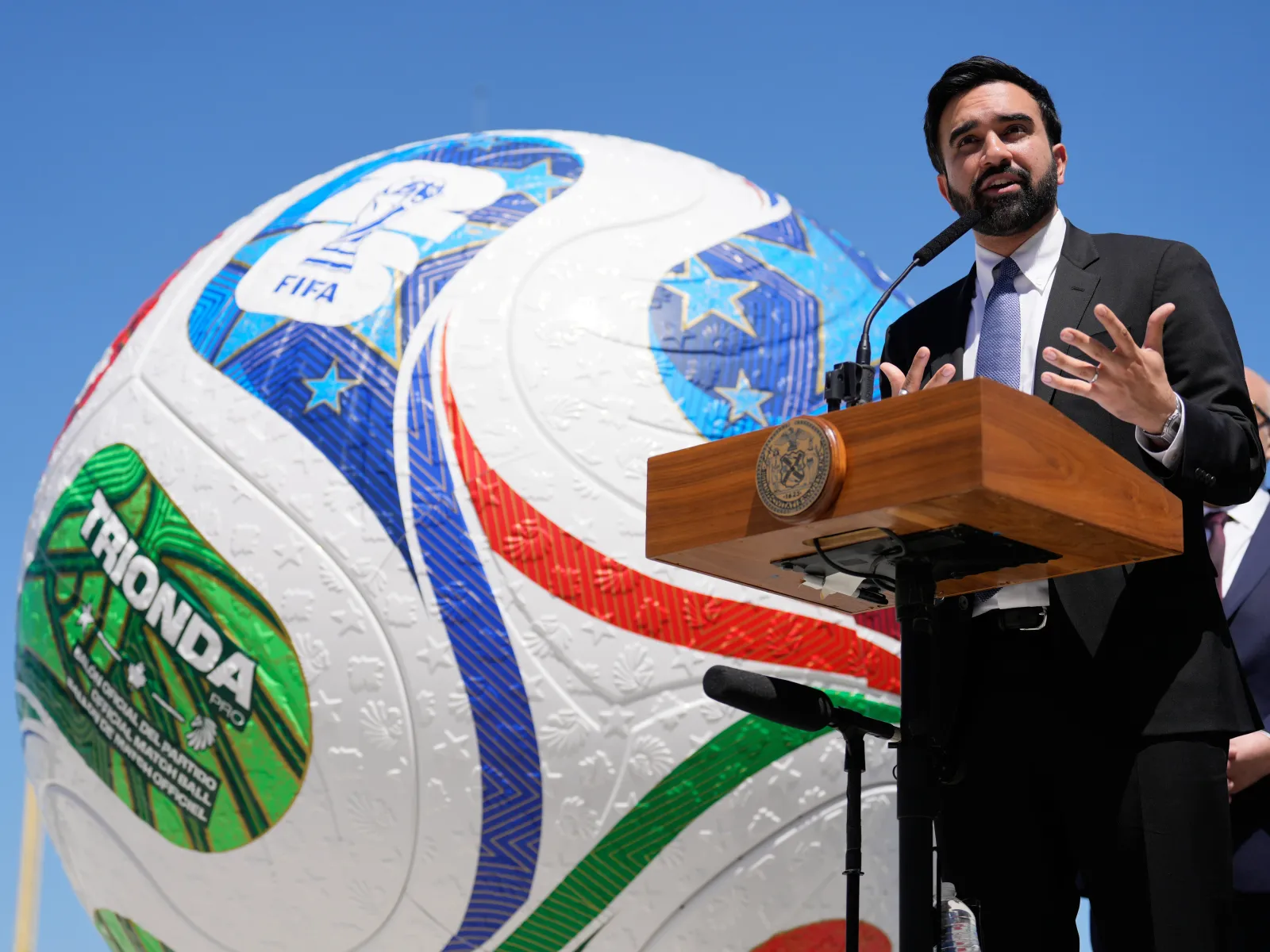
NYC Mayor Zohran Mamdani released $50 New York City-themed World Cup jerseys meant as an affordable alternative to FIFA’s pricier versions, but resellers listed them for at least $400 and as much as $999. The resale surge is a live stress test for how public-minded pricing collides with demand, scarcity, and platform-enabled arbitrage.
NYC Mayor Zohran Mamdani launched a run of $50, New York City-themed World Cup jerseys on Friday with the explicit goal of giving New Yorkers a cheaper option than FIFA’s expensive official gear. Within hours, resellers flipped those same shirts online for far less affordable prices, listing them for at least $400 on sites like eBay and Facebook Marketplace, with some sellers asking as much as $999.
That is not a small mismatch. It is a rapid, almost surgical conversion of a “$50 for residents” moment into a four-figure market, even though the jerseys were only available in limited quantity. Mamdani’s administration said only 1,500 jerseys were available for purchase, which turned the launch into a hot ticket. People reportedly stood in line for hours outside the City of New York’s official store to get one, and once they hit the public marketplaces, scarcity plus demand did the rest.
To understand why this kind of flip happens so fast, it helps to look at what Mamdani was trying to correct in the first place. The source notes that Mamdani’s administration has broadly pushed affordability initiatives. In May, he outlined a plan to expand affordable housing. A month earlier, he and New York State Gov. Kathy Hochul proposed a new pied-à-terre tax targeting wealthy people who own a secondary property in the city but live elsewhere. He has also tried to make events more affordable for New Yorkers, including going after FIFA’s pricing mechanics.
Last September, Mamdani launched a petition urging FIFA to ditch its dynamic pricing model and lower ticket prices for New Yorkers. Dynamic pricing means businesses adjust prices in real time based on factors like demand and market conditions. That approach is designed to capture willingness to pay, but it often frustrates buyers who expect fixed prices. The source also highlights Mamdani’s criticism of FIFA allowing ticket reselling on FIFA’s official platform without a price cap, where resale markets can be volatile and vendors can upcharge by hundreds of dollars.
What happened with the jerseys is essentially a parallel economics story, just with merchandise instead of tickets. FIFA’s official jerseys are described as noticeably pricier in the source: the most expensive team gear costs $375, while the cheapest alternative costs $70. Against that backdrop, Mamdani’s $50 jersey was meant to function as an affordable alternative. An Instagram post from Mamdani said the jerseys were “made by New Yorkers, for New Yorkers.” The administration’s strategy relied on a simple assumption: if you offer a lower price, residents get the benefit.
But the market route from retailer shelves to online resale platforms is short. The source says the jerseys “popped up on sites like eBay and Facebook Marketplace hours after they went on sale.” That timing matters. It suggests that the initial limited supply and high attention created an immediate arbitrage opportunity for resellers. Once a product becomes both scarce and desirable, resellers do not need to invent anything. They just move inventory quickly, monetize the gap, and let the online listings do the amplification.
There is also a political and operational tension baked into this. Mamdani announced the apparel earlier this week, and the response was clearly visible in the physical line outside the official store. In other words, this was not a product nobody wanted. It was, in fact, a product people queued for. When demand outpaces supply, any workaround that can capture that pricing pressure will attract players. In this case, the workaround was resale listings far above the intended $50 price, including offers at $400 and as much as $999.
This jersey flip lands in the middle of a much bigger World Cup accessibility story for New York and New Jersey, which are host areas for this year’s tournament. The source notes the first local match at MetLife Stadium takes place on Saturday evening between Brazil and Morocco. Even outside match days, pricing disputes matter, because they shape public trust. Mamdani secured 1,000 World Cup tickets for New Yorkers at $50 each in May following negotiations with FIFA President Gianni Infantino, and he described it as a win in a video posted to X in May. The source quotes Mamdani saying, “Last year we said we'd fight for cheaper tickets for New Yorkers, and today I'm proud to announce, just like Arsenal, we got it done,” and the mention of Arsenal underscores how personal and high-stakes this fight is for him as a lifelong fan of the London soccer club.
For executives and board members watching similar affordability initiatives, the second-order lesson is blunt: price controls alone may not protect the intended beneficiary if distribution channels allow quick resale. If the system does not cap resale gains, rationing plus demand can turn any “affordable” product into a speculative asset for the few who can secure inventory first. Mamdani’s jersey experiment shows the risk in high-visibility launches: even when the public price is designed to help, the market can rewrite the outcome within hours.
This story's Key Insights and Take-aways are locked.
Create a free account to unlock Executive Actions for one credit.
Register to UnlockAlways free for Executives Club members. Join the Club
More in Business

SpaceX Nasdaq debut makes it the 6th most-valuable U.S. company at record scale
The IPO flips the usual tech script, putting a revenue-light rocket maker among megacap peers on day one.

SpaceX debuts Friday on Nasdaq at $135, surges to $160.95, valued near $1.8T
A Nasdaq opening pop turns SpaceX into a public company overnight, forcing new money questions fast.

Mena construction CPMI slips 12% in April 2026, but execution momentum rebounds to 1.01
GlobalData’s April CPMI shows resilience masking pre-execution caution, with conflict risk surfacing unevenly by country and sector.