

Zooniverse hits 1 billion classifications for NASA, proving citizen science scales fast
NASA grantee Zooniverse turns 1 billion volunteer contributions into discoveries, publications, and a future-ready research pipeline.
Zooniverse, a NASA grantee that runs the world’s largest platform for online people-powered research, reached 1 billion classifications from volunteers around the globe. For decision-makers, the milestone is a clear signal that human-in-the-loop participation can accelerate scientific output at major data scale.
Zooniverse has hit 1 billion classifications from volunteers worldwide, and the number is the point. It is 1 billion moments where someone looked at a dip in a light curve, confirmed a moving object in a short video, or identified species in a camera trap image. In other words, the “people-powered” part of NASA-linked science is not a marketing phrase. It is a measurable throughput engine that turns human pattern recognition into research inputs.
NASA also provides the scaffolding behind the milestone: there are 31 NASA-sponsored citizen science projects hosted on Zooniverse, totaling 120 million classifications by 324 thousand volunteers since 2020. Those volunteers are not just participating for fun. Their work supports projects like Planet Hunters TESS, Daily Minor Planet, Backyard Worlds: Planet 9, Space Umbrella, and Snapshot Wisconsin, which focus on tasks ranging from discovering exoplanets and identifying near-Earth objects and asteroids to searching for brown dwarfs and planetary systems, analyzing effects of the solar wind, and informing wildlife management decisions. The consequence for executives is straightforward. When you can reliably transform large volumes of raw observations into validated research outputs, you can compress discovery timelines without compromising scientific rigor.
Look at the downstream results, and the scale gets more concrete. These Zooniverse projects have led to 96 scientific publications. Even better for governance and legitimacy, 56 of those articles feature NASA citizen scientists as co-authors, explicitly recognizing how volunteer contributions translate into academic credit. That matters because it changes how people-powered research is treated internally. It stops being a public outreach add-on and becomes part of the knowledge production system, with publication tracks that look more like traditional research workflows.
This is also a data strategy story, not just a community celebration. The source emphasizes that the next phase will require even tighter collaboration between volunteers, scientists, and computing technology as researchers tackle enormous and complex datasets, including those from NASA’s upcoming Nancy Grace Roman Space Telescope. For organizations planning ahead, this is the operational lesson: classification platforms like Zooniverse are a bridge between messy real-world inputs and structured scientific analysis. Human judgment helps where pattern detection is hard for models, while scalable computing helps where volume would otherwise crush manual review.
There is also an institution-and-incentives layer worth noting. Zooniverse is co-founded by the Adler Planetarium and the University of Oxford, with the University of Minnesota serving as a key institutional partner. The platform has a community of more than 3 million registered volunteers and, through a six-year collaboration with NASA, provides science-enabling infrastructure to NASA researchers through tools and a sustained network of contributors. When you run partnerships like this, the incentive alignment is subtle: NASA needs dependable research-grade outputs, and the participating institutions need a platform that remains robust enough to justify continued investment. Hitting 1 billion classifications suggests the model is resilient.
Finally, the milestone carries a message from the person closest to the system. Laura Trouille, principal investigator of Zooniverse and vice president of Science Engagement at the Adler Planetarium, described “1 billion classifications” as “far more than a number,” calling them one billion moments of curiosity transformed into meaningful contributions to research. She also framed each classification as bringing “one step closer to new discoveries and a deeper understanding of our universe, our world, and ourselves.” Even if you are not in science engagement, the governance relevance is clear: when milestones are tied to real publications and co-authorship, you can defend the program to stakeholders who demand measurable impact.
For executives, the strategic stakes are simple. If NASA-linked citizen science can reliably produce 96 scientific publications from 120 million classifications since 2020, then the broader question for boards and leaders is whether their organizations are learning the same “human-plus-data” lessons early. Platforms like Zooniverse are quietly building a playbook for scaling discovery across large datasets, with participation that can grow, iterate, and feed scientific output rather than just generating engagement. The future research pipeline is likely to be blended, and 1 billion classifications is a strong proof point that this blend can operate at true, industrial scale.
This story's Key Insights and Take-aways are locked.
Create a free account to unlock Executive Actions for one credit.
Register to UnlockAlways free for Executives Club members. Join the Club
More in Science
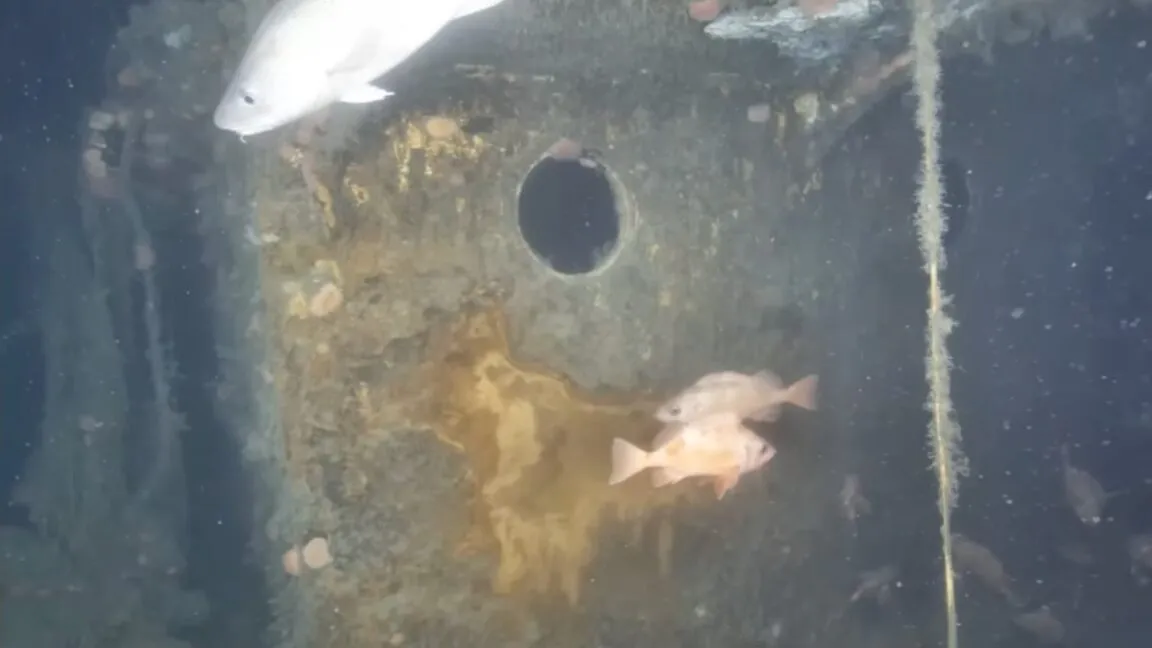
Quest wreck images show how Shackleton’s doomed ship became an Arctic-style living system
The Royal Canadian Geographic Society released first photos, revealing a worst-case wreck turned thriving marine habitat.

2022 Yangtze heat and drought revealed why natural forests outlast planted ones
A record-breaking 2022 event gave researchers a rare, real-world stress test for forest resilience under heat and water shortages.
Microalga rewires 1/3 of its genes from moderate warming, The Plant Cell study finds
Chlamydomonas reinhardtii shifts protein-coding activity at smaller temperature swings than many ecosystems expect.