

Zuckerberg’s net worth jumps $12B as Meta rides AI model optimism
Meta’s investor reaction tracks a new AI model push and plans for in-house chips, reshaping the tech stack bets.

Mark Zuckerberg and Meta Platforms are seeing Zuckerberg’s net worth swell by $12 billion as Meta gains momentum tied to a new AI model. The move also comes alongside Meta reporting plans for in-house AI chips, which matters for decision-makers deciding where to invest next.
Mark Zuckerberg’s net worth swelled by $12 billion as Meta ended what Forbes describes as its best week since 2024, helped by a positive investor reaction to its new AI model and a reported plan to build in-house AI chips. That combination is the tell: this was not just a “we announced something AI” moment. Investors appear to have treated Meta’s AI roadmap as both near-term product momentum and longer-term infrastructure positioning.
In practical terms, Meta’s stock reaction suggests the market is rewarding two things at once. First, the new AI model created immediate optimism, the kind that tends to show up when expectations shift from “AI as marketing” to “AI as usable capability.” Second, plans for in-house AI chips signal a willingness to control costs and performance for a compute-heavy future. That matters because AI workloads do not run on vibes. They run on data, power, and specialized hardware, which is why chip strategy often becomes a proxy for profitability and speed.
To understand why these headlines hit so hard for executives, zoom out to how large AI efforts usually play out. Most companies can buy compute, train and serve models using third-party chips, and keep hardware decisions relatively modular. But building or integrating in-house AI chips is different. It is a commitment that reaches beyond engineering into supply chains, long-lead manufacturing timelines, talent allocation, and procurement leverage. When investors react positively, it typically means they believe the payoff could include better unit economics and reduced reliance on external chip supply constraints.
Second-order, this puts pressure on peers to clarify their own AI infrastructure strategies. Even if other firms do not publicly plan chip programs, they still face the same underlying cost curve: as models get larger and usage grows, the economics of inference, training, and deployment become board-level issues. If Meta is framing in-house chips as a route to advantage, competitors cannot just compete on model quality. They also have to defend their approach to cost, latency, and scalability. Boards and CFOs tend to care about those three words because they determine how fast a company can expand capacity without burning cash.
There is also a governance and risk angle. Meta is a massive incumbent, and large incumbents often face a familiar tension between experimentation and execution. Investors are effectively saying they see a path from AI model improvements to a durable strategy that can survive real-world constraints. But the same strategic move also increases execution risk. Chip roadmaps, in particular, can turn into long projects with uncertain timing. So the upside is control. The risk is that control takes longer than expected. The market reaction, which helped push Zuckerberg’s net worth higher by $12 billion, indicates investors are currently leaning toward “control is coming and it will matter.”
Regulation sits in the background too, even when today’s news is focused on stock and chips. Meta and its peers operate in an environment where AI systems can trigger scrutiny around transparency, fairness, and misuse. While the source does not add new regulatory details, the meta-point for decision-makers is simple: infrastructure decisions and AI capabilities accelerate faster than governance processes sometimes can. If AI improvements are likely to roll out quickly, companies may need to keep compliance and safety work parallel, not sequential.
For executives at other companies, the strategic stake is clear. Meta’s best week since 2024, tied to a new AI model and plans for in-house AI chips, is a reminder that markets are increasingly evaluating AI as a full-stack strategy. That includes models and the compute underneath them. If you are a CEO or CFO, the question is not whether AI matters. It matters. The question is whether your AI roadmap has a credible path to unit economics, capacity scaling, and differentiation that will still look good when the novelty wears off and costs show up on the income statement.
This story's Key Insights and Take-aways are locked.
Create a free account to unlock Executive Actions for one credit.
Register to UnlockAlways free for Executives Club members. Join the Club
More in Business
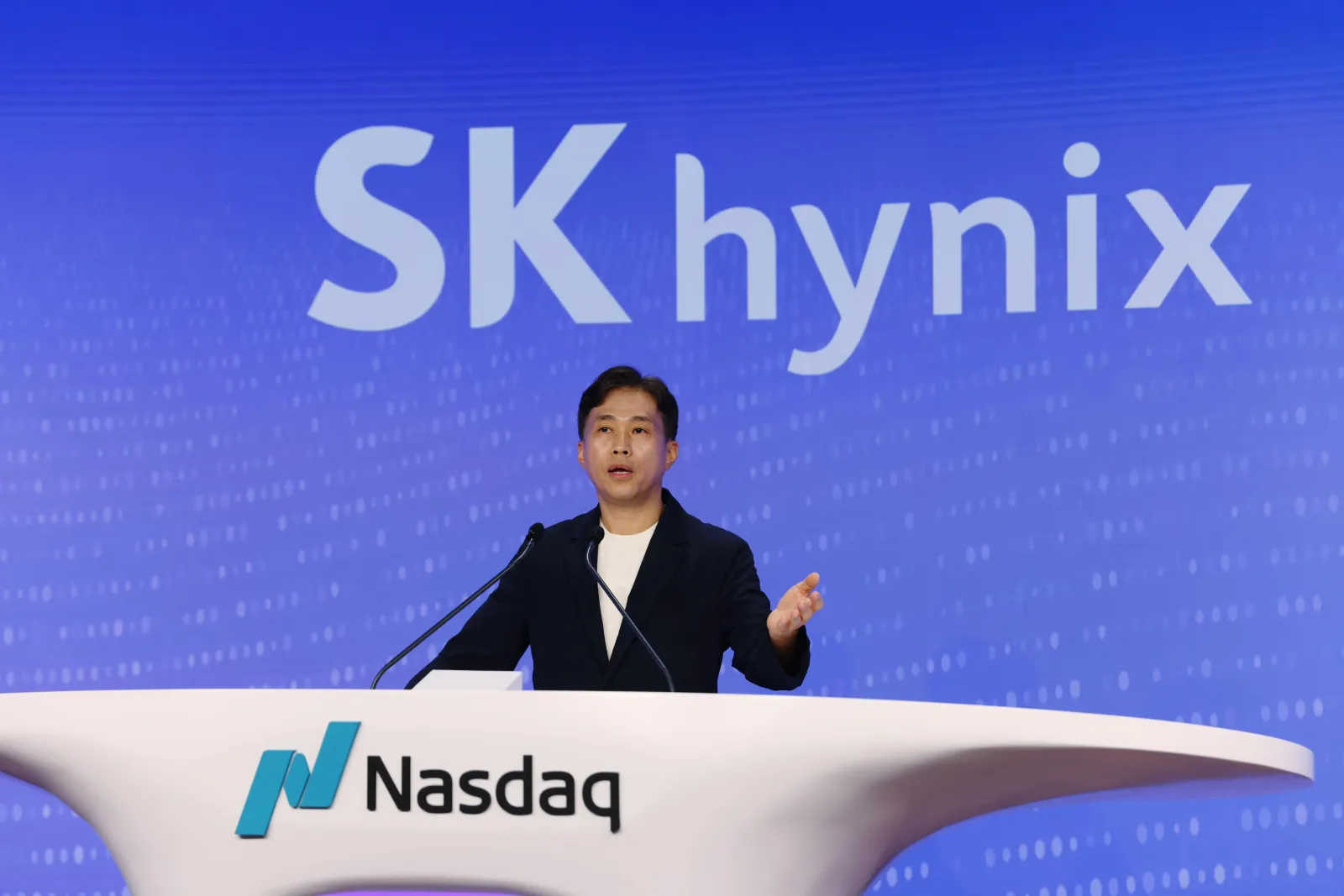
SK Hynix opens at $170, raises $26.5B, and tops foreign IPO records
In Friday's Wall Street debut, SK Hynix turns AI RAM demand into a $26.5B fundraising moment that rewrites comps.

China lands a reusable Long March booster, a first that matches SpaceX and Blue Origin
A barge landing and net-based recovery move China from theory to proof, reshaping the reusability race and satellite ambitions.

AstraZeneca $27B wipeout as Wainua late trial misses cardiovascular target
A failed late-stage heart study triggered a swift market punishment, forcing investors and boards to reset timelines and risk.