
10 Dead in Two New York Fires. E-Bike Batteries Face a Council Reckoning
After 10 deaths across two recent fires, at least one tied to e-bike batteries, New York City Council held an emergency hearing on storage and battery-safety rules that could reset compliance costs for delivery platforms, landlords, and battery sellers.
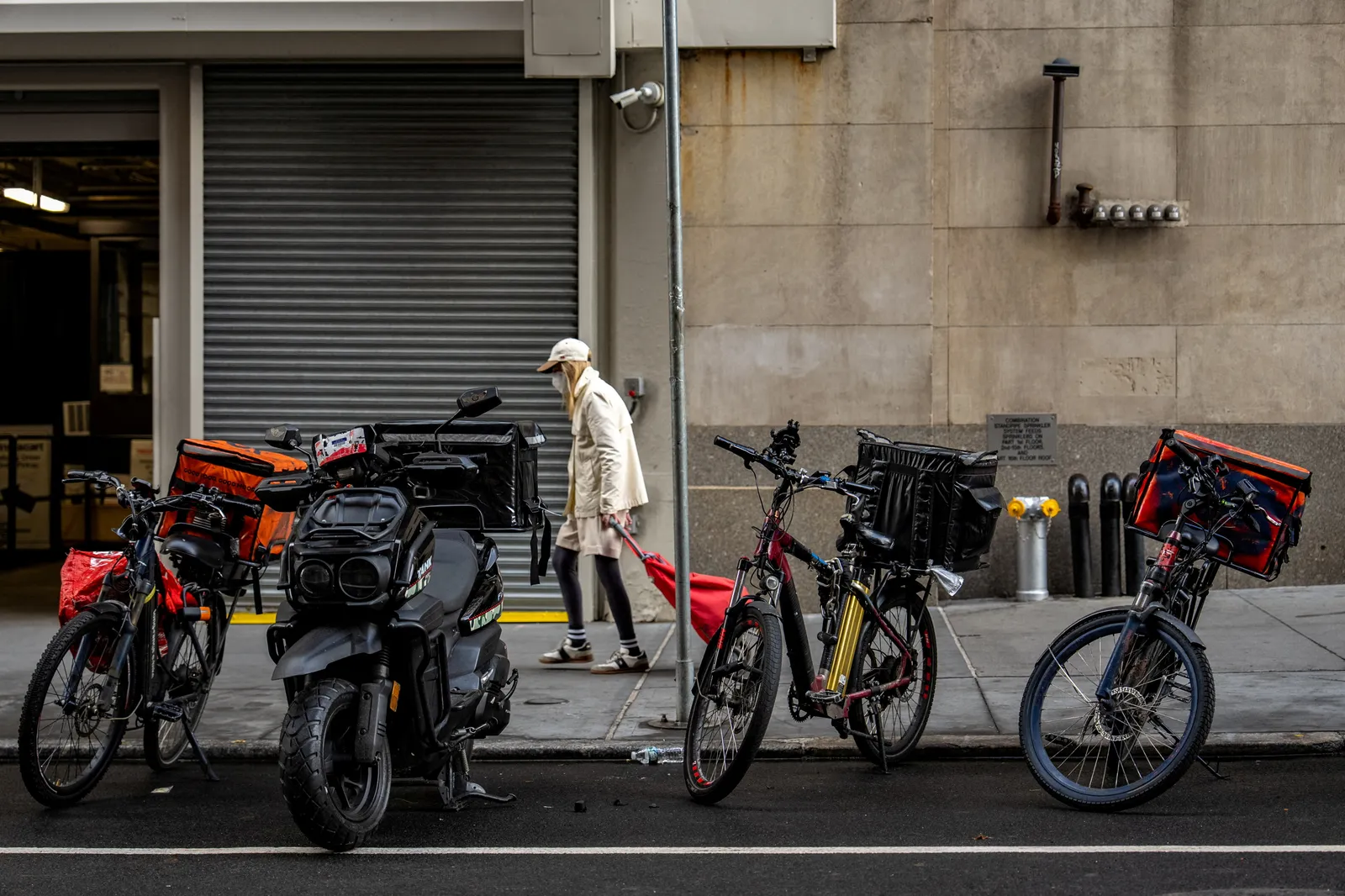
The New York City Council held an emergency hearing on stricter e-bike storage and battery-safety rules after 10 people died in two recent New York fires, at least one caused by e-bike batteries. For delivery platforms, landlords, battery sellers, and micromobility operators, the hearing turns battery safety from a product-liability issue into an urban-operations and real-estate compliance question.
Ten people died in two recent New York fires, and at least one of those fires has been determined to be caused by e-bike batteries. That is the fact driving an unusually urgent city-level response. The batteries are not a niche hobby accessory in New York. They lean in apartment hallways, charge overnight in bedrooms and carry many of New York City's delivered meals. The same devices that make dense urban delivery work are increasingly a source of fires, linked to aging or inferior batteries.
On Friday, the New York City Council held an emergency hearing on a raft of stricter rules for e-bike storage and battery safety, prompted by those deaths. The meeting ran three hours. The final shape of the rules is still to be settled, but the scope is clear: where e-bikes and their batteries are stored, and whether the batteries themselves are safe enough to be sold and used in dense residential buildings. For operators, that is not a cosmetic policy debate. It puts a fast-growing urban transport and delivery tool into the same regulatory bucket as other building-safety and consumer-product risks.
The underlying problem is physical. E-bike batteries are lithium-ion packs that store a large amount of energy in a small package. When cells are defective, damaged, mismatched with chargers, or simply worn out, that energy can be released as heat and fire, a phenomenon often described as thermal runaway. In a detached garage, that is dangerous. In an apartment hallway or a bedroom where a battery charges overnight, it can be lethal. The source points to aging or inferior batteries as a common thread, which is why the debate is moving beyond rider behavior and into the hardware itself.
The hearing also lands in the middle of New York's delivery economy. E-bikes carry many of the city's delivered meals, and the people who rely on them typically need to charge where they live, which is often a small apartment in a dense building. That makes e-bike safety a labor and logistics issue as much as a fire-code issue. Delivery platforms and restaurants depend on these vehicles to move orders quickly and cheaply. If storage and charging rules tighten, the cost of compliance does not disappear. It lands somewhere, whether on platforms, restaurants, workers, landlords, or battery sellers. The hearing does not resolve that allocation, but it starts the fight over it.
For landlords and building managers, the political signal is just as important as the eventual rulebook. Hallway storage and overnight bedroom charging are exactly the behaviors a safety crackdown would target. Building owners may face pressure to restrict charging, designate safer storage areas, or answer harder questions from insurers and tenants. Even a narrow rule can change building operations if it forces managers to decide what is allowed in common areas and what must be pushed out of residential units. The risk is not only fines. It is liability, insurance cost, and the unglamorous work of enforcement in buildings where residents have few good alternatives.
For battery sellers and micromobility operators, the phrase 'aging or inferior batteries' is the tell. Regulators are not only asking riders to behave better. They are asking whether the hardware entering the market is safe. That can reach cheap replacement packs, refurbished batteries, mismatched chargers, and the informal repair ecosystem that keeps older e-bikes running. The policy question is whether New York treats battery safety as a consumer-protection problem, a fire-code problem, or both. For founders in micromobility, the strategic risk is that a few bad batteries can force rules across an entire product category. The opportunity is that clear standards can favor operators with better sourcing and traceability.
The numbers are stark and simple: 10 deaths, two recent fires, at least one tied to e-bike batteries, and a three-hour emergency hearing at the New York City Council. Those facts are enough to move the issue from the margins of urban policy to the center of a fight over how people move, eat, and live in dense cities. The next phase is not just enforcement. It is a definitional battle over who owns battery safety, who pays for it, and who gets blamed when it fails. For executives in delivery, real estate, insurance, or hardware, the right posture is to treat this hearing as a leading indicator, not a one-off news event. The cities that solve e-bike safety first will set the template for everyone else.
This story's Key Insights and Take-aways are locked.
Create a free account to unlock Executive Actions for one credit.
Register to UnlockAlways free for Executives Club members. Join the Club
More in Business

Anthropic's record IPO lands a day before Nvidia's longest losing streak since 2008
Anthropic's record Nasdaq debut and Nvidia's longest weekly losing streak since 2008 landed within 24 hours of each other, and the contrast shows how fast the market is re-pricing the AI trade.

New World's HK$24.9B rights issue triggers 41% plunge as HK$50B debt target looms
New World Development has three levers left to erase up to HK$50 billion in borrowings by 2031, and shareholders just told the market what they think of the first one.

Chip supply chain warns new US export controls will spread beyond the target list
Suppliers, distributors and equipment makers say the latest US restrictions will not stay contained to the firms named on paper, putting orders, inventory and delivery timelines at risk across the global chip chain.