
Africa DNA reveals a ghost lineage humans interbred with before leaving the continent
A newly identifiable third ancestry explains why earlier hints in genomes never quite added up.
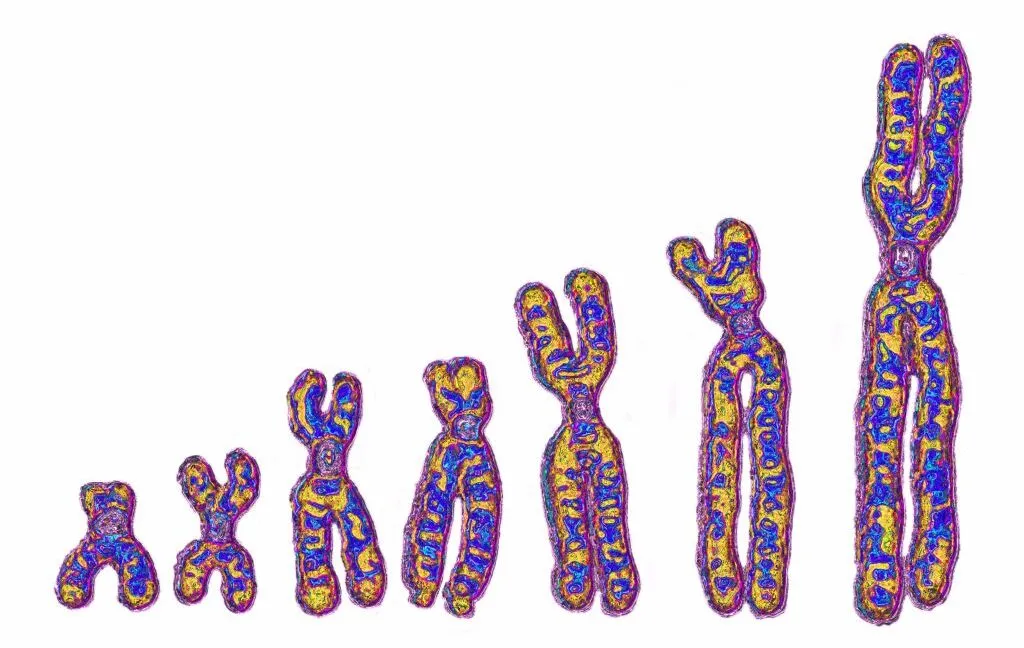
Researchers using recently developed analytical techniques find evidence of a third hominin lineage that contributed DNA before any modern humans left Africa. The consequence is a clearer picture of human evolution and a reminder that “founding” genomic snapshots can hide additional contributors.
When scientists map human ancestry, they often start with a tidy premise: we can see the shared DNA because interbreeding left recognizable genetic signatures. For years, Neanderthal and Denisovan contributions have been central to that story. But researchers kept seeing something else in large genomic datasets, an odd pattern that fit neither a fully clean Neanderthal signal nor a neat Denisovan one. Now, using newly developed analytical techniques, they report evidence for a third lineage. And importantly, this “ghost lineage” seems to have been involved before any modern humans left Africa.
The twist is not that the genome evidence exists. The twist is that the source of the DNA does not. The third lineage is present as genetic material in people today, yet there is no modern human relative genome to directly compare to, meaning the specific group remains a “ghost lineage.” The study argues that earlier hints pointed in this direction but lacked the crucial “other side of the comparison,” because until recently there was no genome from a modern human relative to help decode the details. In other words, researchers had to infer a contributor without having a reference blueprint.
Why does this matter beyond anthropology trivia? Because the logic of genomic inference is a lot like risk modeling in markets: assumptions about what you can observe can quietly shape what you think is true. Neanderthal DNA illustrates the problem. Many populations carry around 2 percent Neanderthal DNA on average, but that average does not mean every individual has the same 2 percent. Some individuals may carry more, others less, and that variation affects how patterns look when scientists try to identify shared segments across different people. So even with a well-known introgression source, researchers can still get ambiguous signals. Add in a second introgression source, and the “residual” that does not match either known pattern becomes the place where the next ghost might be hiding.
The Neanderthal and Denisovan story is already a reminder that human history was not a straight line. Instead, interbreeding with close relatives happened along the way. The new result shifts the timeline and the scope. The third lineage contribution appears to have occurred before modern humans left Africa. That changes the framing for how we interpret early human population structure, because it implies an additional contact event or gene flow prior to the major dispersal documented in broad human migration narratives. Even if the source group has no modern descendants, its genetic imprint can persist, showing up in the living genomes we can sequence today.
From a decision-maker perspective, there is also an important lesson about data interpretation and governance. Genomic science relies on large collections of data and analytical techniques that can detect patterns at scale. As datasets grow and methods improve, the same underlying biological reality can get reinterpreted. The source of this new insight is explicitly tied to “recently developed analytical techniques” and to the fact that earlier hints existed but could not be fully explained. That is basically the scientific version of how boards and regulators learn to ask: are we looking at a signal or a byproduct of measurement, sampling, and modeling choices? When results hinge on methods, the institutional question becomes whether the process for validating findings can keep up with the speed of tool development.
Regulatory background may not be the first thing you think of for ancient DNA, but the meta-point is familiar to any leadership team: standards for evidence and validation matter when conclusions affect downstream decisions. In healthcare and biotech, genomic discoveries can influence everything from risk stratification models to product claims, requiring careful interpretation and transparent methodology. While this specific piece is focused on evolutionary genetics, the principle carries: if your conclusions depend on analytical technique and reference genomes, then the absence of a reference is not a minor detail. It is the entire reason the paper can only label the contributor as a “ghost lineage.” That label signals both the strength of the genetic evidence and the current limitation of direct identification.
Second-order implications show up in how you think about “complete” stories. Neanderthal and Denisovan DNA already demonstrated that human genomes can contain contributions from lineages that do not exist in the living population. The third ghost lineage intensifies that point. It suggests that our current narratives might be missing additional chapters, not because researchers were sloppy, but because until the right techniques arrive, the residual patterns can remain unassigned. For executives overseeing research-heavy work, platforms, or analytics pipelines, the practical takeaway is that unexplained variance is not always noise. Sometimes it is the footprint of something real that only becomes legible when the methods mature.
For peers in adjacent domains, the strategic stakes are clear. If genomic history is more layered than it looked a few years ago, then the same could be true for other complex systems where we rely on indirect signals and probabilistic inference. Boards and leaders should treat model interpretability and validation as ongoing infrastructure, not a one-time checkbox. And in evolutionary science specifically, this discovery raises a fresh research agenda: to keep searching for the missing reference that would turn “ghost lineage” into an identifiable group. Until then, the DNA in living people will continue to do the quiet work of telling a story the fossils never had time to finish.
This story's Key Insights and Take-aways are locked.
Create a free account to unlock Executive Actions for one credit.
Register to UnlockAlways free for Executives Club members. Join the Club
More in Science

Alaska's 1,580-foot tsunami had warning signs. Scientists just found them.
Rapid glacier retreat, heavy rainfall, and thousands of tiny tremors preceded Alaska's 1,580-foot tsunami, a warning for every coastal community in a warming world.

The rare mutation that lets high-risk brains dodge Alzheimer's
Scientists found a natural defense against protein buildup, opening a new path to preventive treatments.

3,000 steps a day may halve Alzheimer's decline, study finds
New research links a modest daily walk to less tau buildup and nearly half the cognitive and functional decline, even for those with early signs.