
AI chaos is here. History says that's what progress looks like.
Outages and cyberattacks blamed on AI read like decline, but the historical record says new technology breaks things first and pays off later, and the gap in between is where the liability and the advantage sit.
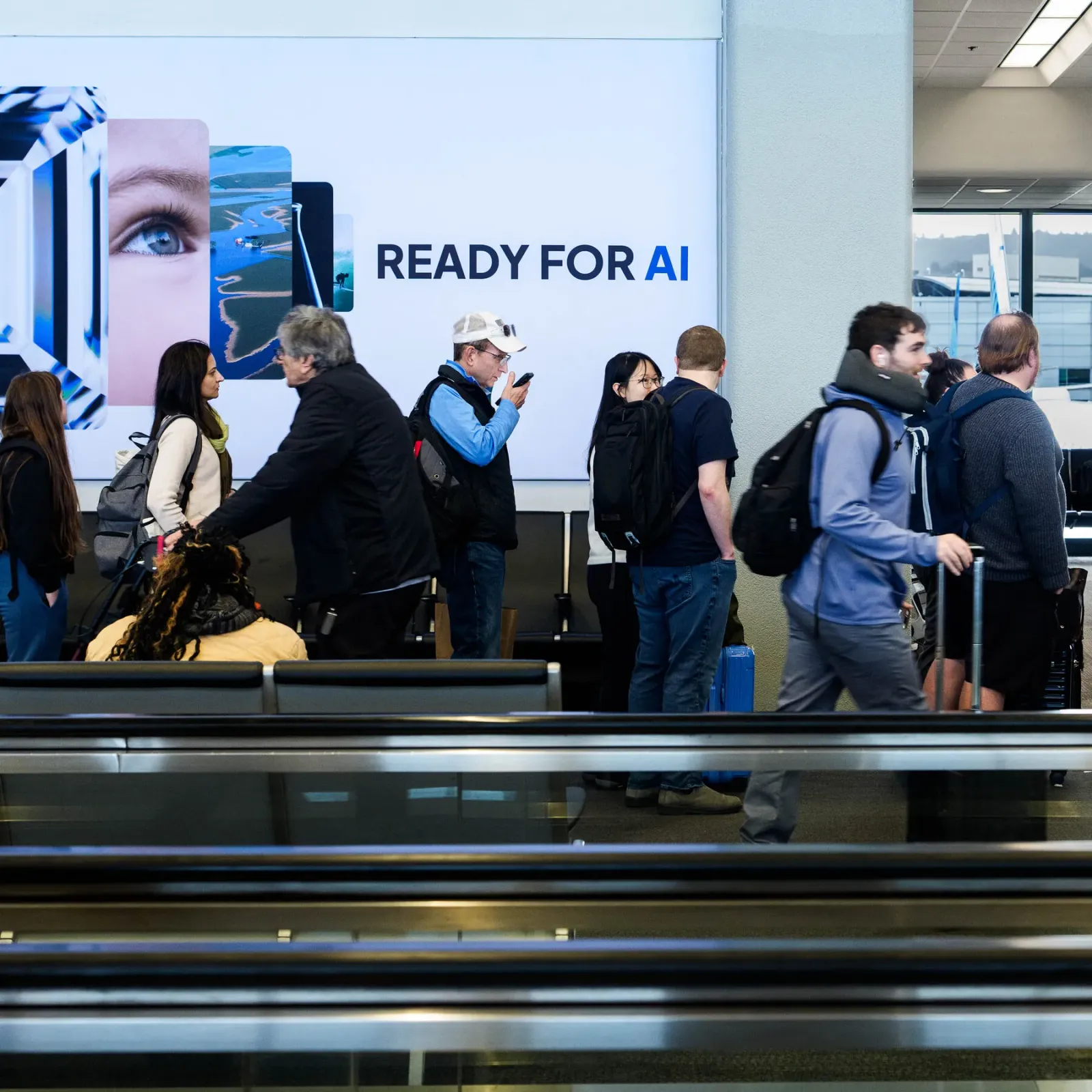
The New York Times argues that if artificial intelligence is producing outages, cyberattacks and broader digital disorder, that is consistent with history, in which new innovations typically trigger calamitous failure before they deliver their benefits. For decision-makers, that reframes today's incidents from a verdict on AI to a measurement problem: the firms that instrument and contain the failures fastest are the ones that capture the upside.
If artificial intelligence is handing us outages, cyberattacks and a nagging sense that the digital ground is less stable than it was two years ago, the instinctive read is that something has gone badly wrong. The New York Times makes the opposite case: this is simply what progress looks like from the inside. The paper's argument is that if AI is giving rise to outages, cyberattacks and more, that pattern is consistent with history, because new innovations often set off calamitous failure before they make life better. Read that twice. The mess is not a verdict on the technology. It is the receipt for its adoption.
Strip the AI framing away and the shape of the thing is familiar. Historically, general-purpose technologies arrive well before the institutions that tame them. The standards, inspection regimes, professional norms and insurance logic that make a technology safe tend to be written after the first round of accidents, not before. The technology ships; the guardrails follow. Electricity, railways, automobiles, aviation, industrial machinery: each carried real danger in its early decades and became background noise later. The failure mode is rarely that a technology is bad. It is that deployment outruns the layer of people, process and accountability that would normally catch the failure.
That is the useful lens for anyone running a company right now. The question is not whether AI is worth the disruption, because the disruption and the payoff are the same event seen from two different quarters. The question is whether your organization is treating AI-related incidents as anomalies to be explained away or as the predictable output of a system that got adopted faster than it got governed. Those are very different operating postures, and they produce very different outcomes when the next outage lands on a Friday afternoon.
There is a second-order consequence the Times thesis makes hard to ignore. If calamitous failure is a normal phase rather than an aberration, then the accountability layer becomes the scarce asset. Historically, the auditors, insurers, regulators and standards bodies do not lead the technology; they trail it, arriving after the damage and pricing it in afterward. Companies that build the incident reporting, rollback discipline and vendor scrutiny early are effectively pre-buying the trust that everyone else will have to rent at a premium once the rules catch up.
The argument is not a blank check, and it should not be sold internally as one. "Consistent with history" is a description of a pattern, not a promise about any single company's survival. History is quietly survivorship-biased: we count the technologies that eventually paid off and forget the ones whose early failures were never resolved. The historical fixes also tended to be slow, expensive and imposed from outside, frequently after damage that no one involved would describe as acceptable at the time. Being on the right side of the trend does not immunize you from being on the wrong side of a specific incident.
That is where the strategic stakes sharpen. Boards typically ask whether AI is delivering productivity, and the answer is usually yes. The better question is what the company's failure budget looks like: how many AI-driven incidents it can absorb before customers, regulators or insurers reprice the risk. Every general-purpose technology in the historical record eventually traded chaos for reliability because someone paid to build the reliability layer. That layer is now being built inside companies, in real time, largely without a shared standard to lean on.
So the practical read of the Times argument is neither complacency nor panic. It is that the chaos phase is a competitive phase. The firms that treat outages and cyberattacks as data, contain them fast and can prove to a regulator or a customer that they did so are the ones converting the messy middle into market position. The firms that wait for the standards to arrive before they build the guardrails will get both the failures and the bill for them.
None of this requires believing AI is uniquely dangerous or uniquely safe. It requires accepting that adoption and breakdown are running on the same clock. If that is right, the executive who wins the next two years is not the one who avoided the incidents. It is the one whose organization was built to survive them, and who can say so with evidence rather than adjectives.
This story's Key Insights and Take-aways are locked.
Create a free account to unlock Executive Actions for one credit.
Register to UnlockAlways free for Executives Club members. Join the Club
More in Technology

Anthropic Mathematician Claims Claude Helped Prove Riemann Hypothesis in Six Weeks
Levent Alpöge says the AI tool helped him develop a solution to one of math's most important unsolved problems in about six weeks, a claim that, if verified, would reshape AI's role in research.

Asahi Pours $85M Into AI Cyber Defense After Ransomware Hit
Japan's beverage giant is rebuilding its security stack around AI, and the $85 million price tag is a warning to every board still treating cyber risk as an IT line item.

Signal kills mobile screenshots to fight the 'existential threat' of AI surveillance
The encrypted messaging app is closing the one hole encryption never covered, the screenshot button, as AI tools get better at reading everything on your screen.