
Signal kills mobile screenshots to fight the 'existential threat' of AI surveillance
The encrypted messaging app is closing the one hole encryption never covered, the screenshot button, as AI tools get better at reading everything on your screen.
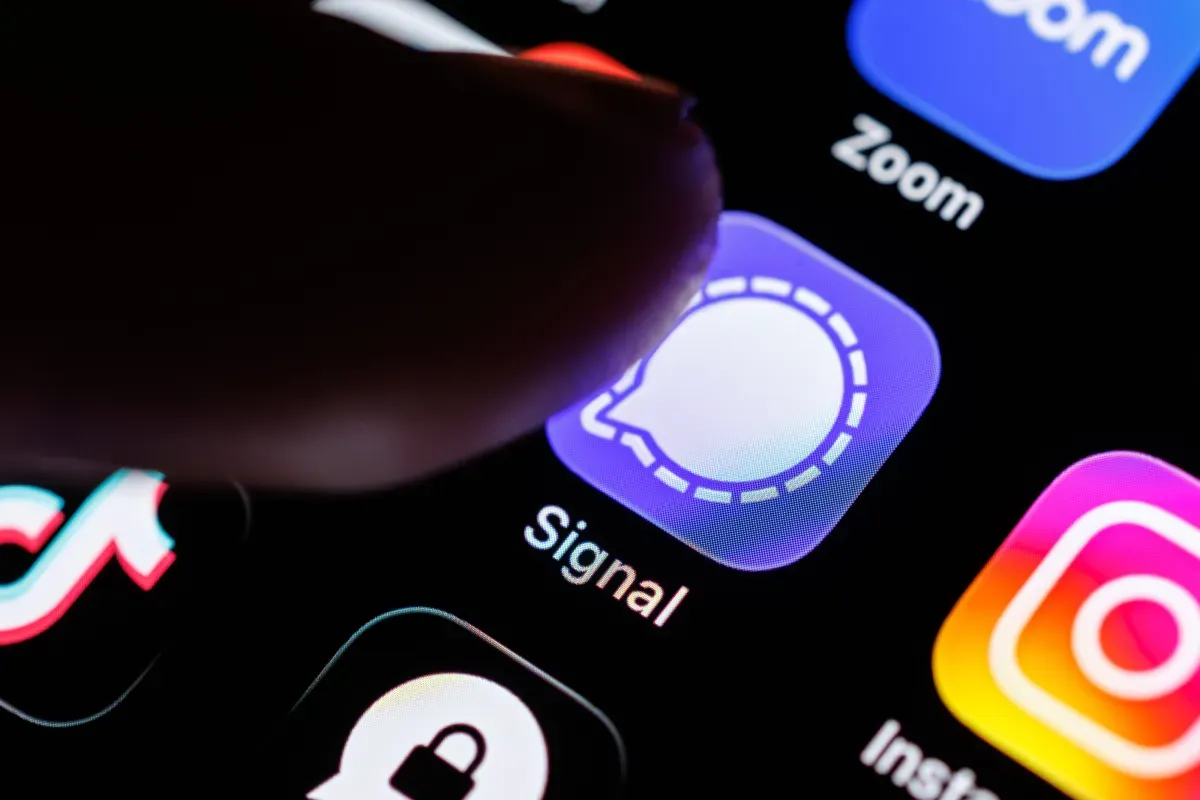
Signal is restricting users' ability to take screenshots in both its Android and iOS apps, TechCrunch reports, as the encrypted messaging service confronts what it frames as an existential threat from AI-driven surveillance. For anyone who runs a product built on user trust, the move is a preview of the coming fight: encryption protects the pipe, but nothing protects the glass.
Signal just took a run at the screenshot button. The encrypted messaging app is limiting users' ability to take screenshots in both its Android and iOS apps, TechCrunch reports, a product tweak that sounds minor until you see what is driving it: Signal is confronting what it frames as an existential threat from AI-powered surveillance, and the humble screenshot is one of the last open doors.
The logic is blunt once you lay it out. End-to-end encryption protects the pipe, not the glass. A message is scrambled between sender and receiver, but the instant it renders on a phone it becomes plain text behind a pane of Gorilla Glass, one thumb-press away from the camera roll, the cloud backup, the shared family album, and, increasingly, whatever model is quietly reading the screen. Signal's change narrows that last mile. If the app will not hand you a clean export of a conversation in a single tap, the conversation stays closer to the boundary the encryption was built to defend. That is the whole bet: make the leaky part of the experience slightly harder, and the number of leaks falls.
Screenshot controls are not new, and that history is the best guide to how well this will work. Snapchat built an entire product identity on disappearing messages and capture alerts. Banking apps have long blocked screen capture on sensitive account pages. Streaming services lean on platform-level protections to keep frames off the open web. Historically, these controls have been partial by design: mobile operating systems give developers ways to flag a screen as protected or to detect that a capture happened, but the enforcement is uneven across platforms and app versions. And determined users typically route around any block with a second phone and a camera pointed at the first. Security teams generally treat screenshot blocking as a speed bump, not a wall. Signal appears to be betting that a speed bump is still worth having when the alternative is nothing.
What changed is who is doing the capturing. For two decades the threat model was a person: a snoop, a boss, an abusive partner. The emerging threat model is a process. AI assistants are being built to see what is on a user's screen, and the broader industry push toward agents that can act on your behalf depends on exactly that kind of visibility. Add cheap optical character recognition, always-on cloud sync, and the appetite to train models on whatever text can be hoovered up, and every rendered message becomes potential input. That is the shape of the existential threat Signal is naming. Encryption can guarantee that nobody intercepts a message in transit; it cannot guarantee that the recipient's phone, and everything plugged into it, behaves.
There is a real cost, and Signal's critics will name it fast. Screenshots are how people keep receipts. They are how harassment gets documented, how a scam gets reported, how a source verifies that a quote was real, how a group chat becomes evidence. Restricting capture makes life marginally harder for journalists, researchers, and ordinary users who want a record. That tension is not a bug in the decision, it is the decision: Signal is trading a slice of convenience for a smaller attack surface, and the argument will be about whether the slice is worth it. The company has not framed this as a cure, and it should not be sold as one. A restriction that stops casual capture while a determined adversary photographs the screen is a filter, not a fortress.
For context, this lands in the middle of a much bigger regulatory fight over whether messaging apps should be made to inspect what users send. Brussels spent years arguing over proposals that would have pushed platforms toward scanning message content on-device, drawing sustained opposition from cryptographers and privacy groups who argued that any such capability is a backdoor waiting to be widened. The United Kingdom's online safety regime has raised similar questions about encrypted services. Signal's move reads as a preemptive answer from the private sector: rather than wait for a mandate, tighten the product on your own terms and make the case that privacy can be engineered rather than legislated.
The strategic stakes reach well past one app. Signal has historically punched above its weight on norms, and its choices tend to become reference points for larger rivals weighing the same tradeoffs. Every messaging product now sits on the same fault line: the more capable the assistant layered on top, the more valuable the screen becomes as a data source, and the more pressure there is to lock it down. Expect screenshot behavior, screen-recording detection, and capture notifications to become standard product decisions rather than edge cases, and expect users to notice which apps chose which side.
For operators, the lesson is uncomfortable and useful. Trust is no longer a policy page; it is a set of small, visible product constraints that cost something to ship. If your roadmap includes an AI feature that reads the screen, the question your users will ask is not whether it is convenient but who else can see what it sees. Signal just answered that question in the most literal way available, and it will be judged on whether the answer holds.
This story's Key Insights and Take-aways are locked.
Create a free account to unlock Executive Actions for one credit.
Register to UnlockAlways free for Executives Club members. Join the Club
More in Technology

Anthropic Mathematician Claims Claude Helped Prove Riemann Hypothesis in Six Weeks
Levent Alpöge says the AI tool helped him develop a solution to one of math's most important unsolved problems in about six weeks, a claim that, if verified, would reshape AI's role in research.

Asahi Pours $85M Into AI Cyber Defense After Ransomware Hit
Japan's beverage giant is rebuilding its security stack around AI, and the $85 million price tag is a warning to every board still treating cyber risk as an IT line item.

Guadagnino's OpenAI Film 'Artificial' Lands at Neon as AI Doom Fears Peak
Neon is betting Luca Guadagnino's drama about Sam Altman, Ilya Sutskever and Elon Musk can do what Sony's The Social Reckoning could not: sell the tech era back to the people living inside it.